
Introduction: The Buzz Behind Shockwave Therapy
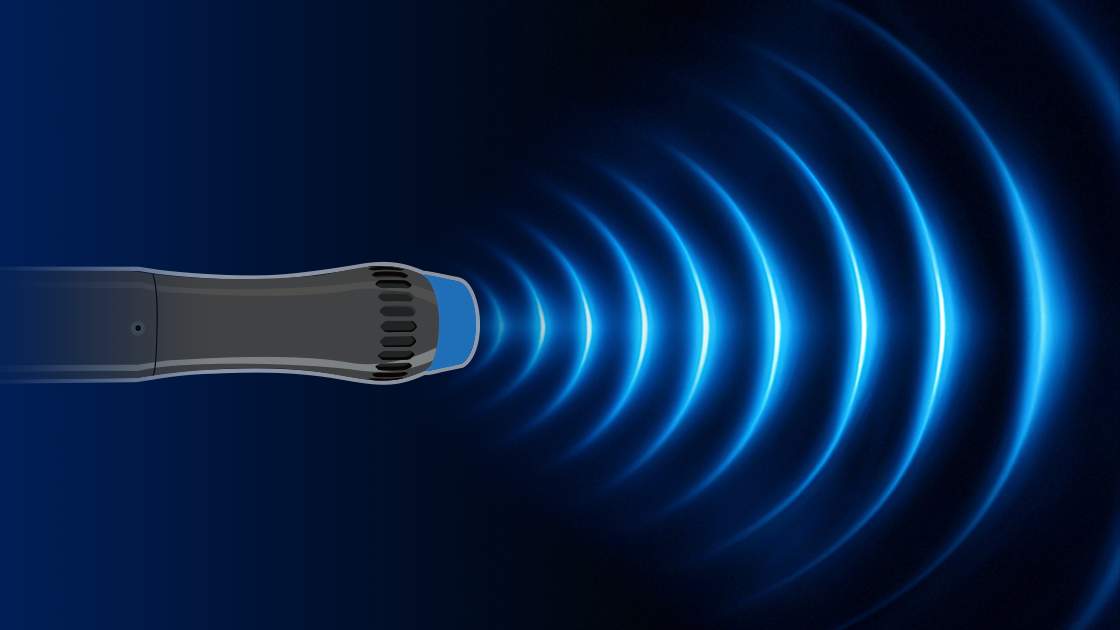
Shockwave therapy (ESWT) is making waves in modern medicine. Originally used to break kidney stones, it now plays a major role in treating chronic pain and musculoskeletal injuries. This non-invasive therapy uses acoustic waves to stimulate tissue regeneration and reduce inflammation—without surgery or long-term medication. Its ability to trigger natural healing processes puts it at the forefront of patient-centered, minimally invasive care. As demand grows for drug-free, effective pain relief, ESWT has become a preferred option for both practitioners and patients.
Why Shockwave Therapy Is Gaining Popularity
Shockwave therapy has rapidly gained popularity because it targets the root causes of musculoskeletal problems instead of just masking symptoms. Unlike typical treatments relying on painkillers or anti-inflammatories, ESWT stimulates tissue healing through mechanotransduction—where mechanical signals trigger biological cell responses. Numerous studies confirm its effectiveness in reducing pain, improving function, and increasing patient satisfaction. Being a drug-free, non-invasive option, it appeals to patients avoiding medications and healthcare providers aiming to reduce opioid use. Additionally, it’s an outpatient treatment with minimal downtime, fitting well with today’s healthcare cost concerns and busy patient lifestyles.
Who’s Using It: From Pro Athletes to Everyday Aches
Shockwave therapy is used by a broad range of people, from professional athletes to those with common chronic pains. Top sports teams in football, tennis, and soccer use ESWT for injury prevention and faster rehab, cutting down injury recurrence. Besides athletes, many people suffering from plantar fasciitis, tennis elbow, and calcific tendinitis find relief through shockwave treatments. Occupational health professionals also use it for repetitive strain and computer-related injuries. Its versatility and effectiveness make it popular in both high-performance sports and everyday wellness care.
What This Guide Will Cover
This guide offers a detailed look at shockwave therapy, covering its scientific basis, clinical uses, and practical tips for patients and providers. It explains how ESWT works biologically, explores applications in different medical fields, and addresses common questions about treatment protocols and results. The guide also discusses safety, contraindications, potential side effects, and sets realistic expectations. Furthermore, it touches on new uses in veterinary medicine and debunks common myths. By the end, readers will understand how to effectively include shockwave therapy in patient care plans for better outcomes.
Understanding Shockwave Therapy: Breaking It Down
To fully appreciate the therapeutic potential of shockwave therapy, it’s essential to understand the fundamental principles governing its mechanisms of action. This section explores the scientific foundations of ESWT, examining how acoustic energy translates into biological healing responses and the specific cellular processes that drive therapeutic outcomes.
Что такое ударно-волновая терапия?
Extracorporeal shockwave therapy (ESWT) is an advanced medical treatment using high-energy acoustic waves to promote healing in injured tissues. These waves are generated outside the body and precisely focused on targeted areas. ESWT includes two main types: focused shockwaves that deliver energy deeply to specific tissue spots, and radial shockwaves that spread energy more widely over surface areas. The therapy works through mechanotransduction, where mechanical energy triggers biological responses at the cellular level. Shockwaves create tiny cavitation bubbles in tissues, which rapidly collapse, producing forces that boost cell metabolism and encourage tissue repair. Importantly, this process stimulates healing without harming surrounding healthy tissue. Thanks to its precision and safety, ESWT is widely used for treating various musculoskeletal problems, offering a non-invasive and effective option for patients.
The Biological Mechanisms Behind the Magic
The therapeutic efficacy of shockwave therapy stems from its ability to trigger multiple concurrent biological processes that collectively promote tissue healing and pain reduction. Understanding these mechanisms provides insight into why ESWT demonstrates such broad clinical applications and consistent therapeutic outcomes across diverse patient populations.
Mechanical Energy Stimulates Healing
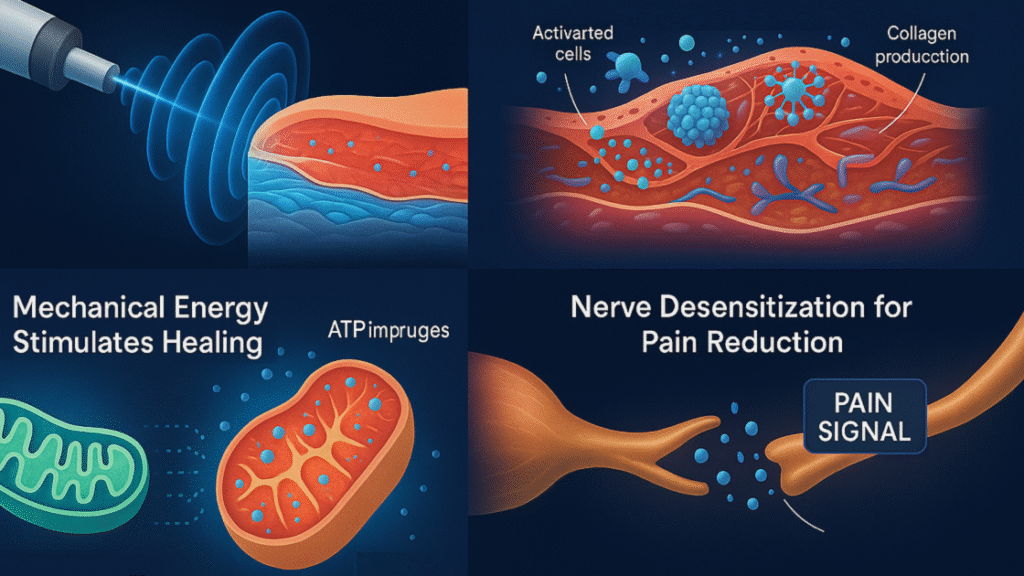
Shockwave therapy promotes healing mainly through mechanotransduction, a cellular process where mechanical forces activate signaling pathways inside cells. When acoustic waves enter tissues, they cause mechanical stress that triggers mechanosensitive ion channels and membrane receptors. This leads to the release of growth factors and cytokines, which start a cascade of responses including increased protein synthesis, boosted collagen production, and faster tissue remodeling. Research shows that shockwave-induced mechanotransduction raises levels of important growth factors like vascular endothelial growth factor (VEGF), transforming growth factor-beta (TGF-β), and bone morphogenetic proteins (BMPs). These factors are vital for tissue repair, new blood vessel growth (angiogenesis), and cell differentiation. This mechanism explains why ESWT effectively treats a variety of conditions from tendon injuries to slow-healing bone fractures, by promoting true biological healing rather than just symptom relief.
Neovascularization: Promoting Blood Vessel Growth
One key therapeutic benefit of shockwave therapy is its ability to promote neovascularization—the formation of new blood vessels in treated tissues. This process, also called therapeutic angiogenesis, happens because ESWT increases angiogenic factors such as VEGF, endothelial nitric oxide synthase (eNOS), and proliferating cell nuclear antigen (PCNA). Improved blood vessel growth enhances oxygen delivery, nutrient supply, and waste removal in tissues, creating ideal conditions for healing and regeneration. Clinical studies using color Doppler ultrasound have shown that shockwave therapy increases blood flow and vessel density in affected areas. This enhanced vascularization is especially helpful for chronic tendinopathies and other conditions where poor blood flow contributes to ongoing tissue damage and delays natural healing, making ESWT a valuable option for patients with these difficult-to-treat disorders.
Расщепление рубцовой ткани и кальцификатов
Shockwave therapy is highly effective at treating abnormal tissue formations, especially calcific deposits and fibrous scar tissue common in chronic musculoskeletal issues. The mechanical forces from acoustic waves physically disrupt these structures through cavitation-induced microtrauma. This controlled disruption stimulates the body’s natural repair processes, gradually breaking down calcifications and reorganizing scar tissue into healthier, more functional tissue. Calcification breakdown occurs as microfractures form inside calcium deposits, increasing their surface area and making them easier to dissolve naturally. Simultaneously, shockwaves attract osteoclast-like cells and macrophages that help resorb and clear out calcific material. This dual action explains why ESWT works well for conditions like calcific tendinitis in the shoulder and plantar fasciitis with heel spurs, providing lasting relief by addressing the underlying pathological tissue changes.
Nerve Desensitization for Pain Reduction
Shockwave therapy reduces pain through several neurophysiological mechanisms that improve function and decrease discomfort. The gate control theory suggests that mechanical stimulation of large sensory nerve fibers interrupts pain signals sent by smaller nociceptive fibers, effectively “closing the gate” to pain signals reaching the brain. Additionally, ESWT reduces levels of substance P, a neuropeptide linked to pain transmission and inflammation, which correlates with lower pain intensity after treatment. Shockwave therapy also affects the expression of pain-related ion channels and receptors, leading to longer-lasting changes in how pain is processed by the nervous system. These combined effects explain why patients often experience significant and sustained pain relief following ESWT, beyond the immediate treatment period.
What Conditions Can Shockwave Therapy Treat?
The therapeutic versatility of shockwave therapy has led to its adoption across numerous medical specialties, with growing evidence supporting its efficacy in treating a wide range of musculoskeletal and soft tissue conditions. This section examines the primary clinical applications of ESWT, exploring both established indications and emerging therapeutic areas.
Musculoskeletal Disorders
Shockwave therapy (ESWT) is highly effective for musculoskeletal disorders, especially those involving chronic tendon issues. Теннисный локоть (lateral epicondylitis) is one of the most studied applications, with strong evidence showing pain reduction and functional improvements compared to traditional treatments. ESWT is particularly helpful for patients who haven’t responded to physiotherapy or steroid injections. Плантарный фасциит also responds well, with clinical studies showing 70–90% success in properly selected cases. The therapy targets both inflammation and mechanical dysfunction, making it ideal for this condition. Other common indications include calcific tendinitis of the shoulder, Achilles tendinopathy, and patellar tendinopathy. ESWT has earned a central place in orthopedic and sports medicine practices.
Chronic Pain and Overuse Injuries
Chronic pain and overuse injuries are difficult to manage with standard treatments that often offer only short-term relief. Shockwave therapy addresses the root cause while providing lasting pain reduction. It is particularly effective for myofascial pain syndrome, helping reduce muscle tension and improve mobility. ESWT has also shown promise in early studies for complex conditions like CRPS and fibromyalgia. Its ability to influence both peripheral and central pain pathways makes it a valuable tool for treating pain that is resistant to other therapies. Non-invasive and low-risk, ESWT appeals to patients seeking drug-free alternatives.
Calcific Deposits and Soft Tissue Adhesions
Shockwave therapy excels at breaking down calcific deposits and fibrous adhesions. It is especially effective for calcific tendinitis, commonly affecting the rotator cuff, with studies reporting 60–90% complete calcium dissolution. The treatment induces controlled microtrauma, prompting natural tissue remodeling. Dupuytren’s contracture also responds well in early stages, with ESWT slowing disease progression and improving hand function. Peyronie’s disease, involving fibrous plaques in penile tissue, has shown positive responses to specialized ESWT protocols. While promising, this application requires proper patient selection and clinician expertise. Overall, ESWT offers a non-surgical option for conditions involving abnormal tissue formations.
Veterinary Applications: Shockwave for Pets and Horses
Shockwave therapy has become a powerful tool in ветеринария, especially for horses and dogs. In equine practice, it is used to treat suspensory ligament injuries, tendonitis, and delayed fracture healing—conditions where surgery poses higher risks. In dogs, it helps manage hip and elbow dysplasia, soft tissue injuries, and mobility issues in working and sporting breeds. ESWT reduces pain, improves movement, and shortens recovery without needing invasive procedures. It also shows promise in treating chronic wounds and supporting bone healing. Its safety, effectiveness, and versatility have made it a preferred choice in animal rehabilitation.
Что ожидать во время сеанса ударно-волновой терапии
Understanding the treatment process is crucial for both patients and healthcare providers to ensure optimal outcomes and appropriate expectations. This section provides a comprehensive overview of the shockwave therapy experience, from initial evaluation through post-treatment care and follow-up protocols.
Before the Treatment: Initial Evaluation
A thorough evaluation is essential before starting shockwave therapy. This includes reviewing the patient’s medical history, focusing on symptoms, prior treatments, and physical limitations. Clinicians must screen for contraindications such as pregnancy, cancer in the treatment area, pacemakers, or electronic implants. Patients on blood thinners may require medication adjustments. A physical exam assesses range of motion, strength, and pain points to determine ideal treatment sites. Imaging studies like ultrasound, X-rays, or MRI may be used to confirm diagnoses or rule out conditions that would make ESWT unsafe. Patient education is also crucial—explaining the procedure, expected results, possible side effects, and post-treatment care helps build trust and ensures better compliance and outcomes.
During the Session: What It Feels Like
The shockwave therapy session itself typically takes place in a comfortable outpatient setting, with patients positioned to allow optimal access to the treatment area. The procedure begins with the application of coupling gel to ensure proper transmission of acoustic waves into the target tissues. Modern shockwave devices feature sophisticated targeting systems that allow precise localization of energy delivery, maximizing therapeutic effects while minimizing discomfort.
Is It Painful?
Patient responses to shockwave therapy vary based on treatment intensity, location, and pain tolerance. Most describe the sensation as tapping or pulsing, similar to a rubber band snap. Discomfort usually decreases during the session as tissues desensitize. Modern devices allow energy adjustments, letting providers tailor intensity for comfort. Topical anesthetics are not recommended, as they can interfere with the therapy’s neurological mechanisms and block important patient feedback. However, those with low pain tolerance may take mild pain relievers beforehand. While the sensation may be mildly uncomfortable, it’s typically well-tolerated and fades quickly after the session. Most patients report that the therapeutic benefits far outweigh any short-term discomfort.
Typical Session Duration
A typical shockwave therapy session lasts 15–20 minutes, though the exact time may vary depending on the condition and number of areas treated. Each session delivers about 1,500 to 4,000 shockwaves. Treatment intensity is adjusted based on patient tolerance and tissue response. Most patients undergo 3–6 sessions spaced 1–2 weeks apart. Acute conditions may improve faster, while chronic issues often require more sessions. Providers monitor progress after each treatment and modify the plan as needed to ensure optimal results.
Aftercare: What Happens Post-Treatment
Proper post-treatment care is essential for optimizing therapeutic outcomes and minimizing potential complications. This section outlines the key components of post-treatment management and provides guidance for both patients and healthcare providers.
Activity Guidelines
Avoid high-impact activities for 24–48 hours post-treatment.
No aggressive stretching during the initial recovery phase.
Encourage light movement and gentle range-of-motion exercises to boost circulation and prevent stiffness.
Avoid NSAIDs for 2–3 days, as they can hinder the healing process.
Ice packs may be used for comfort, but only for 10–15 minutes at a time to avoid excessive vasoconstriction.
Gradual return to normal activity as symptoms improve.
Progressive loading protocols are often recommended for athletes or active individuals.
Общие побочные эффекты
Temporary pain or discomfort at the treatment site (usually peaks at 2–4 hours post-session).
Mild swelling or redness (erythema), especially in those with sensitive skin or after high-energy treatment.
Petechiae (small red spots) due to minor capillary rupture; usually cosmetic and resolves in a few days.
Temporary numbness or tingling, rare and typically resolves within 24–48 hours.
Serious side effects are extremely rare, but may include Hematoma and infection
When to Expect Results
Improvement from shockwave therapy varies by individual. Some patients notice relief within 24–72 hours, but early results may be temporary. The most noticeable and lasting improvements typically appear 6–12 weeks after completing all sessions, as tissue repair and remodeling take time. Chronic conditions may take longer, with continued improvement seen for up to 6 months post-treatment. It’s normal to experience some increased discomfort early in the healing process. Regular follow-ups help clinicians track progress, adjust treatment if needed, and guide patients through realistic recovery timelines.
Преимущества ударно-волновой терапии
The advantages of shockwave therapy extend far beyond simple symptom relief, encompassing a comprehensive approach to tissue healing that addresses both immediate concerns and long-term functional outcomes. This section explores the multifaceted benefits that make ESWT an increasingly popular choice among healthcare providers and patients alike.
Drug-Free Pain Relief
Shockwave therapy offers powerful pain relief without relying on drugs. This is especially important as concerns grow around opioid use and medication side effects. ESWT works by desensitizing nerves, improving tissue healing, and reducing inflammation—treating the root cause of pain, not just the symptoms. Studies show pain relief can last for months or even years after treatment, unlike medications that offer only short-term results. This makes ESWT a valuable tool for managing chronic conditions without the risks of long-term drug use or dependence.
Неинвазивность и отсутствие простоев
Shockwave therapy is non-invasive, meaning no surgery, no anesthesia, and minimal risk of complications. Most patients return to normal activities right after treatment, with only light restrictions for 24–48 hours. This makes it ideal for busy individuals and athletes. The outpatient nature of ESWT means no hospital stay or long recovery. Combined with its excellent safety record, this convenience helps patients feel more confident about getting timely care without disrupting their lives.
Стимулирует естественное заживление
ESWT doesn’t just mask symptoms—it activates the body’s own healing processes. It stimulates cellular activity, boosts blood vessel growth, and increases collagen production. This leads to true tissue repair and long-lasting recovery. Treated tissues often become stronger and more resilient, helping prevent re-injury. Athletes and active patients benefit especially from this regenerative effect. Rather than temporary relief, ESWT encourages deep healing that continues to improve tissue health over time.
Improves Mobility and Function
Reducing pain is great—but improving function is better. Shockwave therapy helps patients move better, faster. It enhances tissue flexibility, strength, and joint range of motion. Studies show ESWT improves daily activity levels and athletic performance more than many standard treatments. Benefits often appear within weeks and continue for months as the body heals. Patients report better balance, coordination, and reduced disability. For those eager to return to sports or pain-free daily life, ESWT delivers on both relief and recovery.
Long-Term Outcomes and Patient Satisfaction Rates
Shockwave therapy boasts long-lasting results and high patient satisfaction—often between 70% and 90%. These outcomes rival or exceed traditional options like injections or surgery. Many patients report relief that lasts for years. Factors like non-invasiveness, minimal side effects, and avoiding surgery drive satisfaction. It’s also cost-effective and convenient, with no hospital time required. Providers value its consistent success and low complication rate. For both patients and clinicians, ESWT offers a safe, effective, and satisfying solution to chronic musculoskeletal issues.

Risks, Contraindications, and Limitations
While shockwave therapy boasts an excellent safety profile, it’s essential to understand the potential risks, contraindications, and limitations associated with this treatment modality. This comprehensive understanding ensures appropriate patient selection and optimal treatment outcomes while minimizing the possibility of adverse events.
Кому следует избегать ударно-волновой терапии?
Pregnancy – ESWT is not recommended due to unknown effects on fetal development.
Patients with tumors near the treatment site should not receive therapy, as ESWT may stimulate unwanted growth.
Individuals with pacemakers, defibrillators, or other electronic implants may be at risk of device interference.
Bleeding disorders – Patients with clotting issues or on anticoagulants (e.g., warfarin) require special consideration or temporary medication adjustment.
Severe cardiovascular conditions – Particularly those with recent heart attacks or unstable angina should be carefully assessed before treatment.
Side Effects: What’s Normal and What’s Not
Normal Side Effects (Temporary and Mild)
Легкая боль или дискомфорт в месте обработки
Swelling or skin redness (erythema)
Petechiae (small red/purple dots) – cosmetic and fade within a few days
Most of these resolve within 24–48 hours
Abnormal Side Effects (Seek Medical Attention)
Persistent or worsening pain
Signs of infection: fever, pus, red streaks, warmth
Neurological symptoms: long-lasting numbness or weakness
Hematoma (bruising/swelling from internal bleeding), especially in those with bleeding risks
Any symptoms lasting more than 72 hours or worsening should be evaluated
Not a Cure-All: When Other Therapies Are Better
While shockwave therapy is highly effective for many conditions, it’s not appropriate for all musculoskeletal problems. Acute fractures, joint instability, and conditions requiring surgical intervention are not suitable for ESWT treatment. Patients with severe osteoarthritis may benefit more from joint replacement surgery than from shockwave therapy, though ESWT may be useful as an adjunctive treatment in mild to moderate cases. Certain chronic pain conditions, particularly those with significant central sensitization components, may not respond well to shockwave therapy alone and may require multimodal treatment approaches including psychological interventions. Additionally, patients with unrealistic expectations or those seeking immediate pain relief may be better served by other treatment modalities, as ESWT requires time for the natural healing process to occur.
Подходит ли вам ударно-волновая терапия?
Shockwave therapy may be a good option if you have a musculoskeletal condition that hasn’t improved with rest, physical therapy, or medications. Ideal candidates often suffer from chronic tendon issues or calcific deposits and prefer non-invasive, drug-free treatments. A qualified healthcare provider should assess your condition, health status, and treatment goals before recommending ESWT. Success depends on factors like symptom duration, severity, age, overall health, and commitment to the full treatment plan. Patients with realistic expectations—understanding that ESWT promotes gradual healing rather than instant relief—are more likely to be satisfied. While shockwave therapy is often used before surgery, it may not be suitable for those with severe structural damage or who need rapid pain control. Discussing alternative treatments, risks, and costs with your provider is essential to making an informed decision.
Common Myths and Misconceptions
ESWT has been studied in many randomized controlled trials and approved globally for various conditions. It has over 20 years of clinical use with strong evidence supporting both its efficacy and safety.
While some discomfort is normal, most patients describe it as tolerable. No anesthesia is usually required, and any discomfort subsides quickly after the session.
ESWT stimulates natural healing, which takes time. Gradual improvements usually occur over several weeks to months, not instantly.
Fact: Shockwave therapy helps people of all ages, including older adults with chronic conditions. It is effective for everyday musculoskeletal issues, not just sports injuries.
Conclusion: Don’t Just Rest—Recover Smartly with Shockwaves
Shockwave therapy offers a modern, non-invasive solution for chronic musculoskeletal conditions by targeting the root causes—not just the symptoms. Backed by strong clinical evidence, ESWT promotes natural healing, improves function, and reduces pain without surgery or long-term medication. Its high safety profile and strong patient satisfaction make it a valuable tool in today’s healthcare. Patients who commit to the full treatment plan and have realistic expectations tend to see the best results. Shockwave therapy is not an instant fix, but a proven way to stimulate lasting recovery over time. As research grows, new applications continue to emerge, expanding its role in musculoskeletal medicine. For those seeking a drug-free, personalized, and evidence-based treatment, ESWT provides a compelling option. With proper guidance from trained providers, patients can recover smarter—not just rest.