

Введение
Heel pain is a common musculoskeletal condition affecting millions worldwide. From busy professionals to active seniors, chronic discomfort in the heel can significantly impair daily activities such as walking, standing, or even sleeping. While rest, stretching, and medications can provide temporary relief, they often fail to address the root cause. Shockwave Therapy (SWT), a non-invasive and highly effective treatment, has gained prominence in recent years for its ability to promote natural healing, reduce inflammation, and restore mobility without the risks associated with surgery or long-term medication use.
1 Understanding Heel Pain
Before exploring treatment options, it is essential to understand the anatomy and causes of heel pain.
1.1 Common Causes of Heel Pain
Heel pain can arise from multiple sources, including plantar fasciitis, Achilles tendonitis, heel spurs, and repetitive stress injuries. Plantar fasciitis, the most frequent cause, involves inflammation of the plantar fascia—a thick connective tissue running along the bottom of the foot. Repetitive impact from walking, running, or prolonged standing can lead to microtears, inflammation, and eventually chronic pain. Poor footwear, flat feet, or abnormal gait patterns can exacerbate these issues, increasing the risk of persistent heel pain.
1.2 Why Heel Pain Becomes Chronic
Chronic heel pain develops when minor injuries fail to heal properly. The plantar fascia and surrounding tissues have limited blood flow, slowing the natural healing process. Continuous stress on these tissues can lead to microtrauma and fibrosis, prolonging discomfort. Without targeted intervention, chronic pain can significantly reduce mobility and quality of life.
1.3 Symptoms and Indicators
Patients with chronic heel pain often experience sharp stabbing pain during the first steps in the morning, tenderness at the base of the heel, and discomfort that worsens with prolonged activity. Ignoring these symptoms may result in worsened inflammation, calcification, or additional compensatory injuries to the knees or lower back.
2 How Shockwave Therapy Works
Shockwave Therapy (SWT) is increasingly recognized for its ability to address both pain and tissue damage.https://www.shockwavemachines.com/indications
2.1 The Science Behind Shockwave Therapy
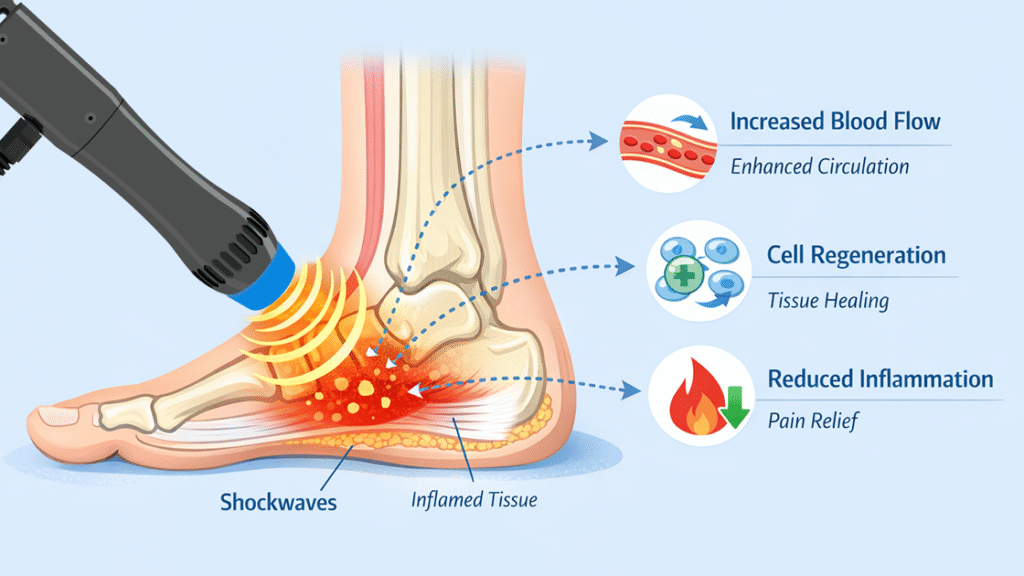
SWT uses high-energy acoustic waves to penetrate deep into affected tissues. These waves generate controlled microtrauma that stimulates the body’s natural repair mechanisms. Unlike injections or surgery, SWT is non-invasive, making it a preferred treatment for patients seeking an effective yet safe option.
2.2 Promoting Tissue Repair and Collagen Formation
Shockwaves stimulate fibroblasts—the cells responsible for collagen production—enhancing tissue regeneration in the plantar fascia and surrounding structures. This accelerates the repair of microtears and restores elasticity, effectively reducing pain while improving structural integrity.
2.3 Reducing Inflammation and Improving Blood Flow
SWT increases local blood circulation, which delivers oxygen and nutrients to damaged tissues while removing metabolic waste products. The therapy also modulates inflammatory mediators, reducing swelling and accelerating recovery. These combined effects are critical for treating chronic heel pain where inflammation persists over time.
3 Benefits of Shockwave Therapy for Heel Pain
Understanding how SWT works highlights its numerous clinical benefits.
3.1 Fast and Long-Lasting Pain Relief
One of the primary advantages is significant pain reduction, often experienced after a few sessions. Unlike oral analgesics, which only mask symptoms, SWT addresses the underlying tissue damage, providing long-term relief.
3.2 Non-Invasive and Minimal Downtime
SWT does not involve incisions, anesthesia, or injections, allowing patients to return to daily activities immediately. This makes it particularly suitable for professionals and seniors who require quick recovery.
3.3 Enhanced Functionality and Mobility
By promoting tissue regeneration and reducing pain, SWT allows patients to regain proper foot function. Activities such as walking, jogging, or climbing stairs become more comfortable, improving overall quality of life.
3.4 Effective for Resistant Cases
Patients who have not responded to conventional treatments, such as orthotics, stretching, or anti-inflammatory medications, often see measurable improvements with SWT. Its unique mechanism targets both inflammation and structural damage, offering hope for otherwise resistant cases.
4 The Treatment Process
Understanding the process can help patients feel comfortable and prepared.
4.1 Initial Assessment
Before treatment, a healthcare professional evaluates the patient’s medical history, pain severity, and underlying causes. Diagnostic imaging may be used to assess tissue damage and ensure the therapy is appropriate.
4.2 How a Session Feels
During a typical session, a handheld device delivers focused shockwaves to the heel and surrounding structures. Patients may feel mild tingling or pressure, but the procedure is generally well tolerated. Each session lasts approximately 15–20 minutes.
4.3 Number of Sessions and Recovery Timeline
Most patients undergo 3–6 sessions over a period of 2–4 weeks. Many report noticeable pain relief after the first session, with continued improvement as tissue healing progresses. Combining SWT with stretching and strengthening exercises enhances long-term outcomes.
5 Safety and Considerations
While SWT is highly effective, certain precautions should be noted.
5.1 Is Shockwave Therapy Safe?
When administered by trained professionals, SWT is safe and well-tolerated. It avoids the risks associated with surgery and long-term medication use, making it suitable for a wide range of patients.
5.2 Possible Side Effects
Minor side effects, such as temporary redness, swelling, or mild soreness, may occur but usually resolve within a day or two. No significant complications have been reported in standard clinical practice.
5.3 Who Should Avoid Shockwave Therapy?
Patients with active infections, blood clotting disorders, or tumors in the treatment area should consult a healthcare professional before undergoing therapy. Pregnant patients should also avoid treatment over the abdominal region.
FAQ
How quickly does Shockwave Therapy work?
Many patients experience pain relief after the first session, with maximum improvement over several weeks.
Is it painful?
Most patients report mild discomfort, often described as tingling or pressure, but the treatment is generally well tolerated.
How many sessions are required?
Typically 3–6 sessions are recommended, depending on the severity and duration of heel pain.
Can it replace physical therapy?
Shockwave therapy complements physical therapy, enhancing tissue healing and functional recovery.
Are results permanent?
When combined with proper foot care, stretching, and activity modification, results can be long-lasting.
Заключение
Shockwave Therapy offers a safe, effective, and non-invasive solution for chronic heel pain. By stimulating tissue regeneration, reducing inflammation, and promoting long-term healing, it provides faster and more sustainable relief than many conventional treatments. For individuals suffering from persistent heel discomfort, SWT represents a modern approach that enables pain-free movement, improved mobility, and a better quality of life.
Ссылки
Extracorporeal Shock Wave Therapy for Plantar Fasciitis
https://pubmed.ncbi.nlm.nih.gov/17565954
Shockwave Therapy in Musculoskeletal Disorders
https://www.ncbi.nlm.nih.gov/pmc/articles/PMC6029898
Effectiveness of ESWT in Chronic Heel Pain
https://www.sciencedirect.com/science/article/pii/S1877056815000292