

Введение
Persistent shoulder pain is one of the most common musculoskeletal complaints affecting adults across a wide range of professions and activity levels. Many individuals initially assume that shoulder discomfort is temporary and will resolve with rest, stretching, or occasional medication, yet symptoms often return and gradually interfere with sleep quality, mobility, and daily function. Over time, untreated tendon irritation and soft-tissue overload may develop into chronic shoulder conditions that require structured rehabilitation support. As awareness of non-invasive recovery technologies continues to expand in physical therapy and sports medicine environments, shockwave therapy has emerged as a widely discussed option for supporting tendon health and restoring shoulder function in patients experiencing long-lasting discomfort.
1. Understanding Chronic Shoulder Pain That Doesn’t Go Away
Chronic shoulder discomfort rarely develops overnight. Instead, it usually progresses through repeated mechanical stress and gradual tendon irritation. Understanding how clinicians define persistent shoulder pain helps explain why technology-assisted rehabilitation approaches are increasingly considered in long-term cases.
1.1 What Counts as Chronic Shoulder Pain
Chronic shoulder pain is generally defined as discomfort lasting longer than three months or recurring despite periods of rest and activity modification. Patients frequently describe symptoms such as difficulty reaching overhead, stiffness during rotational movement, or discomfort when lying on the affected side at night. These symptoms often indicate irritation within the rotator cuff tendon complex or surrounding connective structures. Because tendon tissue has relatively limited blood supply compared with muscle, healing responses may be slower and less predictable without targeted therapeutic support. In rehabilitation settings, persistent symptoms of this nature are commonly evaluated using imaging and functional assessments to determine whether non-invasive technologies such as shockwave therapy may support soft-tissue recovery and improve mechanical tolerance during daily movement.
1.2 Why Shoulder Pain Often Becomes Persistent
Before exploring treatment-support technologies, it is important to understand why shoulder pain tends to become long-lasting rather than resolving naturally. Several anatomical and behavioral factors contribute to this progression.
Shoulder pain often becomes persistent because the joint relies heavily on coordinated tendon function rather than structural stability from bone alignment alone. Repetitive overhead motion, postural imbalance, and occupational strain gradually overload the rotator cuff complex and surrounding bursae. Over time, micro-trauma accumulates within collagen fibers, leading to tendon thickening and reduced elasticity. Circulatory limitations inside tendon structures further slow regenerative responses, especially in individuals with sedentary work patterns or repetitive lifting demands. Rehabilitation specialists increasingly incorporate modalities such as shockwave therapy and low-level laser therapy to stimulate local biological responses in chronic tendon environments where natural healing progression has plateaued.
2. Daily Activities That Commonly Lead to Long-Term Shoulder Pain
Persistent shoulder discomfort often reflects the cumulative effect of everyday movement patterns rather than a single traumatic injury. Many occupational and recreational activities place repeated stress on shoulder tendons.
2.1 Repetitive Overhead Work
One major contributor to chronic shoulder strain involves repeated overhead positioning during work tasks. This category includes hairstylists, electricians, warehouse workers, painters, and technicians who frequently maintain elevated arm positions for extended periods. Sustained elevation increases compression within the subacromial space and alters tendon gliding mechanics, eventually leading to inflammation and structural fatigue. Over months or years, this mechanical stress may progress toward rotator cuff irritation or calcific tendon changes. Rehabilitation clinics commonly assess these patterns when designing recovery strategies, and shockwave therapy is often integrated into treatment environments where repetitive strain has contributed to chronic tendon overload affecting work performance and shoulder mobility.
2.2 Long Hours of Desk Work and Poor Posture
Beyond physically demanding roles, prolonged seated posture also plays a significant role in shoulder dysfunction development. Office-based professionals frequently maintain forward head alignment and rounded shoulder positioning while working at computers, which gradually alters scapular stabilization mechanics. These changes increase strain on the posterior shoulder capsule and surrounding musculature. Over time, reduced scapular coordination contributes to narrowing of functional movement space during elevation tasks. This mechanical imbalance may lead to progressive discomfort that becomes noticeable during sleep or exercise. Physical therapists increasingly combine posture correction strategies with technology-supported modalities such as laser therapy and shockwave therapy to improve tissue responsiveness in patients experiencing persistent desk-related shoulder stiffness.
2.3 Sports-Related Shoulder Stress
Athletic activity introduces another important pathway toward chronic shoulder irritation. Sports such as tennis, swimming, pickleball, and resistance training rely heavily on repetitive acceleration and deceleration of the shoulder joint. These motions place significant strain on tendon insertion sites and stabilizing structures responsible for joint control. When recovery periods are insufficient or technique changes occur abruptly, micro-injury accumulation may exceed the tendon’s repair capacity. Over time, this imbalance contributes to long-term discomfort and reduced performance efficiency. Sports rehabilitation specialists frequently evaluate movement mechanics and incorporate regenerative-support technologies, including extracorporeal shockwave therapy and photobiomodulation laser therapy, to assist athletes experiencing recurring tendon stress patterns that interfere with training continuity.
3. Symptoms That Suggest Shoulder Tendon Problems May Be Developing
Persistent shoulder pain rarely appears without warning signs. Recognizing early symptom patterns allows clinicians to identify whether tendon-related irritation may be contributing to functional limitations.
3.1 Night Pain While Sleeping on One Side
Nighttime shoulder discomfort represents one of the most common indicators of rotator cuff irritation or subacromial space sensitivity. Patients often report waking during sleep when pressure is placed on the affected side, particularly during deeper sleep cycles when muscle guarding decreases. This pattern suggests mechanical compression of inflamed tendon tissue within the shoulder joint complex. Because nocturnal symptoms frequently indicate progression beyond mild strain, rehabilitation professionals often investigate whether chronic inflammatory activity is present. In these scenarios, non-invasive stimulation modalities such as shockwave therapy may be considered within structured recovery environments to support tissue metabolism and encourage improved tolerance to mechanical loading during nighttime positioning.
3.2 Gradual Loss of Shoulder Mobility
Another important warning sign involves progressive restriction in shoulder range of motion during daily activities. Patients commonly notice difficulty reaching overhead shelves, fastening clothing behind the back, or rotating the arm comfortably during exercise routines. These mobility changes often reflect tendon stiffness, capsular tightness, or altered neuromuscular coordination. Over time, reduced motion contributes to compensatory movement strategies that further increase stress on surrounding structures. Rehabilitation specialists frequently evaluate mobility limitations alongside imaging findings to determine whether biological stimulation approaches such as extracorporeal shockwave therapy or laser-assisted soft-tissue modulation may support restoration of connective tissue flexibility and improve long-term joint mechanics.
3.3 Pain That Returns After Temporary Improvement
Recurring shoulder pain after short-term improvement is another hallmark feature of chronic tendon involvement. Individuals may initially respond well to rest, stretching, or activity modification, only to experience symptom recurrence when workload increases again. This cycle suggests that underlying tissue capacity has not fully recovered. Persistent mechanical sensitivity within tendon fibers often requires targeted rehabilitation strategies rather than passive recovery alone. Modern physiotherapy programs increasingly incorporate technology-based stimulation modalities such as focused acoustic wave therapy and low-level laser therapy to address biological limitations that contribute to repeated symptom relapse in long-standing shoulder dysfunction cases.
4. Shoulder Conditions Commonly Associated With Chronic Pain
Several shoulder disorders are strongly associated with persistent symptoms and frequently appear in rehabilitation settings where advanced therapeutic technologies are used.
4.1 Rotator Cuff Tendon Irritation
Rotator cuff tendon irritation represents one of the most frequently observed causes of chronic shoulder discomfort in clinical practice. This condition develops gradually through repeated overload rather than a single traumatic injury event. As collagen fibers experience repeated stress, micro-tearing may occur within tendon insertion regions near the humeral head. Over time, inflammatory signaling alters tissue elasticity and increases sensitivity during elevation movements. Because tendon vascularity is relatively limited, biological recovery responses can remain incomplete without structured rehabilitation support. For this reason, extracorporeal shockwave therapy is commonly introduced within multidisciplinary rehabilitation environments as a non-invasive modality designed to stimulate cellular activity and improve tendon adaptation during long-term recovery planning.
4.2 Calcific Shoulder Tendinitis
Calcific shoulder tendinitis involves deposition of calcium hydroxyapatite crystals within tendon structures, typically affecting the supraspinatus region. These deposits can restrict movement and produce localized mechanical irritation during arm elevation. Patients frequently report sharp pain episodes combined with progressive stiffness that interferes with daily function. Imaging confirmation often reveals calcific accumulations that alter tendon biomechanics and contribute to chronic inflammation cycles. In rehabilitation environments, clinicians increasingly evaluate whether shockwave therapy may support biological remodeling processes associated with calcific tendon changes. When combined with exercise-based therapy and laser-assisted circulation support techniques, this approach is often integrated into structured programs designed to address persistent shoulder discomfort related to mineral deposition patterns.
4.3 Shoulder Impingement Syndrome Patterns
Shoulder impingement syndrome occurs when soft tissues become compressed within the subacromial space during elevation movements. This compression gradually increases mechanical friction between tendon surfaces and surrounding anatomical structures. Over time, repetitive impingement contributes to inflammation and altered movement coordination that reduces functional shoulder capacity. Patients frequently describe discomfort during lifting, reaching, or throwing activities. Rehabilitation professionals often analyze scapular mechanics and muscular balance to identify the factors contributing to impingement progression. Technology-supported modalities such as shockwave therapy and photobiomodulation laser therapy are increasingly incorporated into rehabilitation environments to complement corrective movement strategies aimed at improving long-term shoulder function.
4.4 Frozen Shoulder Patterns
Frozen shoulder, also known as adhesive capsulitis, is characterized by progressive stiffness and restricted joint mobility that develops over several months. The condition typically progresses through inflammatory and fibrotic phases that gradually limit functional movement range. Patients often report difficulty performing routine tasks such as dressing, reaching overhead, or driving comfortably. Because capsular tightness reduces normal joint mechanics, structured rehabilitation programs are essential for restoring mobility. Within these programs, clinicians frequently explore the supportive role of extracorporeal shockwave therapy alongside therapeutic exercise and laser-assisted circulation enhancement techniques to improve tissue responsiveness during extended recovery timelines associated with adhesive capsular stiffness.
5. Why Many Rehabilitation Clinics Are Introducing Shockwave Therapy for Shoulder Pain
As rehabilitation technology evolves, clinics continue expanding their range of non-invasive therapeutic options for managing chronic musculoskeletal conditions.
5.1 Non-Invasive Technology Supporting Soft Tissue Recovery
Non-invasive therapeutic technologies play an increasingly important role in modern rehabilitation strategies designed to support connective tissue adaptation without surgical intervention. Shockwave therapy delivers controlled acoustic stimulation to targeted soft-tissue regions, encouraging cellular responses associated with circulation improvement and metabolic activation. These biological effects may contribute to improved tendon tolerance during progressive loading programs. Compared with medication-based approaches alone, technology-supported modalities allow clinicians to address structural recovery processes more directly. For this reason, many rehabilitation centers integrate extracorporeal shockwave therapy alongside low-level laser therapy and guided exercise interventions as part of comprehensive shoulder rehabilitation environments focused on restoring long-term joint function.
5.2 Increasing Adoption in Sports Medicine Clinics
Sports medicine clinics frequently manage patients experiencing chronic tendon stress related to repetitive athletic activity. Because these individuals often wish to maintain training continuity, non-invasive technologies that support tissue resilience are particularly valuable. Shockwave therapy has gained recognition within sports rehabilitation environments as a modality capable of stimulating biological repair pathways associated with tendon remodeling. In combination with laser therapy techniques that enhance microcirculatory response, clinicians can support recovery progression while maintaining structured movement programs. This integrative approach allows athletes to address persistent shoulder discomfort without interrupting long-term performance development goals.
5.3 Expanding Use in Physical Therapy and Orthopedic Clinics
Beyond sports rehabilitation environments, physical therapy and orthopedic clinics increasingly incorporate acoustic stimulation technologies into treatment planning for chronic shoulder disorders. Clinicians recognize that tendon-related conditions often require biological activation strategies in addition to movement correction programs. Shockwave therapy provides a non-invasive method for supporting tissue responsiveness during structured rehabilitation phases, particularly when conservative interventions alone produce incomplete recovery progress. When combined with laser-based circulation enhancement technologies and individualized exercise protocols, this integrated approach allows clinics to address multiple aspects of shoulder dysfunction simultaneously within comprehensive rehabilitation pathways.
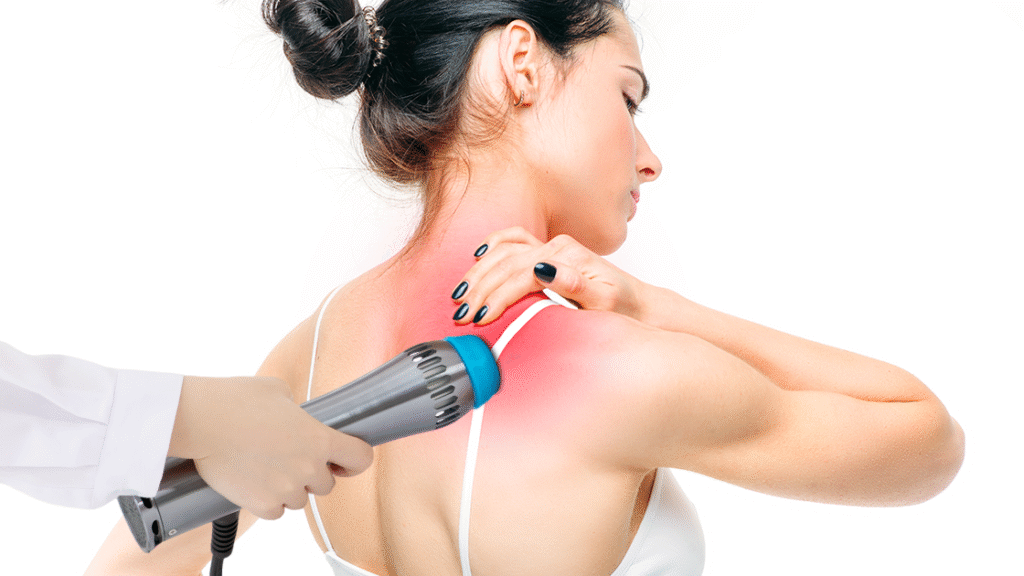
6. When Persistent Shoulder Pain Signals It May Be Time to Consider Technology-Based Therapy Options
Recognizing when conservative recovery strategies are no longer sufficient represents an important step in managing chronic shoulder discomfort effectively.
6.1 Symptoms That Continue Beyond Conservative Care
Persistent symptoms that remain unchanged after rest, stretching programs, or posture adjustments often indicate that tendon structures require additional biological stimulation support. Individuals experiencing discomfort lasting several months without measurable improvement may benefit from professional evaluation of tissue responsiveness. Rehabilitation specialists frequently assess imaging findings and movement mechanics before determining whether technology-supported interventions should be introduced. In these environments, extracorporeal shockwave therapy is commonly considered alongside laser therapy approaches as part of structured programs designed to enhance recovery potential in chronic soft-tissue conditions affecting shoulder mobility and function.
6.2 Shoulder Pain Affecting Work Performance or Sleep Quality
When shoulder discomfort begins interfering with occupational tasks or sleep patterns, the condition has usually progressed beyond mild mechanical irritation. Reduced sleep quality affects hormonal recovery cycles and may further delay tissue repair processes. Similarly, limited shoulder function during work tasks increases compensatory movement patterns that place additional strain on surrounding joints. Rehabilitation professionals often evaluate whether technology-assisted modalities such as shockwave therapy may support biological recovery responses in patients experiencing lifestyle-limiting shoulder discomfort that persists despite activity modification efforts.
6.3 Increasing Interest in Non-Surgical Recovery Approaches
Growing awareness of non-surgical rehabilitation strategies has encouraged more patients to explore conservative technology-supported solutions for chronic musculoskeletal conditions. Shockwave therapy represents one example of an acoustic stimulation modality that continues gaining recognition within multidisciplinary rehabilitation environments. When combined with laser therapy techniques and movement-based interventions, clinicians are able to create integrated recovery strategies that address both mechanical and biological contributors to persistent shoulder discomfort. This trend reflects a broader shift toward structured, evidence-informed rehabilitation pathways designed to improve functional outcomes without reliance on invasive procedures.
FAQ
How long is shoulder pain considered chronic?
Shoulder pain lasting longer than three months or recurring after rest periods is generally considered chronic.
Why does shoulder pain feel worse at night?
Night pain often occurs because pressure increases around irritated tendon structures during side-lying sleep positions.
What shoulder conditions are commonly supported by shockwave therapy?
Rotator cuff irritation, calcific tendinitis, impingement patterns, and frozen shoulder are commonly evaluated in rehabilitation environments using acoustic stimulation technologies.
Who is most likely to experience chronic shoulder tendon problems?
Individuals performing repetitive overhead work, desk-based professionals with posture imbalance, and athletes performing repetitive shoulder movements frequently experience tendon-related discomfort.
Is shockwave therapy commonly used in rehabilitation clinics today?
Yes, many physical therapy and sports medicine environments incorporate shockwave therapy alongside exercise and laser-assisted rehabilitation strategies.
Заключение
Chronic shoulder pain often develops gradually through repeated mechanical stress, tendon overload, and reduced tissue recovery capacity rather than a single injury event. As understanding of soft-tissue biology continues evolving, rehabilitation professionals increasingly integrate non-invasive technologies such as extracorporeal shockwave therapy and photobiomodulation laser therapy into structured recovery environments designed to support tendon adaptation and restore shoulder mobility. Recognizing persistent symptoms early and exploring evidence-informed rehabilitation strategies can play an important role in improving long-term shoulder function and maintaining comfortable participation in daily activities.
Ссылки
Extracorporeal Shockwave Therapy in Musculoskeletal Disorders
https://www.ncbi.nlm.nih.gov/pmc/articles/PMC6029898
Effectiveness of Extracorporeal Shock Wave Therapy in Calcific Tendinitis of the Shoulder
https://pubmed.ncbi.nlm.nih.gov/22992818
Low-Level Laser Therapy in Shoulder Tendinopathy: A Systematic Review
https://pubmed.ncbi.nlm.nih.gov/24842843
Diagnosis and Treatment of Rotator Cuff Tears – American Academy of Orthopaedic Surgeons
https://orthoinfo.aaos.org/en/diseases–conditions/rotator-cuff-tears
Adhesive Capsulitis (Frozen Shoulder) – Clinical Overview