

Introduction
For athletes and active individuals, a minor foot injury is often dismissed as part of the game. A blister that does not heal, a small wound that lingers longer than expected, or a persistent sore spot on the foot can easily be overlooked during a busy training schedule. However, when a wound fails to close within the expected timeframe, it can become a chronic ulcer that disrupts training, affects performance, and raises concerns about long-term foot health. Chronic foot ulcers present a significant challenge in wound healing, particularly when conventional therapies have not produced the desired results. For athletes facing this frustrating situation, extracorporeal shockwave therapy offers a non-invasive, drug-free supportive approach that may help restart the body’s natural healing processes and support recovery.
1. Understanding Chronic Foot Ulcers in Active Individuals
A chronic wound is generally defined as one that fails to progress through the normal stages of healing within the expected timeframe, often persisting for weeks or months despite appropriate care. In athletes and active individuals, foot ulcers can develop from repetitive friction, pressure points from improperly fitting footwear, or minor traumatic injuries that do not receive adequate rest and care. The constant weight-bearing and movement involved in most sports make the feet particularly vulnerable to delayed healing.
1.1 What Makes a Foot Ulcer Chronic
Healthy wound healing follows a predictable sequence of inflammation, proliferation, and remodeling. When this process becomes stalled, a wound may remain trapped in a prolonged inflammatory state. This prolonged inflammation leads to excessive protease activity, degradation of growth factors, and impaired extracellular matrix formation. Fibroblast dysfunction and cellular senescence further compromise the regenerative capacity of the tissue. From a clinical perspective, chronic wounds often present with persistent exudate, fragile granulation tissue, and delayed epithelialization. These characteristics make chronic ulcers difficult to manage with conventional dressings alone.
1.2 Why Athletes Are at Higher Risk
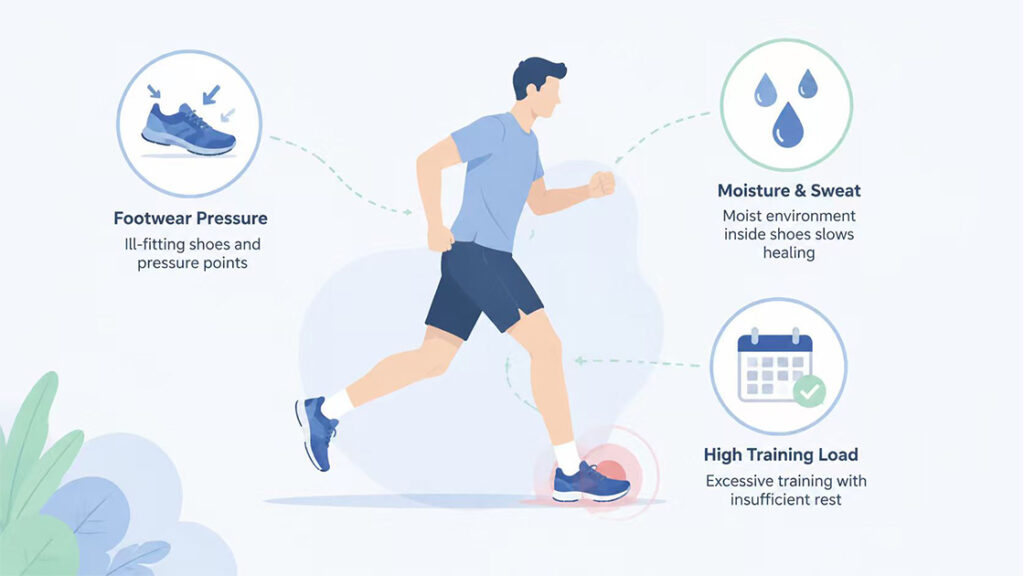
Athletes face unique challenges when it comes to foot wound healing. High training volumes, repetitive pressure on the feet, and the demands of competition often prevent adequate rest. Moist environments inside training shoes can create conditions that slow healing. Athletes may also develop calluses and thickened skin that can mask early signs of tissue breakdown. Additionally, delayed medical consultation is common, as many athletes attempt to continue training despite early signs of trouble. The combination of these factors means that even minor foot wounds can escalate into chronic ulcers if not addressed promptly.
2. How Shockwave Therapy Supports Tissue Healing
Extracorporeal shockwave therapy delivers acoustic waves to targeted tissues through the skin. The mechanical energy from these waves interacts with cells and triggers biological responses that support healing. This approach does not involve incisions, medications, or direct contact with open wounds.
2.1 Stimulating Cellular Activity
When shockwaves reach the tissue surrounding a wound, the mechanical pressure activates mechanotransduction pathways. These pathways convert mechanical signals into biochemical activity. This activation influences the behavior of fibroblasts and other cells involved in tissue repair. The mechanical input may encourage cells to produce growth factors and signaling molecules that are essential for wound healing. The acoustic waves may also temporarily modulate local blood flow, which can support the delivery of oxygen and nutrients to the wound margins.
2.2 Promoting Angiogenesis and Improved Circulation
Shockwave therapy promotes the formation of new blood vessels, a process known as angiogenesis. New capillary networks can improve circulation in tissues surrounding a chronic ulcer. Better blood flow means more oxygen and nutrients reach the wound area, supporting cellular activity and tissue repair. Enhanced circulation also helps remove metabolic waste products that accumulate in chronically inflamed tissues. These vascular effects may create conditions more favorable for the wound to progress through the healing stages.
2.3 Influencing the Inflammatory Environment
Chronic wounds often remain trapped in a prolonged inflammatory state. Shockwave therapy may help modulate this inflammatory environment. The mechanical energy can influence the activity of inflammatory mediators, helping to shift the local environment from a chronic inflammatory state toward a more constructive healing phase. This does not eliminate inflammation entirely but may help bring it into a more balanced range that supports tissue repair.
3. The Role of Shockwave Therapy in Wound Care
Shockwave therapy is not intended to replace standard wound care but rather to complement it. It is best understood as an additional tool that may support the body’s natural healing processes when conventional approaches have not achieved the desired results.
3.1 The Foundation of Standard Wound Care
Basic wound care remains the foundation of chronic ulcer management. This includes appropriate cleansing, debridement of non-viable tissue, infection control, pressure offloading, and the use of appropriate dressings. These measures create the conditions necessary for healing to occur. Shockwave therapy does not replace these essential steps but may be considered when a wound has not responded adequately to standard care.
3.2 Understanding the Supportive Role of Shockwave Therapy
Shockwave therapy is typically considered for chronic ulcers that have shown limited progress with conventional treatment. It is not a first-line therapy but may be offered as an additional option when healing has stalled. The decision to use shockwave therapy involves careful consideration of the individual’s overall health, wound characteristics, and response to previous treatments. A thorough assessment by a healthcare professional is essential to determine whether this approach is appropriate for a specific case.
3.3 Managing Expectations
The goal of shockwave therapy in chronic wound care is to support and accelerate the healing process, not to provide an immediate cure. Healing may occur gradually over several weeks or months. The therapy is most effective when used as part of a comprehensive treatment plan that includes appropriate wound care, pressure management, and attention to overall health and nutrition. Patience and consistency are important, as tissue remodeling takes time.
4. Considerations for Using Shockwave Therapy as a Supportive Tool
When considering shockwave therapy for chronic foot ulcers, several factors help determine whether this approach fits an individual’s situation. Understanding who may benefit and what role the therapy plays supports realistic planning.
4.1 Situations Where Shockwave Therapy May Offer Support
Shockwave therapy may be considered when standard wound care has been followed consistently but the ulcer has shown limited progress toward healing. It may also be considered when other supportive measures have not produced the desired results or when an athlete wishes to explore additional options before considering more invasive interventions. The therapy is not appropriate for all ulcers, and a thorough evaluation helps determine its potential relevance for a specific case.
4.2 Factors That Influence Suitability
Several factors influence whether shockwave therapy may be a suitable supportive option. These include the size and depth of the ulcer, the presence of infection, the individual’s overall health status, and the adequacy of the standard wound care being provided. Proper control of infection and the removal of non-viable tissue are important prerequisites. The therapy is more likely to be considered when these foundational elements have been addressed but the wound remains slow to heal.
4.3 Integrating Shockwave Therapy with Other Supportive Measures
Shockwave therapy works best when combined with other supportive measures that address the factors contributing to delayed healing. These may include nutritional support to provide the building blocks for tissue repair, offloading devices to reduce pressure on the ulcer area, and appropriate wound dressings that maintain a favorable healing environment. When used alongside these measures, shockwave therapy may contribute to a more comprehensive approach to wound management.
5. Long-Term Strategies for Foot Health in Athletes
Preventing foot ulcers from developing or recurring requires attention to daily habits and proactive care.
5.1 Foot Inspection and Early Detection
Regular foot inspection is essential for athletes. Checking the feet daily for signs of redness, swelling, blisters, or areas of tenderness can help detect problems before they become serious. Addressing minor issues promptly can prevent them from escalating into chronic ulcers. Using a mirror to inspect the soles of the feet can be helpful for areas that are difficult to see.
5.2 Proper Footwear and Pressure Management
Ill-fitting shoes are a common cause of foot ulcers in athletes. Proper footwear should provide adequate cushioning and support without creating pressure points. Athletic shoes should be replaced regularly, as worn-out cushioning can increase pressure on the feet. Using orthotic inserts or padding to redistribute pressure can also help reduce the risk of ulcer formation.
5.3 Moisture Control and Skin Care
Keeping the feet dry and clean is important for preventing tissue breakdown. Moisture-wicking socks can help reduce friction and keep the feet dry. Avoiding prolonged exposure to moisture from sweat or wet conditions can help maintain healthy skin. Applying moisturizer to dry areas can prevent cracking, which can become an entry point for infection.
FAQ
Q1: Does shockwave therapy involve direct contact with the wound?
No. The treatment is applied to the tissue surrounding the wound, not directly on the open wound itself.
Q2: How many sessions do I need?
The number varies depending on the wound size and individual response. Some patients notice changes after a few sessions, while others benefit from a longer series.
Q3: Can I continue training during treatment?
Patients should follow their healthcare provider’s advice regarding activity modification during the treatment period.
Q4: How soon will I see improvement?
Improvement often develops gradually over weeks or months. The full benefit may take time to appear as tissue healing progresses.
Q5: Is shockwave therapy suitable for all types of foot ulcers?
A thorough evaluation by a healthcare professional helps determine whether shockwave therapy is appropriate for a specific ulcer type and individual condition.
Conclusion
Chronic foot ulcers can disrupt athletic training, affect performance, and raise concerns about long-term foot health. For athletes who have tried conventional wound care without achieving the desired results, extracorporeal shockwave therapy offers a non-invasive, drug-free supportive option. By stimulating cellular activity, promoting angiogenesis, and modulating inflammation, the therapy may support the body’s natural healing processes and help wounds progress through the healing stages. When combined with standard wound care, pressure management, and attention to overall health, shockwave therapy may help athletes manage their foot ulcers and return to the activities they enjoy.
References
Kang N, Ji X, Yang R, et al. Case report: Shockwave therapy for sports-related chronic foot ulcer. Frontiers in Sports and Active Living. 2025.
https://www.frontiersin.org/articles/10.3389/fspor.2025.1512954/full
Shockwave Therapy for Wound Healing and Tissue Regeneration.
https://www.shockwavemachines.com
Non-Invasive Approaches to Chronic Wound Management in Athletes.
https://www.sportsmed.org/wound-care
Extracorporeal Shockwave Therapy in Dermatology and Wound Care.
https://pubmed.ncbi.nlm.nih.gov/39101450
Extracorporeal shock wave therapy in tissue engineering and regenerative medicine.