

Introduction
Watching your dog struggle to stand up or drag its back legs across the floor is heartbreaking. One moment your furry companion is running and playing, and the next, a spinal cord injury changes everything. Many pet owners fear that surgery is the only option, and when surgery is not possible or too expensive, they feel hopeless. There is another path. Extracorporeal shockwave therapy (ESWT) offers a non-invasive treatment that may help dogs with spinal cord injuries regain movement and improve their quality of life without going under the knife.
1. Understanding Canine Spinal Cord Injuries
Spinal cord injuries in dogs can happen suddenly or develop over time. Knowing what causes these injuries and how they affect your dog helps you understand why shockwave therapy might be a helpful option.
1.1 Common Causes of Spinal Cord Injury in Dogs
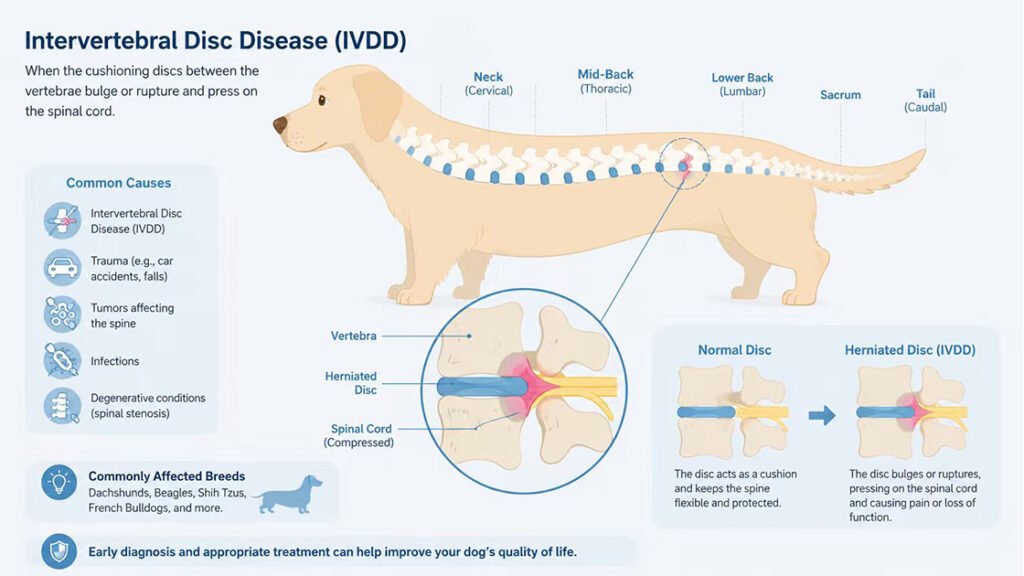
The most frequent cause of spinal cord injury in dogs is intervertebral disc disease (IVDD). This condition occurs when the cushioning discs between the vertebrae bulge or rupture, pressing against the spinal cord. Certain breeds are more prone to IVDD, including Dachshunds, Beagles, Shih Tzus, and French Bulldogs. Other causes include trauma from car accidents or falls, tumors affecting the spine, infections, and degenerative conditions that narrow the spinal canal.
1.2 How Spinal Cord Damage Affects Your Dog
When the spinal cord becomes compressed or damaged, the signals between the brain and the rest of the body get interrupted. Your dog may experience pain, weakness in one or more legs, difficulty walking, or complete paralysis. Some dogs lose bladder and bowel control. The severity depends on how much pressure is on the spinal cord and how long it has been there. Without proper treatment, some dogs may never regain the ability to walk normally again.
1.3 Why Traditional Treatments Have Limits
Conventional treatment for spinal cord injuries in dogs includes strict crate rest, anti-inflammatory medications, pain relievers, and surgery to remove the disc material pressing on the spinal cord. Surgery can be very effective, but it is expensive and not always an option for every family. Some dogs are not good surgical candidates due to age or other health conditions. Recovery from surgery takes weeks or months, and there is always a risk of complications. For many pet owners, finding an effective non-surgical option is a top priority.
2. How Shockwave Therapy Works for Spinal Cord Injuries
Shockwave therapy uses acoustic waves to interact with body tissues. When applied to areas near the spine or over affected limbs, these waves trigger biological responses that may support healing.
2.1 The Science Behind the Sound Waves
Extracorporeal shockwave therapy delivers high-energy sound waves into the body through the skin. These waves create mechanical forces that cells can sense and respond to. Unlike surgical treatments that cut or remove tissue, shockwave therapy stimulates the body’s own healing mechanisms. The waves penetrate through skin and muscle to reach deeper structures without causing damage to surrounding healthy tissue.
2.2 How Shockwaves Reach the Injured Spinal Cord
The shockwaves are applied to the skin over the spine or over the muscles of the affected limbs. The mechanical energy travels through the tissues and reaches the spinal cord area. This non-invasive approach means no incisions, no anesthesia (in most cases), and no recovery time after each session. The treatment is typically well-tolerated, and most dogs remain calm during the procedure. Some animals may need mild sedation if they are very anxious or in significant pain.
2.3 What Happens Inside the Injured Tissues
Research has shown that shockwave therapy can influence several processes that support nerve recovery. Studies in animal models of spinal cord injury have demonstrated functional improvement after shockwave treatment. The therapy appears to affect specific molecules in the body that play roles in nerve protection and repair. Some research indicates that shockwave therapy may increase levels of brain-derived neurotrophic factor (BDNF), a protein that supports the survival of existing neurons and encourages the growth of new connections between them.
2.4 Neuroprotection and Neuroplasticity
Two important concepts help explain how shockwave therapy may help spinal cord injuries. Neuroprotection refers to the ability to protect nerve cells from further damage after an injury. Shockwave therapy may help reduce inflammation and oxidative stress in the injured area, giving nerve cells a better chance of surviving. Neuroplasticity refers to the brain and spinal cord’s ability to reorganize and form new connections. By supporting these natural processes, shockwave therapy may help the nervous system work around the damaged area and restore some function.
3. What to Expect When Treating Your Dog
If you are considering shockwave therapy for your dog with a spinal cord injury, understanding what the treatment involves helps you prepare and set realistic expectations.
3.1 Before the First Session
Your veterinarian will perform a thorough examination of your dog, which may include X-rays, MRI, or CT scan to determine the exact location and severity of the spinal cord injury. They will assess your dog’s current mobility, pain level, and overall health status. Not every dog with a spinal cord injury is a good candidate for shockwave therapy. Your vet will help you understand whether this approach makes sense for your pet’s specific situation.
3.2 The Treatment Experience
During a shockwave session, your dog will lie on a comfortable table. The veterinarian or technician applies a special gel to the skin over the treatment area. The shockwave handpiece is then placed against the skin and activated. Your dog may feel a tapping or pulsing sensation, but the treatment is not typically painful. Each session usually lasts between fifteen and thirty minutes, depending on the size of the area being treated and the specific protocol being used.
3.3 How Many Sessions Your Dog May Need
Treatment protocols for spinal cord injuries vary depending on the severity of the condition and how your dog responds. Some dogs show improvement after just a few sessions, while others may need more extended treatment courses. Your veterinarian will monitor your dog’s progress between sessions and adjust the treatment plan as needed. Many dogs receive shockwave therapy once or twice per week for several weeks. Some may benefit from occasional maintenance sessions after the initial treatment course is complete.
3.4 What Improvements You Might Notice
Every dog responds differently to shockwave therapy. Some owners notice improvements within a few weeks of starting treatment. Your dog may begin putting more weight on previously weak legs. They might stand up more easily from a lying position. Some dogs regain the ability to walk short distances or climb a few steps. Others may show more modest improvements, such as reduced pain or better bladder control. Pay attention to small changes. Each improvement, no matter how small, represents progress toward a better quality of life.
4. How Shockwave Compares to Other Treatment Options
Understanding how shockwave therapy fits alongside other treatments helps you make informed decisions about your dog’s care.
4.1 Shockwave vs. Surgery
Surgery for spinal cord injuries involves opening the spine and removing whatever is pressing on the spinal cord, such as a herniated disc. This can be very effective for dogs with severe compression. However, surgery requires general anesthesia, carries risks of infection and bleeding, and involves a lengthy recovery period. Shockwave therapy is non-invasive, carries minimal risk, and has no recovery time after each session. For dogs who are not surgical candidates or whose owners prefer to avoid surgery, shockwave therapy offers a reasonable alternative to consider.
4.2 Shockwave vs. Medication Alone
Many dogs with spinal cord injuries receive medications such as corticosteroids to reduce inflammation and pain relievers to keep them comfortable. These medications can help manage symptoms, but they do not address the underlying nerve damage. Shockwave therapy works differently by stimulating the body’s own healing processes. Some veterinarians recommend combining medication with shockwave therapy for a more comprehensive approach. The medication helps control pain and inflammation while the shockwave therapy supports nerve recovery.
4.3 Shockwave vs. Physical Therapy
Physical therapy, including exercises, massage, and underwater treadmill work, helps maintain muscle strength and joint flexibility while the nervous system heals. Physical therapy is an important part of recovery for many dogs with spinal cord injuries. Shockwave therapy can complement physical therapy by potentially speeding up the nerve healing process, allowing your dog to get more benefit from rehabilitation exercises. Many rehabilitation veterinarians use both approaches together.
4.4 Shockwave as Part of a Comprehensive Plan
The most successful outcomes often come from combining multiple treatment approaches. Your veterinarian may recommend crate rest to protect the spine, medications to control pain and inflammation, shockwave therapy to support nerve healing, and physical therapy to maintain muscle function. Each component addresses a different aspect of your dog’s condition. Think of shockwave therapy as one tool in a larger toolbox rather than a standalone solution.
5. Practical Advice for Supporting Your Dog’s Recovery
While your dog receives shockwave therapy, there are several things you can do at home to support healing and prevent further injury.
5.1 Managing Rest and Activity
Your veterinarian will give you specific instructions about activity restrictions. In the early stages of recovery, your dog may need strict crate rest to prevent further damage to the spinal cord. This means limiting movement to a small, comfortable crate or confined area. As your dog improves, you may gradually increase activity under your veterinarian’s guidance. Avoid jumping, running, playing rough, or climbing stairs until your vet says it is safe.
5.2 Helping Your Dog with Daily Needs
Dogs with spinal cord injuries often need help with basic activities. You may need to carry your dog outside for bathroom breaks. Using a sling or harness under the belly can help support your dog’s weight while they try to walk. Some dogs need help eating or drinking if they have difficulty standing. Patience is essential. Your dog is not being difficult on purpose. They are doing their best to cope with a challenging situation.
5.3 Monitoring for Progress and Problems
Keep a daily log of your dog’s condition. Note whether they seem more willing to move, whether they can stand for longer periods, and whether they show any signs of pain. Also watch for problems. If your dog seems worse after a treatment, contact your veterinarian. Signs of infection, worsening pain, or new symptoms should never be ignored. Your observations help your veterinarian adjust the treatment plan as needed.
5.4 Maintaining a Positive Environment
Your emotional state affects your dog. Dogs are very sensitive to their owner’s stress and anxiety. Try to stay calm and positive during the recovery process. Spend quiet time with your dog, petting them and speaking in a gentle voice. Even if they cannot run and play, they still need your love and attention. Celebrate small victories. When your dog takes a few steps on their own or stands up without help, let them know they did a good job.
FAQ
Q: Is shockwave therapy painful for dogs?
A: Most dogs tolerate shockwave therapy very well. They may feel a tapping or pulsing sensation, but the treatment is not typically painful. Some dogs need mild sedation if they are very anxious.
Q: How many sessions will my dog need?
A: Treatment protocols vary depending on the severity of the injury. Some dogs show improvement after a few sessions, while others may need more extended treatment. Your veterinarian will monitor your dog’s progress and adjust the plan.
Q: How long does each session take?
A: Each session typically lasts between fifteen and thirty minutes, depending on the size of the treatment area and the specific protocol being used.
Q: Are there any side effects?
A: Side effects are generally mild and temporary. Some dogs may experience mild soreness or bruising at the treatment site, which resolves within a day or two.
Q: Can shockwave therapy replace surgery for my dog?
A: For some dogs, shockwave therapy may help them recover without surgery. However, dogs with severe spinal cord compression may still need surgical intervention. Your veterinarian can help determine the best approach for your pet.
Q: Can my dog take pain medication while receiving shockwave therapy?
A: Some pain medications may interfere with the healing response. Discuss any medications your dog is taking with your veterinarian. They will advise you on which medications are appropriate during treatment.
Q: How soon can I expect to see improvement?
A: Every dog responds differently. Some owners notice improvements within a few weeks. Others see more gradual progress over several months. Consistency with treatment and following your veterinarian’s recommendations are key factors.
Conclusion
A spinal cord injury does not have to mean the end of an active, happy life for your dog. Extracorporeal shockwave therapy offers a non-invasive treatment option that may help support nerve healing and functional recovery. By delivering acoustic waves to the injured area, this therapy stimulates the body’s natural repair mechanisms, potentially improving mobility and reducing pain without surgery or heavy medication. For pet owners who want to explore alternatives to surgery or who need additional support for their dog’s recovery, shockwave therapy represents a reasonable option to discuss with a qualified veterinarian.
References
- Effects of Extracorporeal Shockwave Therapy on Functional Recovery after Spinal Cord Contusion Injury. Biomedicines.
https://oula.finna.fi/PrimoRecord/pci.cdi_doaj_primary_oai_doaj_org_article_56f9392e3da3444fbb91ef1055a8d1f1 - Extracorporeal Shockwave Therapy for Spinal Cord Injury: Mechanisms and Applications. Opus Technikum Wien.
https://opus.technikum-wien.at/solrsearch/index/search/searchtype/authorsearch/author/Michael+Mock/rows/50/start/0 - Shockwave Therapy in Veterinary Rehabilitation: A Review of Current Evidence. Frontiers in Veterinary Science.
https://www.frontiersin.org/journals/veterinary-science - Intervertebral Disc Disease in Dogs: Diagnosis and Treatment Options. American College of Veterinary Surgeons.
https://www.acvs.org/small-animal/intervertebral-disc-disease