

Introduction
Cheerleading combines strength, flexibility, balance, and explosive movement patterns that require athletes to repeatedly perform jumps, landings, lifts, and dynamic body control. These movements place continuous demands on muscles, tendons, and connective tissues, especially around the lower limbs and joints. Cheerleaders often focus on maintaining performance quality while managing the physical stress associated with repetitive training. Shockwave Therapy, also known as Extracorporeal Shock Wave Therapy (ESWT), has gained attention in sports rehabilitation and wellness environments as a technology that uses acoustic waves to support targeted areas of the body. When combined with proper training techniques, recovery routines, and professional guidance, shockwave therapy may become part of a comprehensive approach for supporting mobility, tissue comfort, and athletic recovery.
1. Understanding the Physical Demands of Cheerleading
Cheerleading requires a combination of athletic skills that place unique demands on the body. Unlike many traditional sports, cheerleaders often perform repeated explosive movements while maintaining precise coordination and body control.
1.1 The Impact of Repetitive Jumping and Landing Movements
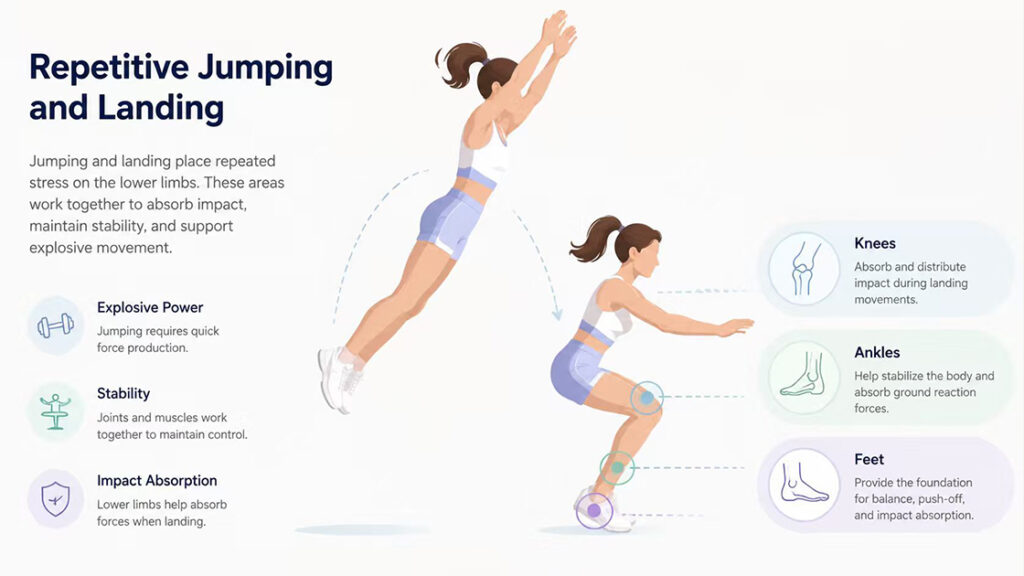
Jumping and landing are essential components of cheerleading routines. These movements require rapid force production and controlled absorption when the body returns to the ground. Repeated jumping patterns may place continuous stress on areas such as the knees, ankles, calves, and feet.
Cheerleaders often focus on maintaining:
- proper landing mechanics
- lower limb stability
- flexibility
- movement control
Understanding these physical requirements helps explain why recovery strategies are an important part of cheerleading training programs.
1.2 Common Areas of Physical Stress in Cheerleading Training
Cheerleading involves multiple movement patterns, including tumbling, stunts, jumps, and lifts. Each activity requires different muscle groups to work together.
Areas commonly involved during training include:
- knee structures during landing movements
- ankle and foot areas during impact absorption
- calf muscles during jumping actions
- hip muscles during flexibility and balance movements
Because cheerleading requires both power and precision, athletes often pay close attention to maintaining overall movement quality.
2. Exploring Shockwave Therapy Technology in Sports Recovery
Shockwave Therapy is a non-invasive technology that uses acoustic wave energy to target specific areas of the body. It is widely discussed in sports rehabilitation settings because of its application in supporting soft tissue management and mobility-focused recovery programs.
2.1 How Shockwave Therapy Supports Athletic Recovery Approaches
Shockwave Therapy delivers mechanical energy through controlled acoustic waves. These waves interact with targeted tissues and are commonly incorporated into professional recovery programs.
In sports environments, shockwave therapy may be considered to support:
- tissue comfort
- mobility improvement
- recovery routines
- preparation between training sessions
The technology is generally used as part of a broader approach that may include exercise planning, stretching, strength training, and movement education.
2.2 The Role of Acoustic Wave Technology for Active Athletes
Athletes often experience physical demands caused by repetitive training cycles. Acoustic wave technology provides another option for professionals who are exploring modern recovery methods.
For cheerleaders, targeted shockwave applications may focus on areas involved in jumping and landing activities, helping support personalized recovery plans based on training needs and physical condition.
3. Shockwave Therapy Applications for Jumping and Landing Recovery
Jumping and landing require coordinated movement between muscles, tendons, and joints. Because cheerleaders frequently repeat these actions, recovery strategies often focus on areas involved in explosive movements.
3.1 Supporting Lower Limb Mobility After High-Impact Training
The lower limbs play an important role in cheerleading performance. The ankles, knees, and surrounding muscles help absorb impact and create power during jumps.
Shockwave Therapy may be included in recovery routines that focus on:
- maintaining movement comfort
- supporting flexibility
- improving mobility-focused care
By combining technology with proper movement habits, athletes can develop a more balanced approach to managing training demands.
3.2 Supporting Tendon and Soft Tissue Management
Tendons and connective tissues help transfer force during athletic movements. Cheerleaders rely on these structures during jumping, landing, and rapid changes in direction.
Shockwave Therapy is often explored in professional settings as part of soft tissue management strategies. It can be combined with strength programs and mobility exercises to support athletes who regularly participate in repetitive movement activities.
4. The Importance of Recovery Strategies for Cheerleaders
A successful cheerleading program requires more than skill development. Recovery planning also plays an important role in helping athletes maintain consistent training quality.
4.1 Balancing Training Intensity and Recovery Needs
Cheerleaders often follow demanding training schedules that include repeated practice sessions and performance preparation. Managing training intensity is important for maintaining physical readiness.
A balanced recovery approach may include:
- appropriate rest periods
- flexibility training
- strength conditioning
- professional recovery support
Shockwave Therapy may serve as one component within a complete recovery strategy designed around individual athletic goals.
4.2 Combining Shockwave Therapy With Movement Preparation
Technology-based recovery methods work best when combined with healthy movement practices. Before and after training, cheerleaders often focus on warm-up routines, mobility exercises, and proper technique.
Integrating Shockwave Therapy into a broader sports recovery plan allows athletes and professionals to consider multiple factors affecting performance, including movement patterns, training volume, and physical condition.
5. Shockwave Therapy and Modern Cheerleading Recovery Approaches
As sports technology continues to develop, more athletes and coaches are exploring advanced recovery methods that complement traditional training practices. For cheerleaders, maintaining movement quality is essential because routines require strength, coordination, flexibility, and repeated explosive actions.
5.1 Supporting Performance Demands in Competitive Cheerleading
Competitive cheerleading requires athletes to perform complex movements under physically demanding conditions. Jumps, tumbling sequences, and partner-based stunts all require strong coordination between different muscle groups.
Shockwave Therapy may be considered as part of a professional recovery approach that focuses on:
- maintaining muscle comfort
- supporting mobility routines
- managing physical stress from repetitive movements
By combining recovery technology with proper training methods, cheerleaders can create a more structured approach to handling the demands of their sport.
5.2 The Role of Technology in Long-Term Athletic Wellness
Modern athletes increasingly pay attention to long-term physical maintenance rather than only focusing on performance during competitions. Recovery strategies are becoming an important part of sports preparation.
For cheerleaders, technology such as Shockwave Therapy may provide additional support when combined with:
- strength and conditioning programs
- flexibility exercises
- movement technique improvement
- professional recommendations
A comprehensive approach helps athletes consider both performance goals and overall physical wellness.
6. Understanding How Shockwave Therapy Fits Into Cheerleading Training Programs
Cheerleading involves unique physical challenges that require personalized approaches. Each athlete may have different training levels, movement patterns, and recovery needs.
6.1 Personalized Recovery Planning for Cheer Athletes
A personalized recovery plan considers factors such as training frequency, routine difficulty, and areas exposed to repeated stress.
Professionals may evaluate:
- movement patterns
- flexibility levels
- muscle condition
- training workload
Shockwave Therapy can be considered as one option within these individualized plans, allowing recovery strategies to match the specific needs of each athlete.
6.2 Supporting a Balanced Approach Between Performance and Recovery
Athletic success depends not only on improving skills but also on maintaining healthy training habits. Cheerleaders need to balance intense practice with appropriate recovery methods.
Combining Shockwave Therapy with proper conditioning and movement awareness may help create a more complete approach to sports wellness. The goal is to support athletes as they continue developing strength, coordination, and confidence in their routines.
FAQ
What is Shockwave Therapy?
Shockwave Therapy uses acoustic wave energy to target specific body areas and is commonly used in sports recovery settings.
Why might cheerleaders consider Shockwave Therapy?
Cheerleaders perform repeated jumping, landing, and high-intensity movements, so recovery support is an important part of training.
Which areas are commonly considered for cheerleading recovery?
Common areas include the knees, ankles, calves, feet, and other regions involved in jumping and landing movements.
Can Shockwave Therapy replace training recovery methods?
No. It is generally used as a complementary approach alongside proper training, mobility exercises, and professional guidance.
Is Shockwave Therapy only for professional cheerleaders?
No. Different athletes may explore recovery approaches based on their individual training demands and physical needs.
Conclusion
Cheerleading requires a unique combination of explosive power, flexibility, balance, and movement control. Because jumping and landing actions place continuous demands on the lower limbs and soft tissues, recovery strategies are an important part of maintaining athletic readiness. Shockwave Therapy provides a technology-based option that may support mobility, tissue comfort, and recovery routines when combined with proper training methods. By integrating modern recovery technologies with strength conditioning, movement preparation, and professional guidance, cheerleaders can explore a more comprehensive approach to managing the physical challenges of their sport.
References
Extracorporeal Shock Wave Therapy in Musculoskeletal Disorders: A Review
https://www.ncbi.nlm.nih.gov/pmc/articles/PMC4743666
Shock Wave Therapy in Sports Medicine: Current Concepts and Applications
https://www.ncbi.nlm.nih.gov/pmc/articles/PMC6125907
Extracorporeal Shock Wave Therapy for Tendinopathies and Soft Tissue Conditions
https://www.ncbi.nlm.nih.gov/pmc/articles/PMC8899948
The Effects of Exercise and Recovery Strategies in Athletic Performance
https://www.ncbi.nlm.nih.gov/pmc/articles/PMC6988101
Sports Injury Prevention and Rehabilitation Approaches for Young Athletes