

Introduction
Cross-country running requires continuous physical effort, strong endurance, and repeated impact management over different terrains. Unlike short-distance sports, endurance running places long-term demands on muscles, tendons, joints, and connective tissues. Many runners and sports rehabilitation professionals are exploring advanced recovery technologies to support training consistency and physical comfort. Shockwave therapy, also known as extracorporeal shockwave therapy (ESWT), has become an important technology in sports rehabilitation because it uses acoustic wave energy to stimulate targeted areas and support natural tissue responses. With adjustable energy levels and different application modes, modern shockwave therapy systems provide sports professionals with another option for developing personalized recovery strategies for endurance athletes.
1. Understanding the Physical Demands of Cross-Country Running
Cross-country running challenges athletes through uneven surfaces, changing elevations, and long training distances. Compared with controlled running environments, trail conditions require continuous adaptation from muscles and joints, making recovery management an important part of an athlete’s training routine.
1.1 Why Endurance Runners Need Specialized Recovery Support
Long-distance runners experience repeated mechanical loading during every training session. Each running step creates impact forces that travel through the lower body, requiring coordination between muscles, tendons, ligaments, and joints.
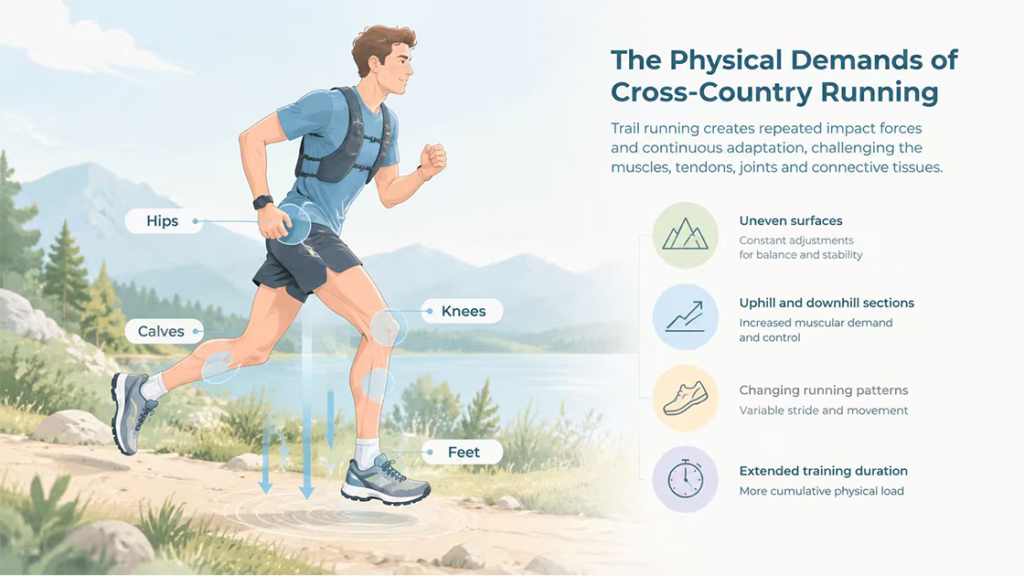
Trail runners often face additional challenges because outdoor environments may include:
- uneven ground surfaces
- uphill and downhill sections
- changing running patterns
- extended training duration
These factors can increase physical demands on areas such as the calves, feet, knees, hips, and lower back.
For endurance athletes, maintaining training consistency requires more than improving cardiovascular ability. Professional runners often combine strength training, mobility exercises, recovery routines, and sports rehabilitation technologies to support overall performance goals.
Shockwave therapy for runners has gained attention as one of the technologies used in sports medicine environments because it delivers acoustic wave energy to targeted areas while allowing professionals to customize application settings.
1.2 Common Areas of Concern for Trail Runners
Because cross-country running involves repetitive movement and impact, athletes often pay attention to areas that experience frequent loading.
Commonly monitored areas include:
- Achilles region
- calf muscles
- plantar area
- knee structures
- hip muscles
Trail running can create additional physical challenges because athletes must constantly adjust their stride and balance according to terrain changes.
For example, downhill running requires greater control from lower-body muscles, while uphill running increases muscular demand. Over time, these repeated movements make recovery planning an important part of endurance training.
Shockwave therapy is often considered within comprehensive sports rehabilitation programs that include professional assessment, exercise planning, and mobility management.
1.3 The Growing Role of Sports Rehabilitation Technology
Modern sports performance is no longer focused only on training intensity. Many athletes and coaches now recognize the importance of recovery strategies in maintaining long-term participation.
Sports rehabilitation technology continues to develop with solutions designed to support:
- tissue recovery management
- mobility improvement
- athletic preparation
- training balance
Shockwave therapy machines have become increasingly discussed in sports clinics because they provide adjustable acoustic energy delivery and can be integrated into professional rehabilitation workflows.
Different shockwave systems may include radial and focused shockwave options, allowing professionals to consider different application approaches based on athlete needs and training conditions.
2. How Shockwave Therapy Works for Endurance Athlete Recovery
Shockwave therapy uses acoustic wave energy to interact with targeted areas of the body. Unlike traditional massage or manual techniques, shockwave technology delivers controlled mechanical energy through specialized applicators.
2.1 The Science Behind Extracorporeal Shockwave Therapy (ESWT)
Extracorporeal shockwave therapy (ESWT) was originally developed from medical applications involving acoustic wave technology and later expanded into musculoskeletal rehabilitation.
During a shockwave therapy session, a device generates mechanical pressure waves that travel into targeted tissue areas. These waves may influence biological responses and support natural recovery processes.
Modern shockwave therapy systems generally include adjustable settings such as:
- energy intensity
- frequency
- number of pulses
- treatment modes
These adjustments allow sports professionals to customize applications according to individual training demands and rehabilitation objectives.
For endurance runners, this flexibility is valuable because athletes may have different training volumes, body conditions, and performance goals.
2.2 Radial and Focused Shockwave Technology in Sports Applications
Shockwave therapy systems commonly use two main approaches: radial shockwave and focused shockwave technology.
Radial shockwave delivers energy outward from the applicator and is often used for broader treatment areas involving muscles and soft tissues.
Focused shockwave directs acoustic energy toward deeper target areas, allowing professionals to consider more specific applications.
For endurance athletes, the choice between different shockwave approaches depends on factors such as:
- target area
- tissue depth
- rehabilitation goals
- professional evaluation
By selecting appropriate parameters, sports professionals can incorporate shockwave therapy into individualized recovery programs.
2.3 Why Runners Explore Shockwave Therapy During Training Cycles
Endurance training usually follows structured cycles that include increasing mileage, speed sessions, and competition preparation.
During intensive training periods, runners often focus on maintaining mobility and physical readiness.
Shockwave therapy may be included as part of a broader recovery strategy because it provides a non-invasive technology option that can complement:
- stretching programs
- strength training
- mobility exercises
- professional rehabilitation guidance
For runners preparing for long-distance events, recovery management is an important factor in maintaining consistent training routines.
3. Shockwave Therapy Applications for Cross-Country Runners
Endurance athletes often require structured recovery plans because running places repeated demands on muscles, tendons, and connective tissues. Shockwave therapy has become a technology explored in sports rehabilitation settings because it can provide targeted acoustic wave energy while allowing professionals to adjust treatment parameters based on individual athlete needs. Studies have investigated extracorporeal shockwave therapy (ESWT) in runners with different musculoskeletal concerns, including tendon-related conditions and running-associated overuse problems.
3.1 Supporting Tendon and Soft Tissue Recovery During Training
Tendons play an important role in running performance because they transfer force between muscles and bones. During endurance training, repetitive loading may place significant demands on areas such as the Achilles region, patellar tendon, and surrounding soft tissues.
Shockwave therapy for runners is often considered as part of a professional rehabilitation approach because acoustic wave energy can be directed toward specific areas of concern. Sports professionals may combine shockwave applications with exercise programs, mobility training, and strength development.
For trail runners, maintaining tendon flexibility and movement quality is especially important because uneven terrain requires continuous adjustment of stride patterns. A personalized recovery approach allows athletes to balance training demands while supporting long-term running goals.
Research involving runners has explored radial and combined shockwave approaches for tendon-related conditions, showing continued interest in ESWT as part of sports rehabilitation strategies.
3.2 Supporting Lower Limb Recovery for Trail Running Demands
The lower body experiences significant workload during cross-country running. The feet, calves, knees, and hips work together to maintain stability, absorb impact, and adapt to changing surfaces.
Trail runners frequently encounter different environmental challenges, including:
- uneven trails
- elevation changes
- longer distances
- variable running speeds
These factors require strong coordination between muscles and joints.
Shockwave therapy may be included in recovery programs designed around lower limb support. By using adjustable energy settings, professionals can consider different application areas and create rehabilitation plans that match an athlete’s physical condition.
Some research has explored ESWT applications in runners with lower leg conditions, including medial tibial stress syndrome, highlighting the continued interest in shockwave technology within sports medicine.
3.3 Shockwave Therapy During Competition Preparation
Preparing for endurance competitions requires careful management of training volume and recovery periods. Marathon runners, trail runners, and ultra-distance athletes often follow structured schedules that include high-mileage training and performance preparation.
During intensive periods, athletes may work with sports professionals to develop recovery strategies that support consistent training.
Shockwave therapy can become part of these strategies by providing a technology-based option alongside:
- physical rehabilitation
- stretching routines
- strength exercises
- movement assessment
The purpose of incorporating shockwave therapy is not to replace training principles but to complement professional recovery planning.
For endurance athletes, maintaining physical readiness throughout long training cycles is often a key factor in achieving sustainable performance goals.
4. Integrating Shockwave Therapy Into Modern Running Recovery Programs
Sports rehabilitation continues to move toward personalized approaches that consider an athlete’s training style, physical condition, and performance objectives. Shockwave therapy machines provide professionals with adjustable settings that can support different rehabilitation environments, from sports clinics to athletic training facilities.
4.1 Combining Shockwave Therapy With Exercise-Based Rehabilitation
Exercise remains an essential part of endurance athlete development. Strength training, mobility exercises, and running-specific conditioning all contribute to athletic performance.
Shockwave therapy is commonly considered as a complementary technology rather than a replacement for exercise-based rehabilitation.
A comprehensive running recovery program may combine:
- movement assessment
- progressive exercise plans
- mobility training
- recovery technology
This combination allows professionals to focus on both short-term recovery needs and long-term athletic development.
Research continues to examine how ESWT may work alongside exercise-based approaches for runners, particularly in tendon-related rehabilitation settings.
4.2 Choosing the Right Shockwave Technology for Sports Clinics
Different athletes have different recovery requirements, which makes equipment selection an important consideration for sports clinics.
Modern shockwave therapy systems may offer features such as:
- adjustable pressure levels
- different frequency settings
- radial or focused shockwave options
- customizable treatment programs
For endurance athletes, professionals may consider factors such as training intensity, target area, and rehabilitation objectives when selecting appropriate settings.
Sports clinics that work with runners often look for technology that can support a wide range of applications, from recreational athletes to competitive endurance runners.
4.3 The Growing Demand for Sports Recovery Technology
The growth of recreational running, marathon events, and trail competitions has increased interest in professional recovery solutions.
Many runners now focus not only on improving speed and endurance but also on maintaining consistent participation over time.
Shockwave therapy represents one example of how sports medicine continues to integrate advanced technology into athlete care.
As rehabilitation technology develops, more sports professionals are exploring ways to combine traditional training methods with modern therapeutic equipment.
5. The Future of Shockwave Therapy in Endurance Sports
The endurance sports industry continues to evolve as athletes seek more personalized approaches to training and recovery. Shockwave therapy technology is expected to remain an area of interest because of its applications in sports rehabilitation and musculoskeletal care.
5.1 Advancements in Shockwave Therapy Technology
Future shockwave therapy systems may continue improving through:
- more precise energy control
- enhanced treatment customization
- improved clinical workflow
- advanced application techniques
For sports professionals, technology that allows greater flexibility can help create more individualized rehabilitation programs.
As research continues, shockwave therapy may become increasingly integrated into sports medicine environments focused on athlete support and performance management.
5.2 Supporting the Next Generation of Endurance Athletes
Modern endurance training requires a balance between performance improvement and physical maintenance.
Whether athletes participate in trail races, marathons, or recreational running, recovery strategies play an important role in long-term training plans.
Shockwave therapy provides sports professionals with another tool to consider when developing comprehensive athlete support programs.
By combining advanced rehabilitation technology with proper training, recovery planning, and professional guidance, endurance runners can continue exploring new ways to support their athletic journey.
FAQ
What is shockwave therapy for runners?
It uses acoustic wave energy to support sports rehabilitation programs focused on muscle, tendon, and soft tissue recovery.
Why do endurance runners consider shockwave therapy?
Runners may explore shockwave therapy as part of recovery programs designed to support mobility, tissue function, and training consistency.
What is the difference between radial and focused shockwave therapy?
Radial shockwave spreads energy over a broader area, while focused shockwave delivers energy toward deeper targeted areas.
Can shockwave therapy replace running training?
No. It is a complementary technology and should be combined with proper training, exercise, and professional guidance.
Is shockwave therapy only for professional runners?
No. It may be considered by recreational runners, endurance athletes, and sports rehabilitation professionals.
Conclusion
Shockwave therapy has become an increasingly recognized technology in endurance sports rehabilitation, offering runners and sports professionals another option for supporting recovery programs. For cross-country runners who experience repeated physical demands from long-distance training and changing terrain, shockwave therapy may complement traditional rehabilitation methods by providing targeted acoustic wave energy and customizable application options. By combining shockwave technology with structured training, mobility exercises, and professional assessment, endurance athletes can develop more comprehensive approaches to maintaining physical readiness and supporting long-term running goals.
References
Extracorporeal Shockwave Therapy Is Associated With Similar Functional Outcomes for Male and Female Runners With Patellar or Quadriceps Tendinopathy: A Pilot Investigation
https://pubmed.ncbi.nlm.nih.gov/40297096
Shockwave Treatment for Medial Tibial Stress Syndrome in Athletes: A Prospective Controlled Study
https://pubmed.ncbi.nlm.nih.gov/21393260
Exercise, Radial Pressure Waves, and Photobiomodulation for Management of Non-Insertional Achilles Tendinopathy in Runners
https://pmc.ncbi.nlm.nih.gov/articles/PMC12506102
The Role of Extracorporeal Shockwave Therapy in Return to Competition for Endurance Runners
https://pubmed.ncbi.nlm.nih.gov/31411811
Outcomes Using Focused Shockwave for Treatment of Bone Stress Injury in Runners