

Introduction
Florists rely on detailed hand movements, creative precision, and long hours of standing to design arrangements and manage daily floral work. From cutting stems and preparing flowers to creating complex designs, many tasks require repetitive wrist, hand, and upper limb movements. This article explores how Shockwave Therapy technology relates to the physical demands of florists and how it can be considered as part of a professional wellness approach for individuals working in floral design environments.
1. Understanding the Physical Demands of Floristry Work
Floristry combines artistic creativity with physically demanding tasks. Behind every arrangement is continuous hand control, tool handling, and body movement. Understanding these occupational demands helps explain why florists may pay attention to hand, wrist, and upper limb wellness.
1.1 Repetitive Hand Movements in Daily Floral Design
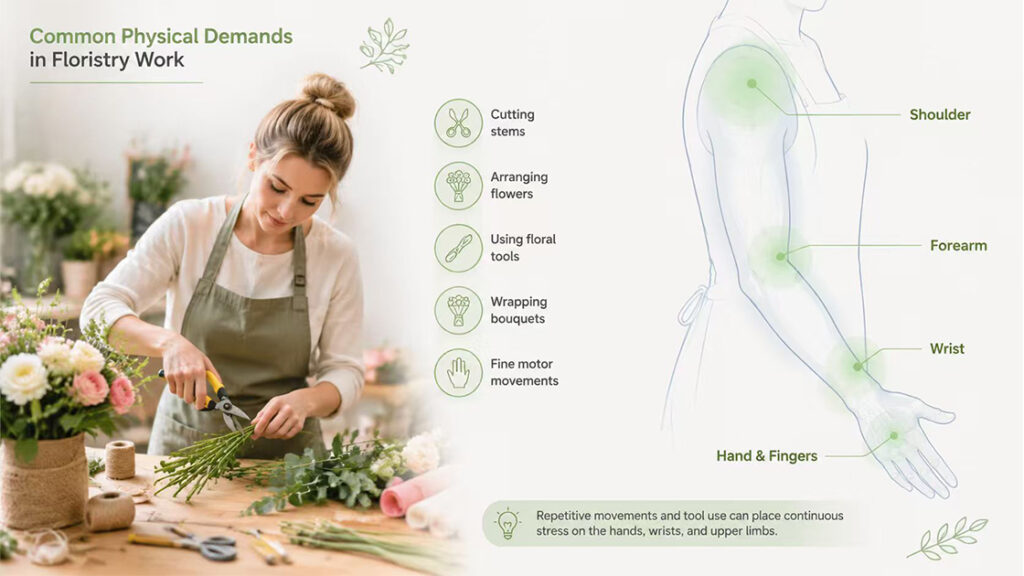
Florists frequently perform repeated tasks such as cutting stems, arranging flowers, wrapping bouquets, and handling small decorative elements. These activities require continuous finger coordination and wrist movement.
Over time, repeated fine motor activities can increase physical demands on the hands and forearms, especially during busy seasons or large event preparations.
1.2 The Impact of Tool Use on Florist Wellness
Professional florists regularly use tools such as floral scissors, cutters, and wires. These tools require gripping strength and controlled movements.
Long periods of tool handling may influence how florists manage their hand and wrist comfort during daily work.
1.3 Standing, Bending, and Upper Body Demands in Floral Studios
In addition to hand movements, florists often spend many hours standing, bending, reaching, and moving between workstations.
These combined physical activities create a unique occupational environment that requires attention to overall body wellness.
2. Exploring Shockwave Therapy Technology in Occupational Wellness
Shockwave Therapy has gained attention in professional wellness and rehabilitation environments due to its use of acoustic wave technology. Understanding how this technology works helps explain its potential role in supporting individuals with physically demanding occupations.
2.1 What Is Shockwave Therapy?
Shockwave Therapy uses controlled acoustic waves delivered through specialized equipment. These waves are applied to targeted body areas according to professional assessment and individual needs.
The technology is commonly discussed in relation to musculoskeletal wellness and professional recovery settings.
2.2 How Shockwave Therapy Technology Supports Targeted Applications
Different occupations create different physical demands. For florists, areas such as hands, wrists, forearms, and shoulders may receive greater attention due to repetitive creative tasks.
Shockwave Therapy allows professionals to focus on specific areas based on activity patterns and wellness goals.
2.3 Why Advanced Recovery Technology Matters for Creative Professionals
Creative professionals often depend on their physical abilities to maintain productivity. Technologies such as Shockwave Therapy provide another option for wellness programs designed around occupational demands.
3. Shockwave Therapy for Florists: Supporting Hand and Upper Limb Wellness
Florists depend heavily on precise movement and hand coordination. A professional wellness approach may include multiple strategies, with Shockwave Therapy technology being one possible component.
3.1 Supporting Hand Comfort During Floral Arrangement Tasks
Creating floral designs requires detailed finger movements, gripping, and repeated cutting actions.
Shockwave Therapy may be considered within a broader wellness routine that focuses on supporting areas frequently involved in floral arrangement work.
3.2 Supporting Wrist and Forearm Wellness for Tool-Based Activities
Floral tools require continuous wrist control and forearm engagement.
Professional applications of Shockwave Therapy may focus on areas involved in repetitive tool use as part of an individualized wellness approach.
3.3 Supporting Shoulder and Upper Body Comfort in Floral Workspaces
Florists often reach, lift supplies, and maintain standing positions while working.
A comprehensive wellness plan may consider both upper limb and overall movement patterns.
4. How Florists Can Combine Shockwave Therapy With Workplace Wellness Strategies
Technology works best when combined with healthy work habits. Florists can consider multiple approaches to support long-term occupational wellness.
4.1 Creating Better Workstation Habits
A well-organized floral workspace may help reduce unnecessary physical demands.
Adjusting tool placement, maintaining comfortable working positions, and organizing workflow can support more efficient daily tasks.
4.2 Balancing Creative Work With Recovery Periods
Busy floral seasons often require extended working hours. Scheduling appropriate breaks and maintaining balanced routines can help florists manage physical workload.
Shockwave Therapy may be included as part of a professional wellness strategy during periods of increased activity.
4.3 Choosing Professional Wellness Technologies for Occupational Needs
Different professions require different wellness approaches.
For florists, technologies that focus on targeted body areas may provide additional options for supporting their unique work demands.
5. The Future of Shockwave Therapy in Creative Professional Wellness
As more industries recognize the importance of occupational wellness, creative professions such as floral design are also receiving more attention. Technology-based wellness solutions may continue to become part of professional care strategies.
5.1 Growing Interest in Occupational Wellness for Specialized Careers
Many creative careers involve repeated movements and unique physical requirements.
Understanding these demands helps develop more personalized wellness approaches for professionals who depend on their hands and movement abilities.
5.2 The Role of Shockwave Therapy Technology in Modern Wellness Programs
Advanced technologies continue to expand options within rehabilitation and wellness fields.
Shockwave Therapy may continue to attract interest among professionals seeking supportive solutions for physically demanding creative careers.
FAQ
What physical challenges do florists commonly experience?
Florists often perform repetitive hand movements, use tools frequently, and spend long periods standing during daily work.
How is Shockwave Therapy related to florist wellness?
Shockwave Therapy is a technology used in professional wellness settings that may be considered as part of a broader approach to supporting musculoskeletal comfort.
Which areas may florists focus on?
Florists may pay attention to hands, wrists, forearms, shoulders, and other areas involved in floral design activities.
Can Shockwave Therapy replace proper workplace habits?
No. Ergonomic practices, rest periods, and professional guidance remain important parts of occupational wellness.
Is Shockwave Therapy suitable for all florists?
Individual needs vary, and professional evaluation is recommended when considering wellness technologies.
Conclusion
Floristry is a creative profession that requires precision, endurance, and continuous physical involvement. From detailed hand movements to long periods of standing and tool use, florists face unique occupational demands. Shockwave Therapy represents one technology option that can be incorporated into broader wellness strategies designed around the needs of creative professionals. By combining advanced wellness technologies with proper workplace habits and balanced routines, florists can explore additional ways to support their long-term professional performance.
References
Extracorporeal Shock Wave Therapy in Musculoskeletal Disorders: A Review
https://pubmed.ncbi.nlm.nih.gov/30115876
Shockwave Therapy: Biological Mechanisms and Clinical Applications
https://pubmed.ncbi.nlm.nih.gov/31162022
The Role of Extracorporeal Shock Wave Therapy in Soft Tissue Rehabilitation
https://www.ncbi.nlm.nih.gov/pmc/articles/PMC4743666
Occupational Health and Musculoskeletal Wellness Among Manual Workers
https://pubmed.ncbi.nlm.nih.gov/32723714
Extracorporeal Shock Wave Therapy: Current Perspectives and Future Directions