

Introduction
Tattoo artists combine creativity, precision, and physical control to create detailed artwork on the skin. However, the profession also requires long periods of concentrated work, repeated hand movements, and static body positions that may place continuous stress on the wrists, forearms, shoulders, and neck. Holding tattoo equipment for extended sessions, maintaining visual focus, and performing highly repetitive movements can contribute to muscle fatigue and soft tissue discomfort over time. Shockwave Therapy, also known as extracorporeal shock wave therapy (ESWT), is an advanced rehabilitation approach that uses acoustic waves to support soft tissue recovery, circulation, and musculoskeletal function. For tattoo professionals, this technology may become part of a broader wellness and recovery strategy designed to support physical comfort and long-term career sustainability.
1. Understanding the Physical Challenges of Tattoo Artists
Tattooing requires both artistic skill and physical endurance. Unlike many creative professions, tattoo artists rely on continuous hand control and precise movements for hours, making physical condition an important part of maintaining professional performance.
1.1 Repetitive Hand Movements and Wrist Stress in Tattoo Work
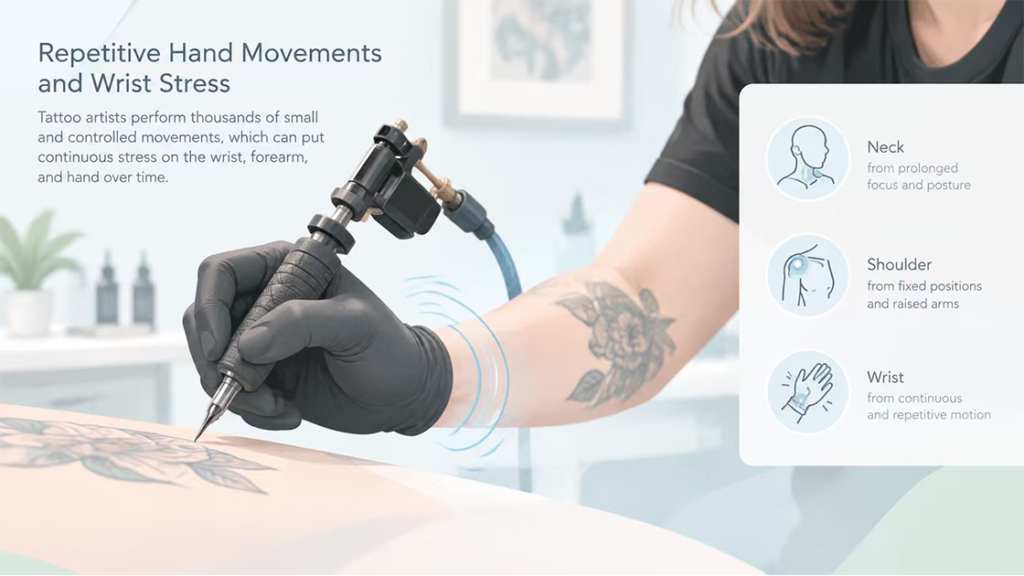
Tattoo artists perform thousands of small and controlled movements during a single session. The continuous operation of tattoo machines requires stable grip strength, wrist coordination, and fine motor control.
Repeated wrist movements may increase stress around muscles, tendons, and connective tissues of the forearm and hand. Over time, artists may experience stiffness, fatigue, or discomfort related to repetitive use.
The wrist and hand contain complex structures that work together to maintain precision. Tendons help transfer force between muscles and bones, while small stabilizing muscles support controlled movement. Maintaining healthy movement patterns is important for professionals who depend on their hands every day.
1.2 Shoulder and Neck Strain From Static Working Positions
Tattoo artists often maintain fixed postures to achieve accurate designs. During long tattoo sessions, artists may lean forward, raise their arms, or keep their shoulders in a stable position for extended periods.
These working habits can create continuous demand on:
- Shoulder muscles
- Upper back tissues
- Neck structures
- Postural stabilizers
Static positions reduce natural movement variety, which may contribute to muscle tension and reduced comfort. Proper ergonomic positioning, regular movement breaks, and recovery strategies can help support better physical management.
1.3 The Importance of Recovery for Tattoo Professionals
A tattoo artist’s hands and upper body are essential professional tools. Supporting recovery is not only related to comfort but also to maintaining consistent movement quality and professional longevity.
Modern recovery approaches often combine stretching, strengthening exercises, ergonomic adjustments, and supportive technologies. Shockwave Therapy can be considered as one component within a comprehensive approach focused on soft tissue support and musculoskeletal recovery.
2. How Shockwave Therapy Supports Soft Tissue Recovery
Shockwave Therapy uses controlled acoustic waves to deliver mechanical energy into targeted tissues. The technology is commonly explored in rehabilitation settings for supporting tendon health, soft tissue recovery, and movement-related concerns.
2.1 Understanding Extracorporeal Shock Wave Therapy (ESWT)
Extracorporeal Shock Wave Therapy, commonly called ESWT, uses high-energy sound waves delivered from outside the body. These acoustic waves interact with targeted areas and may support biological responses related to tissue recovery.
Research and clinical applications have examined shockwave technology in relation to tendon and soft tissue conditions. The approach is often included within broader rehabilitation programs rather than used as a replacement for movement-based recovery methods.
For tattoo artists, the focus is usually on supporting areas affected by repetitive occupational stress, such as the wrist, forearm, shoulder, and surrounding soft tissues.
2.2 Supporting Wrist and Forearm Tissue Health with Shockwave Therapy
The wrist and forearm are among the most active areas during tattoo procedures. Continuous gripping, machine control, and detailed movements require strong coordination between muscles and tendons.
Shockwave Therapy may support local tissue response by providing controlled mechanical stimulation. This process is associated with circulation support and tissue remodeling processes, which are important factors in maintaining soft tissue condition.
For professionals who rely heavily on hand function, supporting wrist and forearm health can be an important part of long-term occupational care.
2.3 Supporting Shoulder Mobility and Muscle Comfort with Shockwave Therapy
The shoulder complex allows a wide range of movement but also requires balance between mobility and stability. Tattoo artists frequently use their shoulders in fixed positions while focusing on detailed work.
Shockwave Therapy may be incorporated into recovery plans that address muscle tension, soft tissue sensitivity, and movement limitations. By supporting tissue function, it can complement other approaches such as mobility exercises and strengthening programs.
Maintaining shoulder flexibility and comfort helps tattoo artists manage the physical requirements of long working sessions.
3. The Connection Between Shockwave Therapy and Tattoo Industry Recovery
The tattoo profession has unique physical demands compared with many other creative careers. Recovery strategies need to consider both artistic precision and occupational movement patterns.
3.1 Addressing Repetitive Strain From Detailed Artistic Work
Tattooing requires thousands of repeated movements involving the fingers, wrist, and forearm. Unlike larger movements in sports activities, tattoo movements are small but continuous.
This type of repetitive workload may influence soft tissue condition over time. Shockwave Therapy provides a non-invasive approach that focuses on supporting tissue recovery processes through mechanical stimulation.
When combined with proper posture, movement exercises, and workload management, it may help tattoo professionals develop a more complete recovery routine.
3.2 Supporting Tendon Health During Long Tattoo Sessions
Tendons play an important role in transmitting force between muscles and bones. Because tattoo artists maintain repeated hand movements throughout their careers, tendon health becomes an important consideration.
Shockwave Therapy has been widely studied in relation to tendon-related concerns because acoustic waves may influence tissue response and collagen remodeling processes.
For tattoo artists, supporting tendon health may contribute to maintaining comfortable hand and wrist movement during professional activities.
3.3 The Role of Circulation Support in Recovery
Healthy circulation provides tissues with oxygen and nutrients needed for normal function. Repetitive work and prolonged static positions may affect local tissue comfort.
Shockwave Therapy is often discussed in rehabilitation contexts because mechanical stimulation may support local circulation responses and biological activity within treated areas.
For tattoo professionals, circulation support can be one factor considered when developing strategies for managing physical workload.
4. Medical Principles Behind Shockwave Therapy for Tattoo Professionals
Understanding the medical foundation of Shockwave Therapy helps tattoo artists and rehabilitation professionals better recognize how this technology fits into modern soft tissue management. ESWT is based on controlled acoustic energy that interacts with biological tissues and supports natural recovery-related processes.
4.1 Acoustic Waves and Tissue Response
Shockwave Therapy delivers acoustic waves into targeted areas through specialized equipment. These waves create mechanical stimulation within soft tissues, which may influence cellular activity and tissue adaptation.
The interaction between acoustic energy and biological tissues has been studied in areas related to tendon health, connective tissue function, and musculoskeletal recovery. The response may involve processes associated with circulation support, cellular communication, and collagen remodeling.
For tattoo artists, these mechanisms are relevant because their profession depends on healthy muscles, tendons, and connective tissues in the hands, arms, shoulders, and upper body.
4.2 Supporting Collagen Remodeling and Soft Tissue Function
Collagen is an important structural protein found in tendons, ligaments, and connective tissues. Maintaining healthy collagen organization supports normal tissue structure and movement function.
Shockwave Therapy is commonly discussed in rehabilitation because mechanical stimulation may encourage biological responses related to tissue remodeling. These effects can vary depending on individual conditions, treatment parameters, and professional assessment.
For tattoo professionals, supporting soft tissue quality can be part of a broader strategy that includes ergonomic improvements, physical conditioning, and appropriate recovery habits.
4.3 The Importance of Professional Assessment
Every tattoo artist has different working styles, tattoo techniques, and physical demands. A professional assessment helps identify specific areas of stress and determine suitable recovery approaches.
Assessment may consider:
- Working posture
- Daily tattooing hours
- Movement patterns
- Areas of discomfort
- Physical activity level
Shockwave Therapy works best when included within a personalized recovery plan that considers the individual needs of the professional.
5. Building a Long-Term Recovery Strategy for Tattoo Artists
Tattooing is a career that requires both artistic creativity and physical endurance. Long-term success depends not only on artistic development but also on maintaining physical capability.
5.1 Combining Shockwave Therapy With Workplace Ergonomics
Ergonomics plays an important role in reducing unnecessary physical stress during tattoo sessions. Small adjustments in working position, equipment handling, and workstation setup can influence overall comfort.
A comprehensive recovery strategy may combine:
- Proper chair and table positioning
- Regular movement during long sessions
- Wrist and shoulder mobility exercises
- Professional recovery support
Shockwave Therapy can complement these approaches by providing additional support for soft tissue management.
5.2 Supporting Career Longevity Through Shockwave Therapy
Tattoo artists often build careers that require years of detailed manual work. Preventive care can help professionals remain comfortable and maintain consistent performance throughout their careers.
Modern rehabilitation approaches increasingly focus on maintaining movement quality rather than only addressing existing discomfort. By paying attention to posture, workload, recovery habits, and physical conditioning, tattoo artists can better manage the demands of their profession.
Shockwave Therapy represents one of the technologies available within this broader approach to occupational wellness.
FAQ
What is Shockwave Therapy used for in tattoo professionals?
Shockwave Therapy is used as part of rehabilitation and recovery programs to support soft tissue function, muscle comfort, and movement ability.
Can Shockwave Therapy help with wrist stress from tattooing?
It may support wrist and forearm recovery by providing mechanical stimulation to targeted soft tissues. Professional evaluation is recommended for individual needs.
How does Shockwave Therapy work?
It uses controlled acoustic waves to create mechanical stimulation that may support tissue response and recovery-related processes.
Is Shockwave Therapy a replacement for exercise?
No. It is usually combined with stretching, strengthening, ergonomic improvements, and other rehabilitation methods.
Why do tattoo artists need recovery strategies?
Tattooing involves repetitive hand movements and prolonged working positions, making physical maintenance important for long-term professional activity.
Conclusion
Tattoo artists rely on precise hand control, stable posture, and physical endurance to create detailed artwork. The repetitive nature of tattooing can place continuous demands on the wrists, forearms, shoulders, and neck, making recovery an important part of professional health management. Shockwave Therapy, through controlled acoustic wave technology, provides a supportive approach that focuses on soft tissue function, circulation support, and musculoskeletal recovery. When combined with proper ergonomics, movement practices, and professional guidance, it can become a valuable component of a long-term recovery strategy for tattoo professionals.
References
Extracorporeal Shock Wave Therapy in Musculoskeletal Disorders: A Review of Clinical Applications
https://pmc.ncbi.nlm.nih.gov/articles/PMC3601870
Shockwave Therapy: A Review of Its Application in Musculoskeletal Conditions
https://www.ncbi.nlm.nih.gov/pmc/articles/PMC6029892
Extracorporeal Shock Wave Therapy in Tendon Disorders: Mechanisms and Clinical Applications
https://pubmed.ncbi.nlm.nih.gov/20494670
The Biological Effects of Extracorporeal Shock Wave Therapy on Tissue Regeneration
https://pmc.ncbi.nlm.nih.gov/articles/PMC4749816
Clinical Applications of Extracorporeal Shock Wave Therapy in Rehabilitation Medicine
https://www.sciencedirect.com/science/article/pii/S1360859220301443