

Introduction
Forward head posture has become increasingly common in modern lifestyles, especially among individuals who spend long hours using digital devices or working in static seated positions. This postural pattern places continuous stress on the cervical spine and surrounding musculature, often leading to persistent neck muscle overload and functional discomfort. In professional rehabilitation and advanced physiotherapy environments, clinicians are exploring shockwave therapy as a non-invasive modality that supports soft tissue conditioning and musculoskeletal balance. Manufacturers design devices for radial and focused shockwave delivery, such as those that clinical platforms like Shockwave Machines systems use, to interact with deep tissue structures and assist in addressing chronic muscular tension that accompanies postural imbalances.
1. Understanding Forward Head Posture and Its Muscular Impact
1.1 Shockwave Therapy and the Development of Forward Head Posture
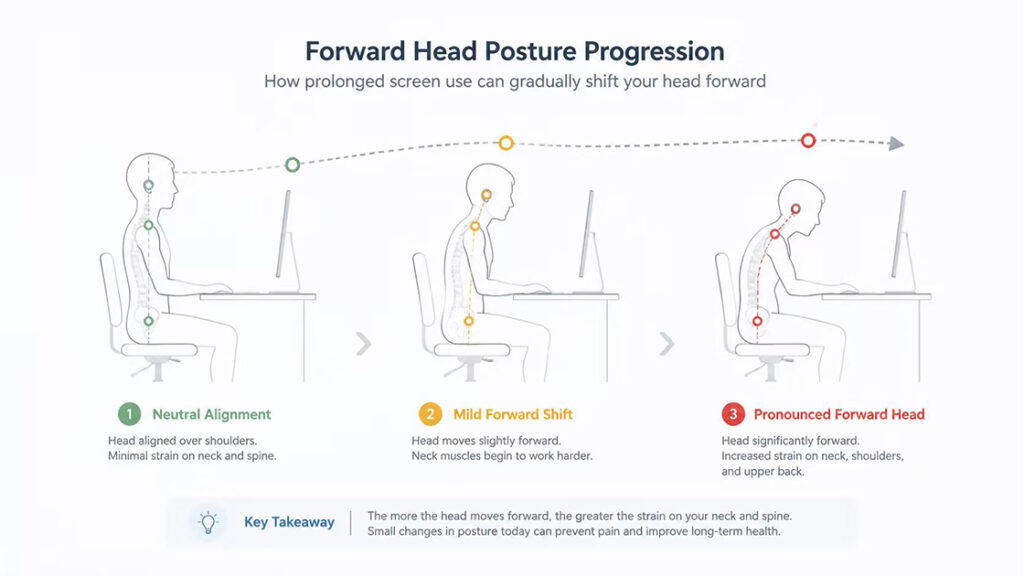
Forward head posture occurs when the head shifts anteriorly relative to the shoulder line, increasing the mechanical load on the cervical spine. This position often develops gradually due to prolonged screen use, reading, or workstation setups that encourage static neck flexion. Over time, the body adapts to this alignment, making it a habitual postural pattern rather than a temporary position.
1.2 Cervical Muscle Overload and Compensation Patterns
When the head moves forward, posterior neck muscles such as the upper trapezius, levator scapulae, and suboccipital muscles must work harder to maintain head stability. This continuous demand can contribute to muscle fatigue and localized tightness. At the same time, anterior neck muscles may weaken, creating an imbalance that further reinforces poor posture.
1.3 Functional Consequences of Chronic Postural Stress
Long-term forward head posture may influence not only neck comfort but also shoulder mechanics and upper back alignment. Individuals often report stiffness, reduced range of motion, and a sensation of heaviness in the neck region. These functional limitations are primarily linked to sustained muscular overload rather than acute injury.
2. How Shockwave Therapy Interacts with Postural Muscle Dysfunction
2.1 Acoustic Energy and Deep Tissue Stimulation
Shockwave therapy uses acoustic pressure waves that propagate through soft tissues, creating mechanical stimulation at a cellular level. This energy interaction is believed to influence local tissue metabolism and promote changes in chronically tight muscle regions. Unlike surface-level interventions, shockwave energy reaches deeper anatomical structures associated with postural strain.
2.2 Targeting Chronic Muscle Tightness Patterns
In cases of forward head posture, muscle tightness is often persistent rather than episodic. Shockwave therapy is commonly applied to areas such as the upper trapezius and cervical extensor chain to address long-standing tension patterns. The goal is not immediate structural correction of posture, but rather support for improved tissue flexibility and responsiveness.
2.3 Supporting Circulatory and Tissue Recovery Processes
Chronic muscle overload is often associated with reduced local circulation and metabolic stagnation. Shockwave therapy is used in rehabilitation settings to support microcirculatory activity within affected tissues, which may contribute to improved muscle recovery capacity over time. This makes it relevant in broader postural rehabilitation programs.
3. Cervical Biomechanics and Postural Chain Considerations
3.1 Shockwave Therapy and the Head–Neck–Shoulder Kinetic Chain
Forward head posture does not exist in isolation; it is part of a larger kinetic chain involving the thoracic spine and shoulder girdle. When cervical alignment shifts, compensatory adjustments occur throughout the upper body. This interconnected system explains why localized neck tension often coexists with upper back stiffness.
3.2 Shockwave Therapy for Muscle Imbalance in Cervical Posture
Postural dysfunction often involves an imbalance between stabilizing and mobilizing muscle groups. Deep cervical flexors may become underactive, while superficial extensors remain overactive. This imbalance contributes to inefficient load distribution across the cervical spine during daily activities.
3.3 Long-Term Tissue Adaptation and Shockwave Therapy Relevance
As forward head posture persists, soft tissues adapt to the altered alignment. Muscles may become less responsive to normal movement patterns, and sensitivity to strain may increase. Addressing this requires approaches that consider both mechanical load and tissue adaptability.
4. Role of Shockwave Therapy in Modern Postural Rehabilitation
4.1 Shockwave Therapy for Chronic Postural Strain vs Acute Injury
Shockwave therapy is typically not used in isolation but as part of a broader rehabilitation framework. This may include mobility training, ergonomic adjustments, and strengthening exercises targeting deep cervical stabilizers. Within this context, shockwave therapy supports soft tissue readiness for movement-based correction strategies.
4.2 Shockwave Therapy for Chronic Postural Strain vs Acute Injury
One of the key applications of shockwave therapy in postural care is its relevance to chronic muscle conditions. Forward head posture-related discomfort often develops over time, making it suitable for modalities that address long-term tissue adaptation rather than acute injury response.
4.3 Clinical Application of Shockwave Therapy in Cervical Regions
In structured rehabilitation environments, shockwave energy is typically applied to posterior cervical muscle groups and upper shoulder regions. These areas are commonly associated with compensatory strain in forward head posture patterns and are frequently addressed in musculoskeletal therapy protocols.
5. Considerations for Forward Head Posture-Related Neck Strain
5.1 Variability in Postural Presentation
Forward head posture can vary significantly between individuals depending on occupation, lifestyle, and ergonomic environment. Some individuals may present with mild postural deviation, while others exhibit more pronounced structural adaptations involving both cervical and thoracic regions.
5.2 Importance of Tissue Sensitivity and Response
Chronic neck muscle overload often involves heightened tissue sensitivity. Any therapeutic approach, including shockwave therapy, must consider the individual’s tolerance level and the chronic nature of the condition when being integrated into a care plan.
5.3 Long-Term Functional Restoration Perspective
The management of postural strain is typically focused on long-term functional improvement rather than immediate structural correction. This includes restoring balanced muscle activation patterns, improving tissue flexibility, and supporting sustainable postural habits over time.
FAQ
What is forward head posture?
It is a postural condition where the head shifts forward from its natural alignment, increasing stress on the neck muscles.
Can shockwave therapy directly correct posture?
No, it does not directly correct posture but may support muscle condition and tissue flexibility within a broader rehabilitation plan.
Which muscles are most affected by forward head posture?
Commonly affected muscles include the upper trapezius, levator scapulae, and suboccipital muscle groups.
Is shockwave therapy used alone for this condition?
It is typically used alongside other rehabilitation strategies such as exercise therapy and ergonomic correction.
Does forward head posture develop quickly?
It usually develops gradually over time due to prolonged repetitive positioning and lifestyle habits.
Conclusion
Forward head posture-related neck muscle overload is a growing concern in modern lifestyles characterized by prolonged device use and static positioning. Shockwave therapy offers a non-invasive approach that supports the management of chronic muscular tension by interacting with deep soft tissue structures. When integrated into a comprehensive rehabilitation strategy, it contributes to improving tissue responsiveness and supporting long-term postural function, particularly in environments where advanced shockwave systems are applied for musculoskeletal care.
References
American Physical Therapy Association – Posture and Neck Pain Overview
https://www.apta.org/patient-care/interventions/posture-and-spine-health
Cleveland Clinic – Forward Head Posture
https://my.clevelandclinic.org/health/diseases/23095-forward-head-posture
National Institutes of Health – Musculoskeletal Pain and Postural Strain
https://www.ncbi.nlm.nih.gov/pmc/articles/PMC6462590/
Journal of Orthopaedic & Sports Physical Therapy – Cervical Posture and Muscle Load
https://www.jospt.org/doi/full/10.2519/jospt.2018.7276
International Society for Medical Shockwave Treatment (ISMST) – Shockwave Therapy Applications
https://www.shockwavetherapy.org/