

Introduction
German Shepherds are recognized for their intelligence, athletic ability, and strong physical structure, which makes them popular as family companions, working dogs, and service animals. Because of their active lifestyle and larger body frame, maintaining mobility and supporting long-term physical condition are important parts of responsible canine care. Shockwave Therapy, also known as Extracorporeal Shockwave Therapy (ESWT), has gained attention in veterinary rehabilitation as a non-invasive technology that uses acoustic wave energy to support soft tissue, muscle, tendon, and joint care. For German Shepherds, especially those with active routines, this technology can be considered as part of a comprehensive rehabilitation approach designed to support comfortable movement and overall mobility management.
1. Understanding Mobility Challenges in German Shepherds
German Shepherds have a unique combination of strength, endurance, and agility. These qualities allow them to perform various activities, but they also mean that their bodies experience continuous physical demands throughout life. Understanding their movement characteristics helps owners and veterinary professionals develop more suitable care strategies.
1.1 Why German Shepherds Need Specialized Mobility Support
German Shepherds are naturally active dogs that often participate in walking, hiking, training, service activities, and other physical routines. Their powerful hind limbs and strong body structure allow them to perform complex movements, including jumping, running, and quick changes in direction.
Over time, owners may notice changes in their dog’s movement habits, such as reduced interest in certain activities, slower transitions from resting positions, or changes in exercise tolerance. These changes may be associated with many factors, including age, lifestyle, body condition, and daily activity levels.
Modern canine rehabilitation focuses on maintaining function and supporting quality of life through individualized care plans. Shockwave Therapy can be included as one of the supportive technologies used in veterinary rehabilitation programs for dogs with different mobility needs.
1.2 Common Areas Considered in German Shepherd Mobility Care
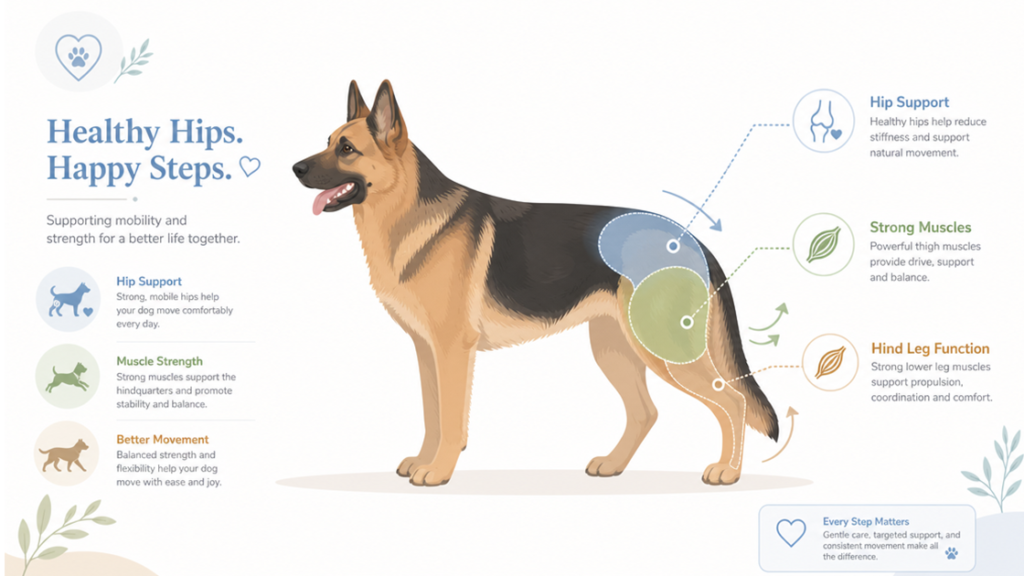
Because German Shepherds rely heavily on coordinated movement between their hips, hind limbs, muscles, and connective tissues, these areas often receive attention during mobility assessments.
The hip area is especially important because it contributes to stability, balance, and movement efficiency. In addition, muscles such as the hamstrings and other soft tissues around the hind limbs play an important role in supporting daily activities.
For active German Shepherds, especially working dogs, rehabilitation professionals may evaluate movement patterns, muscle condition, and physical performance when creating a personalized care approach. Research has discussed the use of Extracorporeal Shockwave Therapy together with rehabilitation methods in working dogs, including German Shepherds, as part of supportive management strategies.
2. How Shockwave Therapy Supports Canine Rehabilitation
As veterinary rehabilitation continues to develop, more technologies are being integrated into mobility management programs. Shockwave Therapy is one approach that uses mechanical acoustic energy to interact with targeted tissues and support rehabilitation goals.
2.1 Understanding Extracorporeal Shockwave Therapy (ESWT)
Extracorporeal Shockwave Therapy uses high-energy acoustic waves delivered through a specialized applicator. These waves travel through the body tissues and create mechanical stimulation in targeted areas.
In veterinary rehabilitation, ESWT is commonly discussed for musculoskeletal applications involving tendons, soft tissues, bones, and joint-related concerns. The technology allows professionals to adjust treatment parameters according to the animal’s condition, targeted area, and rehabilitation objectives.
For German Shepherds, this customized approach is important because each dog has different activity levels and physical requirements. A young working dog may have different mobility goals compared with an older family companion.
2.2 The Importance of Acoustic Wave Technology for Large Dogs
Large breeds such as German Shepherds have greater muscle mass and body weight compared with smaller dogs. Because of this, rehabilitation strategies often need to consider deeper tissue structures and larger movement patterns.
Shockwave Therapy provides a technology option that focuses on delivering acoustic energy to specific areas under professional guidance. This allows veterinary rehabilitation teams to incorporate it into broader programs that may include exercise management, physical therapy, and mobility evaluation.
Rather than focusing only on one body part, modern rehabilitation often considers the entire movement system, including posture, muscle coordination, and daily activity habits.
3. Shockwave Therapy Applications for German Shepherd Lifestyle Needs
German Shepherds can have very different lifestyles. Some live as active family pets, while others work in demanding professional environments. These different roles create different physical requirements.
3.1 Supporting Working German Shepherds
Working German Shepherds often perform tasks that require strength, concentration, and repeated physical movements. Police dogs, service dogs, and trained working animals may experience frequent running, jumping, searching, and directional changes.
Because of these activities, maintaining physical condition becomes an important part of their long-term management. Rehabilitation programs may focus on supporting muscle flexibility, movement coordination, and recovery after periods of intense activity.
Shockwave Therapy may be incorporated into these programs as a supportive tool alongside other rehabilitation methods. A published veterinary report discussed the combination of Extracorporeal Shockwave Therapy and rehabilitation approaches in working dogs with specific muscle-related concerns, highlighting the growing interest in advanced canine rehabilitation technologies.
3.2 Supporting Family German Shepherds During Different Life Stages
Many German Shepherds live as family companions and enjoy activities such as walking, playing, hiking, and outdoor exploration. Although their lifestyle may be less demanding than working dogs, maintaining mobility remains an important aspect of their overall wellness.
As dogs mature, their activity patterns may gradually change. Owners often look for ways to support comfortable movement and encourage appropriate levels of physical activity.
A complete mobility plan may include veterinary evaluation, proper exercise routines, nutrition management, and supportive rehabilitation technologies such as Shockwave Therapy.
4. Shockwave Therapy and German Shepherd Hip Mobility Management
The hip region plays a major role in German Shepherd movement. Healthy coordination between the hips, muscles, and surrounding soft tissues allows dogs to walk, run, and participate in daily activities comfortably.
4.1 Supporting Hip-Related Rehabilitation Programs
German Shepherds are frequently discussed in relation to hip mobility because of their body structure and active nature. However, every dog has different needs, and professional assessment remains an important part of developing a suitable care approach.
Shockwave Therapy may be considered within rehabilitation programs that focus on supporting mobility, tissue response, and overall physical function.
By combining technology with exercise planning and veterinary guidance, rehabilitation professionals can create programs that match the dog’s age, lifestyle, and movement goals.
4.2 Supporting Muscle and Tendon Care
Muscles and tendons play a key role in maintaining efficient movement. Active German Shepherds place regular demands on these tissues through exercise, training, and daily activities.
Shockwave Therapy is often explored in veterinary rehabilitation settings for tendon and soft tissue support. Acoustic wave stimulation provides another option for professionals who manage canine recovery and mobility programs.
For German Shepherd owners, understanding the relationship between muscle condition, movement habits, and rehabilitation support can help promote better long-term care decisions.
5. The Future of Shockwave Therapy in Canine Rehabilitation
With the development of modern veterinary rehabilitation, more pet owners and professionals are exploring advanced technologies that support mobility management and animal wellness. Shockwave Therapy has become one of the options considered in rehabilitation environments because of its ability to provide targeted acoustic wave stimulation for different musculoskeletal care programs.
5.1 Combining Shockwave Therapy With Comprehensive Canine Care
Shockwave Therapy is most effective when it becomes part of a complete rehabilitation strategy rather than a standalone approach. For German Shepherds, maintaining mobility usually involves multiple factors, including appropriate exercise, regular veterinary evaluation, balanced nutrition, and lifestyle adjustments.
A professional rehabilitation plan considers the dog’s age, activity level, physical condition, and daily environment. By combining different supportive methods, veterinary teams can create a more personalized approach that matches the individual needs of each German Shepherd.
For active breeds, this comprehensive approach helps focus on maintaining comfortable movement patterns and supporting long-term physical wellness.
5.2 Supporting Long-Term Mobility in German Shepherds
German Shepherds often remain active throughout adulthood and can continue participating in family activities, training, and outdoor experiences when their physical condition is properly managed.
As pet care continues to shift toward preventive and supportive wellness strategies, technologies such as Shockwave Therapy provide additional options for veterinary rehabilitation programs.
Through professional assessment and customized application, Shockwave Therapy can support mobility-focused care plans designed to help German Shepherds maintain an active lifestyle through different stages of life.
FAQ
What is Shockwave Therapy for German Shepherds?
Shockwave Therapy is a non-invasive rehabilitation technology that uses acoustic wave energy to support muscle, tendon, soft tissue, and mobility care in veterinary settings.
Why is Shockwave Therapy considered for German Shepherds?
German Shepherds are active large dogs with strong physical demands. Shockwave Therapy may be included in rehabilitation programs focused on supporting mobility and physical comfort.
Can Shockwave Therapy replace regular veterinary care?
No. Shockwave Therapy is a supportive rehabilitation option and should be used together with professional veterinary guidance and a complete wellness plan.
Which areas may be considered during German Shepherd Shockwave Therapy?
Veterinary professionals may evaluate areas related to movement, including hips, muscles, tendons, and other soft tissues, depending on the individual dog’s condition.
Is Shockwave Therapy only for working German Shepherds?
No. Both working dogs and family companion German Shepherds may be considered for rehabilitation support depending on their lifestyle, age, and mobility needs.
Conclusion
German Shepherds require thoughtful mobility management because of their active nature, strong body structure, and different lifestyle demands. Shockwave Therapy, as a modern veterinary rehabilitation technology, provides an additional option for supporting canine mobility programs by using acoustic wave energy to assist soft tissue and musculoskeletal care. Whether supporting working dogs with demanding routines or family companions during different life stages, this technology can be integrated into personalized rehabilitation plans alongside professional veterinary care, exercise management, and overall wellness strategies.
References
“Extracorporeal Shock Wave Therapy in Veterinary Rehabilitation: Current Applications and Clinical Perspectives”
https://www.em-consulte.com/article/1589095/article/shockwave-therapy-in-veterinary-rehabilitation
“Extracorporeal Shock Wave Therapy Combined With Rehabilitation in Working Dogs”
https://pubmed.ncbi.nlm.nih.gov/38260195
“Veterinary Rehabilitation and the Use of Therapeutic Modalities in Canine Care”
https://vetmed.iastate.edu/story/new-rehab-treatment/
“Extracorporeal Shock Wave Therapy in Dogs: Applications and Clinical Considerations”
https://www.frontiersin.org/journals/veterinary-science/articles/10.3389/fvets.2023.1258319/full
“Musculoskeletal Rehabilitation and Physical Therapy in Small Animals”