

Introduction
Hip mobility and stability play an important role in daily movement, athletic performance, and overall physical function. Gluteal tendinopathy, often associated with greater trochanteric pain syndrome (GTPS), involves the tendons around the outer hip area and may influence activities such as walking, climbing stairs, exercising, or maintaining certain body positions. As rehabilitation approaches continue to develop, Shockwave Therapy has gained attention as a non-invasive technology used in professional settings to support tendon and soft tissue management. By delivering mechanical acoustic waves to targeted areas, Shockwave Therapy can be integrated into comprehensive rehabilitation programs that include movement training, strengthening exercises, and functional mobility strategies.
1. Understanding Gluteal Tendinopathy and Hip Movement Challenges
Before exploring the role of Shockwave Therapy for gluteal tendinopathy, it is important to understand how hip tendon conditions affect movement patterns and why targeted rehabilitation approaches are becoming increasingly important.
1.1 What Is Gluteal Tendinopathy?
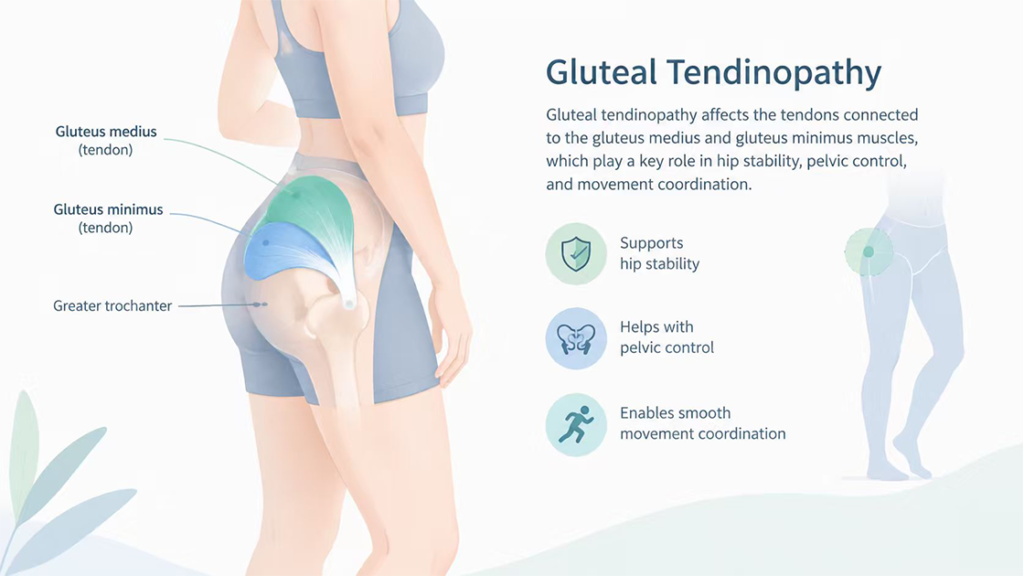
Gluteal tendinopathy refers to changes affecting the gluteal tendons, particularly the tendons connected to the gluteus medius and gluteus minimus muscles. These muscles contribute to hip stability, pelvic control, and movement coordination.
Unlike simple muscle fatigue, tendon-related concerns often involve changes in tendon structure and load tolerance. People with gluteal tendinopathy may experience discomfort around the outer hip area, especially during activities that increase pressure or demand on the hip region.
1.2 The Relationship Between Gluteal Tendons and Hip Stability
The gluteal muscles are essential for maintaining pelvic stability during walking, running, and single-leg movements. When these muscles and tendons do not function efficiently, other areas of the body may compensate.
Common movement challenges may include:
- reduced hip control
- difficulty with certain weight-bearing activities
- limited confidence during physical movement
A balanced rehabilitation approach focuses on improving strength, coordination, and functional movement patterns.
1.3 Why Hip Tendon Rehabilitation Requires a Comprehensive Approach
Managing gluteal tendinopathy often involves more than addressing a single symptom. Rehabilitation professionals usually consider factors such as activity level, movement habits, muscle strength, and soft tissue condition.
Shockwave Therapy can be incorporated as one part of a broader rehabilitation strategy, working alongside exercise programs and movement education.
2. How Shockwave Therapy Supports Gluteal Tendinopathy Management
Shockwave Therapy uses acoustic energy waves that are delivered to targeted tissue areas. Different shockwave systems, including radial and focused technologies, are designed for various clinical applications involving musculoskeletal conditions.
2.1 Supporting Tendon-Focused Rehabilitation Programs
The gluteal tendons experience repeated loading during activities such as walking, running, and climbing stairs. When tendon capacity does not match daily demands, rehabilitation support may become necessary.
Shockwave Therapy can be included in tendon-focused programs to support the management of soft tissue conditions and help professionals create a more complete recovery plan.
Research has explored extracorporeal shockwave therapy for greater trochanteric pain syndrome associated with gluteal tendinopathy, with studies examining its influence on pain and functional outcomes.
2.2 Supporting Soft Tissue Function Around the Hip with Shockwave Therapy
The hip area contains multiple interconnected structures, including muscles, tendons, and connective tissues. Effective movement depends on cooperation between these tissues.
Shockwave Therapy may help support soft tissue management by applying mechanical stimulation to targeted areas. When combined with mobility exercises and strengthening programs, it can become part of a structured rehabilitation process.
2.3 The Role of Shockwave Therapy in Modern Rehabilitation Settings
Modern rehabilitation increasingly focuses on restoring movement quality rather than only addressing temporary discomfort.
This herapy provides professionals with an additional tool that can be integrated into programs designed around:
- functional movement
- progressive loading
- mobility improvement
- physical activity goals
3. Common Situations Related to Gluteal Tendon Stress
Gluteal tendons are involved in many everyday and athletic movements. Understanding common situations that increase hip loading can help explain why targeted rehabilitation strategies are valuable.
3.1 Repetitive Walking and Lower Body Activities
Walking is a basic daily movement, but repeated loading over time can challenge the structures around the hip.
Activities involving frequent walking, stairs, or prolonged standing may increase demand on the gluteal muscles and tendons.
Shockwave Therapy may be considered within rehabilitation programs that focus on improving hip function and supporting comfortable movement patterns.
3.2 Exercise and Athletic Movement Demands
Active individuals often place higher demands on the hip through running, strength training, and dynamic movements.
Sports and exercise activities may involve:
- repeated single-leg loading
- directional changes
- hip stabilization demands
A professional rehabilitation program may combine Shockwave Therapy with targeted exercises to support gradual return to activity.
3.3 Age-Related Changes in Hip Mobility
As people become older, maintaining mobility and muscle function becomes increasingly important for daily independence.
Gluteal tendon support programs may focus on preserving:
- walking ability
- balance
- lower body strength
- movement confidence
Shockwave Therapy may serve as a supportive option within active aging and mobility-focused rehabilitation programs.
4. Integrating Shockwave Therapy Into Hip Rehabilitation Programs
Effective rehabilitation usually combines different approaches based on individual needs and movement goals.
4.1 Combining Shockwave Therapy With Exercise Training
Exercise remains an important part of tendon rehabilitation. Strengthening and movement training help improve the body’s ability to handle physical demands.
Shockwave Therapy can complement exercise-based programs by providing additional support during the rehabilitation process.
A comprehensive approach may include:
- hip strengthening exercises
- mobility training
- gradual activity progression
4.2 Supporting Sports Medicine and Physical Therapy Applications
Physical therapists and sports medicine professionals often work with individuals who require structured recovery plans.
Shockwave Therapy machines allow clinics to provide technology-assisted care for various tendon and soft tissue conditions while maintaining an individualized approach.
4.3 The Importance of Movement Assessment
Every person has different movement patterns, activity levels, and physical goals. A proper assessment helps professionals determine appropriate rehabilitation strategies.
Factors that may be considered include:
- hip strength
- movement coordination
- activity demands
- functional limitations
Technology works best when combined with professional evaluation and customized planning.
5. The Future of Shockwave Therapy for Hip Tendon Support
As research and clinical applications continue to develop, Shockwave Therapy is becoming part of broader approaches for managing tendon-related conditions.
5.1 Expanding Applications in Tendon Rehabilitation
Recent discussions have explored the role of extracorporeal shockwave therapy in hip and pelvic tendinopathies, including gluteal tendinopathy and related conditions.
Future rehabilitation strategies may continue to focus on combining technology with exercise-based approaches to improve overall movement outcomes.
5.2 Personalized Rehabilitation With Shockwave Therapy
Different individuals require different rehabilitation strategies. Factors such as activity level, age, movement patterns, and recovery goals influence program design.
Modern therapy systems allow professionals to adjust treatment approaches according to specific clinical requirements.
FAQ
What is gluteal tendinopathy?
Gluteal tendinopathy involves changes affecting the tendons around the hip that support movement and stability.
Can Shockwave Therapy help with hip tendon rehabilitation?
It can be used as a supportive technology within professional rehabilitation programs.
Is Shockwave Therapy used alone for gluteal tendinopathy?
Usually, it is combined with exercise training, movement education, and professional assessment.
Which areas are commonly addressed in hip tendon programs?
Programs may focus on the outer hip, gluteal tendon region, and related soft tissues.
Who may consider Shockwave Therapy for hip mobility support?
Active adults, athletes, and individuals with movement limitations may discuss suitable options with healthcare professionals.
Conclusion
Shockwave Therapy provides a modern technology option for supporting gluteal tendinopathy management and hip mobility programs. By delivering targeted acoustic energy to selected areas, it can complement rehabilitation approaches focused on tendon support, movement improvement, and functional training. Although successful hip rehabilitation usually requires exercise, professional guidance, and personalized planning, this therapy continues to be explored as a valuable tool in sports medicine and musculoskeletal care. As interest in movement-focused rehabilitation grows, this technology may continue to play an important role in supporting active lifestyles and improved mobility.
References
Focused extracorporeal shock wave therapy for greater trochanteric pain syndrome with gluteal tendinopathy: a randomized controlled trial
https://pubmed.ncbi.nlm.nih.gov/30585498
Is shockwave therapy effective in the management of greater trochanteric pain syndrome? A systematic review and meta-analysis
https://pubmed.ncbi.nlm.nih.gov/38777616
Extracorporeal Shockwave Therapy for Greater Trochanteric Pain Syndrome: A Systematic Review with Meta-Analysis of Randomized Clinical Trials
https://pubmed.ncbi.nlm.nih.gov/39297780
Conservative treatments for greater trochanteric pain syndrome: a systematic review
https://pubmed.ncbi.nlm.nih.gov/27834675
Extracorporeal Shockwave Therapy for Tendinopathies Around the Hip and Pelvis: A Systematic Review