

Introduction
Weekend soccer players often experience hamstring tightness due to sudden bursts of sprinting, frequent directional changes, and limited recovery time between games. Clinicians commonly link this type of muscle discomfort to overuse of the posterior thigh muscles, especially when activity levels spike after a sedentary workweek. Shockwave therapy has gained attention as a non-invasive modality that practitioners use in sports recovery settings to support soft tissue function and manage muscle tightness. By delivering focused acoustic energy to targeted areas, they often incorporate it into broader recovery routines that aim to support mobility and muscle relaxation in active individuals.
1. Understanding Hamstring Tightness in Recreational Soccer
1.1 Sprinting Load and Muscle Overuse
Hamstrings play a major role in accelerating and decelerating the body during soccer movements. Weekend players often go from minimal weekday activity to high-intensity sprinting, creating a sudden load increase. This rapid shift can contribute to muscle tightness and reduced flexibility in the posterior thigh.
1.2 Eccentric Contraction Stress
During soccer play, hamstrings frequently work under eccentric contraction when slowing down or changing direction. This type of muscle action places higher mechanical stress on muscle fibers, which may contribute to post-activity tightness and delayed recovery sensations.
1.3 Recovery Gap Between Activity Cycles
Unlike professional athletes, recreational players often have longer gaps between training sessions. While this may seem beneficial, inconsistent conditioning can lead to reduced muscle adaptation, making hamstrings more sensitive to sudden high-intensity movements.
2. How Shockwave Therapy Supports Muscle Recovery
2.1 Acoustic Wave Energy and Tissue Response
Shockwave therapy uses focused acoustic pulses that interact with soft tissue structures. In sports recovery contexts, this energy delivery is often associated with supporting localized circulation and tissue response in areas of muscle tightness.
2.2 Targeting Deep Muscle Structures
Hamstring muscles are located in a deep posterior compartment, making them difficult to address with surface-level recovery methods alone. Shockwave therapy allows practitioners to target deeper soft tissue layers, supporting comprehensive muscle recovery strategies.
2.3 Supporting Post-Exercise Mobility
Improved soft tissue mobility is an important aspect of recovery for soccer players. Shockwave therapy is often integrated into recovery plans aimed at supporting flexibility and reducing perceived tightness after intense weekend matches.
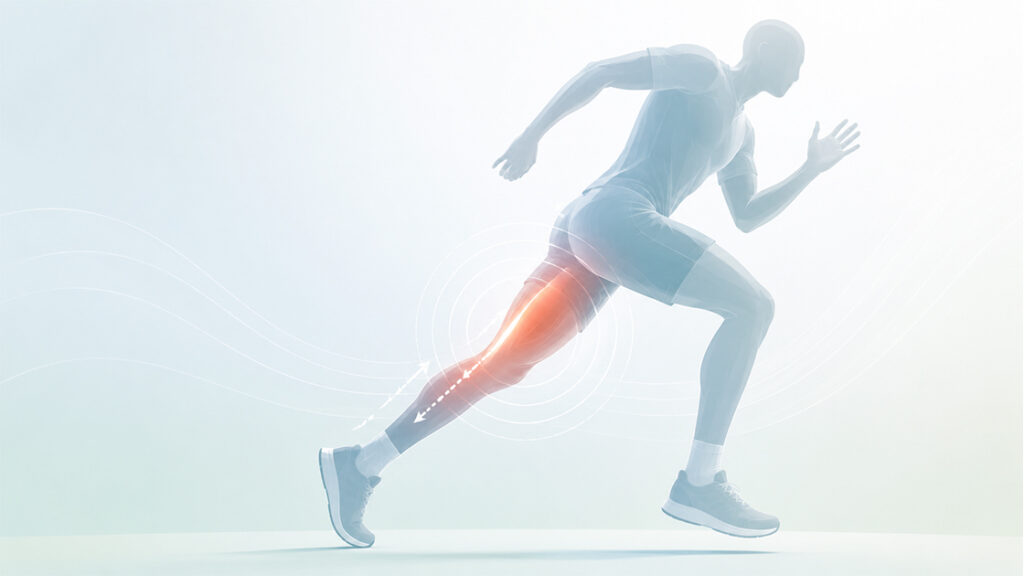
3. Biomechanics of Hamstring Strain in Soccer Movements
3.1 Acceleration and Deceleration Forces
Soccer requires repeated acceleration and sudden stopping. These movements place alternating stress on the hamstrings, which must stabilize the lower limb while also generating force.
3.2 Muscle Imbalance Between Quads and Hamstrings
In many recreational athletes, quadriceps may dominate over hamstrings, especially in individuals with limited strength training. This imbalance can contribute to uneven load distribution during movement.
3.3 Fatigue Accumulation During Matches
As a match progresses, muscle fatigue increases, which can alter movement patterns. These changes may increase strain on the hamstrings, contributing to post-game tightness.
4. Shockwave Therapy in Sports Recovery Environments
4.1 Non-Invasive Recovery Modality
Shockwave therapy is widely used in sports recovery environments as a non-invasive approach that does not require surgical intervention or extended downtime. It is often combined with stretching and mobility work.
4.2 Focused Application on Posterior Thigh
In recovery protocols for soccer players, shockwave therapy is commonly applied to the posterior thigh region. This allows for localized support in areas most affected by sprinting and directional changes.
4.3 Integration into Weekly Activity Cycles
Weekend athletes benefit from structured recovery between matches. Shockwave therapy can be incorporated into post-game recovery routines to support ongoing muscle conditioning.
5. Managing Hamstring Tightness in Weekend Athletes
5.1 Sudden Activity Transition Patterns
One of the most common issues among weekend soccer players is the sudden transition from low activity during the week to high-intensity play on weekends. This pattern increases the likelihood of muscle tightness.
5.2 Role of Recovery Strategies
Practitioners commonly use recovery strategies such as mobility work, hydration, and targeted muscle therapies alongside shockwave therapy to support overall muscle function and reduce stiffness.
5.3 Supporting Long-Term Muscle Conditioning
Rather than focusing only on immediate post-game comfort, practitioners often integrate shockwave therapy into long-term conditioning strategies that aim to maintain hamstring flexibility and resilience over time.
FAQ
What causes hamstring tightness in soccer players?
It is mainly caused by sprinting, sudden directional changes, and eccentric muscle loading during matches.
How does shockwave therapy interact with muscle tissue?
It delivers acoustic energy to targeted areas, which supports tissue response and muscle recovery processes.
Is shockwave therapy used before or after sports activity?
It is typically used after activity as part of recovery and muscle maintenance routines.
Can shockwave therapy replace stretching?
No, it is usually combined with stretching and mobility work for better results.
Who benefits most from shockwave therapy?
Recreational and weekend athletes experiencing muscle tightness or overuse discomfort.
Conclusion
Hamstring tightness is a common issue among weekend soccer players due to sudden high-intensity activity and repetitive sprinting demands. Shockwave therapy offers a non-invasive recovery approach that is widely used in sports environments to support soft tissue function and mobility. When integrated into a structured recovery plan that includes stretching and conditioning, it may help athletes better manage muscle tightness and maintain consistent performance over time.
References
American College of Sports Medicine – Muscle Injury and Recovery in Sport
https://www.acsm.org/education-resources/trending-topics-resources
National Institutes of Health – Musculoskeletal Soft Tissue Injuries
https://www.ncbi.nlm.nih.gov/books/NBK539902/
British Journal of Sports Medicine – Hamstring Injury and Rehabilitation Concepts
https://bjsm.bmj.com/
Physiopedia – Shockwave Therapy in Musculoskeletal Conditions
https://www.physio-pedia.com/Extracorporeal_Shock_Wave_Therapy
Cleveland Clinic – Hamstring Injuries
https://my.clevelandclinic.org/health/diseases/21903-hamstring-injury