

Introduction
Aging is a natural process that brings changes to muscles, tendons, joints, and overall physical mobility. Many older adults focus on maintaining an active lifestyle and preserving movement quality as part of their long-term wellness goals. Changes in tissue flexibility, muscle strength, and joint function may influence daily activities such as walking, climbing stairs, exercising, and participating in recreational activities. As interest in healthy aging continues to grow, non-invasive technologies such as Shockwave Therapy have gained attention in rehabilitation and wellness environments. Using acoustic wave technology, Shockwave Therapy provides targeted mechanical energy to specific areas and is commonly explored as part of professional approaches for supporting soft tissue function, mobility management, and recovery routines. When combined with appropriate exercise, lifestyle adjustments, and professional guidance, shockwave technology represents an additional option for individuals seeking to maintain physical activity throughout the aging process.
1. Understanding Mobility Changes During Aging
Aging affects different body systems, including muscles, connective tissues, and joints. Understanding these changes helps explain why mobility support becomes an important part of healthy aging strategies.
1.1 How Aging Influences Muscle and Tissue Function
As people age, natural changes may occur in muscle mass, tendon flexibility, and connective tissue structure. These changes can influence movement patterns and may make certain physical activities feel more challenging.
Muscle recovery processes may become slower, while reduced elasticity in soft tissues can affect flexibility and range of motion. For many older adults, maintaining mobility is not only related to exercise ability but also connected with independence and daily comfort.
Shockwave Therapy is discussed in rehabilitation settings because its acoustic wave energy can interact with targeted tissues. The technology is often considered as part of broader mobility and recovery programs designed around individual needs.
1.2 The Importance of Maintaining Mobility During Healthy Aging
Mobility plays an important role in everyday activities. Simple movements such as walking, standing from a chair, reaching, and maintaining balance all depend on coordinated function between muscles, tendons, joints, and connective tissues.
A decline in mobility does not happen overnight. It often develops through gradual changes in physical activity levels, lifestyle habits, and tissue condition. Therefore, many health professionals emphasize consistent movement and personalized wellness strategies.
Shockwave Therapy has become an area of interest because it provides a technology-based approach that can complement traditional mobility management methods. It does not replace exercise or healthy habits but may serve as an additional supportive option within professional care environments.
1.3 Common Mobility Challenges Among Older Adults
Older adults may experience different mobility concerns depending on lifestyle, activity levels, and previous physical demands. Some individuals notice stiffness after inactivity, while others experience reduced flexibility in specific body areas.
Common areas of attention include the knee, hip, shoulder, foot, and lower back because these regions contribute significantly to daily movement.
Extracorporeal Shockwave Therapy (ESWT) has been studied in relation to several musculoskeletal conditions involving mobility limitations. Research discussions often focus on areas such as joint function, soft tissue response, and movement-related discomfort.
2. The Role of Shockwave Therapy in Modern Aging Support
With advances in rehabilitation technology, Shockwave Therapy has become a commonly discussed method for supporting musculoskeletal wellness. Understanding how the technology works can help explain its potential role in healthy aging programs.
2.1 Understanding Acoustic Wave Technology
Shockwave Therapy uses acoustic waves to deliver mechanical energy to targeted areas of the body. These waves create controlled physical stimulation within tissues, which is why the technology is often used in professional rehabilitation environments.
Different shockwave systems may include radial and focused technologies, allowing professionals to select appropriate approaches based on application requirements.
The goal of Shockwave Therapy in mobility-focused programs is generally to support tissue response, improve physical comfort, and complement other recovery strategies.
2.2 How Shockwave Therapy Supports Soft Tissue Wellness
Soft tissues such as tendons, fascia, and muscles play important roles in movement. Changes in these tissues may influence flexibility and physical performance during daily activities.
Shockwave Therapy delivers mechanical stimulation that may support circulation-related responses and tissue activity. Professionals often consider factors such as treatment area, energy level, and individual condition when creating a suitable application plan.
The technology is frequently included in discussions about tendon care, muscle recovery, and mobility support because it focuses on targeted areas rather than general body stimulation.
2.3 The Relationship Between Shockwave Therapy and Functional Movement
Functional movement refers to the ability to perform daily activities efficiently and comfortably. For older adults, maintaining functional movement is an important aspect of quality of life.
Mobility programs often combine exercise, strength training, flexibility activities, and professional rehabilitation support. Shockwave Therapy may be incorporated into these programs as a complementary technology.
By focusing on specific musculoskeletal areas, shockwave applications can support individualized approaches for people with different mobility goals.
3. Exploring the Connection Between Shockwave Therapy and Active Aging
Healthy aging is not only about increasing lifespan but also about maintaining the ability to participate in daily activities. As more people focus on staying active, mobility support has become an important part of modern wellness management.
3.1 Supporting Mobility for Active Older Adults
Many older adults continue participating in activities such as walking, gardening, recreational exercise, and outdoor activities. Maintaining flexibility and physical comfort can help them continue these routines with greater confidence.
Active aging requires attention to muscle condition, joint movement, and overall physical balance. Regular movement remains one of the most important factors for maintaining functional ability.
Shockwave Therapy may be included in professional wellness programs that focus on soft tissue support and mobility improvement. Through acoustic wave stimulation, the technology provides a targeted approach that can complement exercise-based recovery strategies.
3.2 Shockwave Therapy for Tendon and Connective Tissue Care
Tendons and connective tissues are essential structures that connect muscles and bones while supporting movement. Over time, these tissues may experience changes related to aging, repetitive activity, or reduced physical activity.
Healthy tendon function contributes to comfortable movement patterns and physical stability. This is why tendon-focused care has become an important part of many rehabilitation programs.
Shockwave Therapy is widely discussed in relation to tendon applications because acoustic wave energy can be directed toward specific soft tissue areas. Professionals may use this technology as part of comprehensive approaches designed to support tissue function and mobility.
3.3 The Importance of Personalized Mobility Strategies
Every person experiences aging differently. Factors such as activity level, lifestyle habits, previous injuries, and physical goals can influence mobility needs.
A personalized approach allows professionals to consider individual differences when creating recovery and wellness plans. Some people may focus on maintaining walking ability, while others may want to continue recreational activities or improve general movement quality.
Shockwave Therapy provides adjustable parameters, including energy intensity and treatment settings, allowing professionals to adapt applications according to individual requirements.
4. Understanding the Technology Behind Shockwave Therapy
Learning about the science behind Shockwave Therapy helps explain why this technology has become part of modern rehabilitation discussions.
4.1 How Mechanical Waves Interact With Targeted Tissues
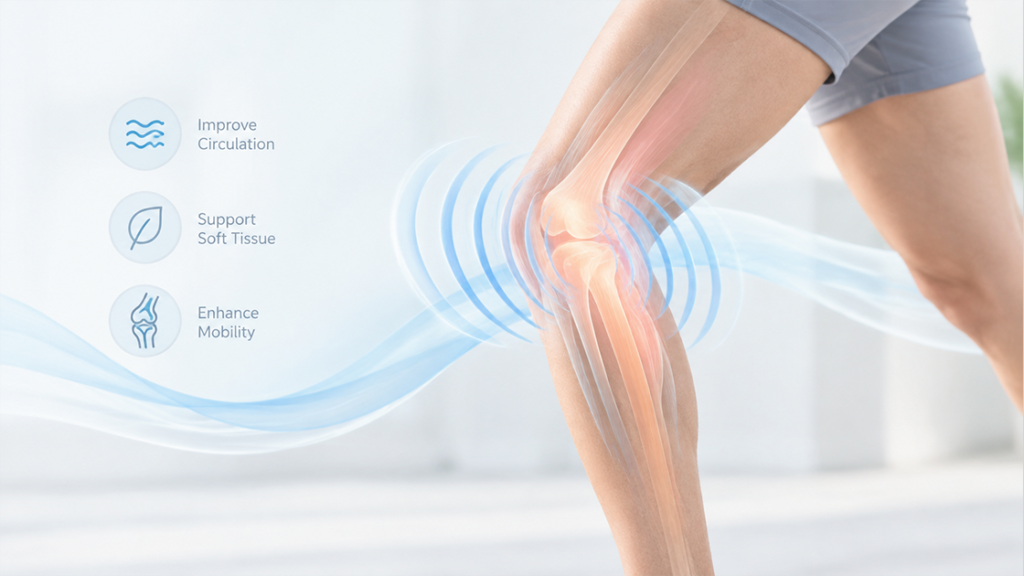
Shockwave Therapy uses high-energy acoustic waves that create mechanical stimulation within targeted areas. These waves are generated by specialized devices and delivered through professional application methods.
The mechanical effects of shockwaves may influence local tissue responses, which is why the technology is often explored in musculoskeletal care.
Different tissues may respond differently depending on their structure and condition. Therefore, professionals usually consider treatment parameters, application location, and individual needs when using shockwave technology.
4.2 Radial Shockwave Therapy and Mobility Applications
Radial Shockwave Therapy is one commonly used form of shockwave technology. It delivers pressure waves from the applicator outward into the targeted area.
Because radial shockwaves can cover broader treatment regions, they are often considered suitable for applications involving larger soft tissue areas.
In mobility-focused programs, radial shockwave technology may be combined with movement exercises and rehabilitation techniques to support overall physical function.
4.3 Focused Shockwave Technology in Professional Rehabilitation
Focused Shockwave Therapy delivers acoustic energy to a more concentrated area. This allows professionals to target specific regions that require detailed attention.
Focused technology is often discussed in relation to precise applications involving deeper tissue areas.
The selection between radial and focused approaches depends on professional assessment, targeted area, and individual mobility goals.
5. The Future of Shockwave Therapy in Healthy Aging Management
As the global population continues aging, technologies that support mobility and physical wellness are receiving increased attention. Shockwave Therapy represents one of the approaches being explored within modern rehabilitation and wellness environments.
5.1 The Growing Importance of Mobility-Focused Wellness
Healthy aging strategies are increasingly focused on maintaining physical independence and supporting active lifestyles.
Instead of only addressing mobility concerns after they appear, many people are paying more attention to preventive wellness habits, including regular movement, strength maintenance, and professional recovery support.
Shockwave Therapy fits into this broader trend by providing a technology-based option that focuses on targeted musculoskeletal applications.
5.2 Combining Technology With Exercise and Lifestyle Habits
Technology alone does not replace fundamental health practices. Regular physical activity, balanced nutrition, sufficient rest, and professional advice remain important components of healthy aging.
Shockwave Therapy is generally used as a complementary approach alongside other wellness strategies.
Combining advanced technology with active lifestyle habits creates a more comprehensive approach to maintaining mobility throughout different stages of life.
5.3 The Development of Personalized Aging Support Solutions
Future rehabilitation and wellness trends are moving toward more personalized solutions. Instead of using identical approaches for everyone, professionals increasingly consider individual movement patterns, goals, and lifestyle factors.
Shockwave Therapy technology continues evolving with improved parameter control and application flexibility.
This development supports the growing demand for customized mobility management solutions designed around individual needs.
FAQ
What is Shockwave Therapy?
It is a non-invasive technology that uses acoustic waves to provide targeted mechanical stimulation in professional rehabilitation and wellness settings.
Is Shockwave Therapy only for athletes?
No. Although it is commonly discussed in sports recovery, Shockwave Therapy is also used in rehabilitation environments for people with different mobility goals.
Can older adults use Shockwave Therapy?
Shockwave Therapy may be considered as part of professional mobility and wellness programs. Application decisions depend on individual conditions and professional evaluation.
Does Shockwave Therapy replace exercise?
No. It is generally used as a complementary approach alongside exercise, healthy habits, and professional guidance.
What areas can Shockwave Therapy support?
Depending on professional assessment, Shockwave Therapy may be applied to different musculoskeletal areas, including tendons, muscles, and soft tissues.
Conclusion
Maintaining mobility is an important part of healthy aging, allowing individuals to continue daily activities and enjoy active lifestyles. As the understanding of rehabilitation technology continues developing, Shockwave Therapy has become a valuable topic in mobility support discussions because of its use of acoustic wave technology and targeted mechanical stimulation. While individual needs vary, combining professional guidance, regular movement, and appropriate wellness strategies can help support long-term physical function. With continued innovation in rehabilitation technology, Shockwave Therapy may continue playing a role in modern approaches to mobility management and healthy aging.
References
Extracorporeal Shock Wave Therapy in Musculoskeletal Disorders: A Review
https://pmc.ncbi.nlm.nih.gov/articles/PMC6755419
Clinical Applications of Extracorporeal Shock Wave Therapy in Musculoskeletal Conditions
https://www.ncbi.nlm.nih.gov/pmc/articles/PMC6125012
Extracorporeal Shockwave Therapy: Current Evidence and Future Directions
https://pmc.ncbi.nlm.nih.gov/articles/PMC7464147
Shockwave Therapy in Rehabilitation and Sports Medicine
https://www.physio-pedia.com/Extracorporeal_Shockwave_Therapy
Mechanisms and Applications of Extracorporeal Shock Wave Therapy