

Introduction
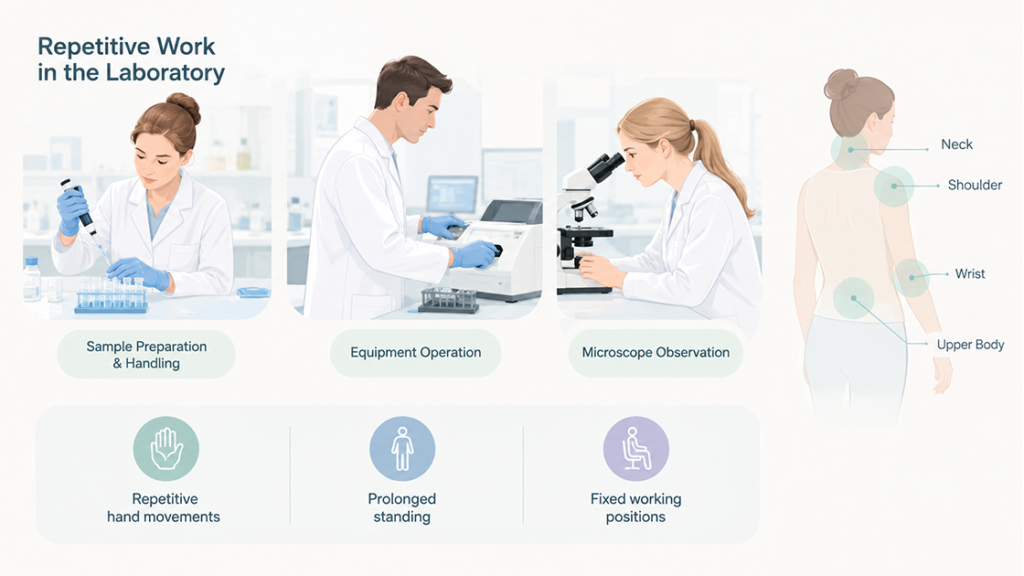
Laboratory technicians play an important role in scientific, medical, and research environments, where precision, concentration, and consistent performance are essential. Although laboratory work often focuses on accuracy and technical skills, many daily tasks require repetitive hand movements, prolonged standing, extended periods of microscope observation, and maintaining fixed working positions. Over time, these work patterns may create physical demands on areas such as the hands, wrists, shoulders, neck, and upper body. Shockwave Therapy, based on mechanical acoustic wave technology, has become a supportive option used in professional rehabilitation and wellness environments to help manage physical stress associated with repetitive activities. By providing targeted energy delivery and adjustable treatment settings, shockwave therapy can be incorporated into personalized wellness strategies for professionals with precision-based occupations.
1. Understanding Physical Demands in Laboratory Work
1.1 Why Laboratory Technicians Experience Repetitive Work Challenges
Laboratory technicians often perform tasks that require accuracy and attention to detail. Activities such as sample preparation, equipment handling, microscope observation, and laboratory documentation may involve repeated movements throughout the workday.
Unlike physically demanding occupations that involve heavy lifting, laboratory work often creates gradual physical demands through consistency and repetition. Maintaining the same hand positions, focusing on small details, or working within limited movement ranges can influence overall comfort during daily activities.
Understanding these occupational patterns helps professionals develop better workplace habits, including proper positioning, movement breaks, and recovery-focused routines.
1.2 Common Physical Factors in Laboratory Environments
Laboratory environments require controlled movements and careful handling of materials. Technicians may spend significant time using precision instruments, adjusting equipment, or performing detailed procedures that involve continuous concentration.
Common workplace factors include extended sitting or standing, limited posture changes, repetitive hand movements, and prolonged visual focus. These conditions may affect how the body responds during and after work periods.
A balanced approach that combines ergonomic awareness, regular movement, and professional wellness support can help laboratory professionals maintain better daily routines.
2. Exploring Shockwave Therapy Technology for Occupational Wellness
2.1 How Shockwave Therapy Works in Professional Settings
Shockwave Therapy uses acoustic wave technology to deliver mechanical energy to targeted areas. In professional wellness and rehabilitation environments, it is commonly used as a supportive approach for managing soft tissue-related concerns and promoting physical recovery processes.
Modern shockwave systems allow professionals to adjust treatment intensity and application methods according to individual needs and specific areas of focus.
For laboratory technicians, shockwave therapy may be considered as part of a broader wellness plan that includes workplace adjustments, mobility exercises, and healthy recovery habits.
2.2 The Role of Mechanical Acoustic Waves in Recovery Support
Shockwave technology uses controlled acoustic waves that interact with targeted tissues. Professional applications focus on supporting natural recovery processes and improving physical comfort in selected areas.
For individuals involved in repetitive occupations, maintaining movement quality and physical balance is an important part of long-term wellness management.
When combined with proper work habits and appropriate physical activity, shockwave therapy can serve as one supportive option for professionals managing repetitive daily tasks.
3. Shockwave Therapy Applications for Different Laboratory Roles
3.1 Supporting Medical Laboratory Technicians
Medical laboratory technicians often work with samples, testing equipment, and detailed laboratory procedures. These responsibilities require precision and consistent hand control throughout the day.
Repeated handling of tools, containers, and laboratory materials may create ongoing physical demands on the upper body, particularly in areas involved in fine motor activities.
Shockwave Therapy may be included within professional wellness programs as a supportive approach for individuals who want to maintain physical comfort while performing precision-based laboratory work.
3.2 Supporting Research Laboratory Professionals
Research laboratory professionals frequently manage experiments, analyze materials, and operate specialized equipment. Many research activities require extended concentration and repeated technical procedures.
Long experimental sessions may involve maintaining similar body positions for extended periods, especially when working with microscopes, computer systems, or laboratory instruments.
A comprehensive wellness approach that includes movement strategies and recovery support can help research professionals better manage the physical aspects of their work routines.
3.3 Supporting Quality Control Laboratory Workers
Quality control technicians often perform inspections, measurements, and detailed assessments to ensure product standards. Their work requires accuracy and repeated observation processes.
The combination of concentration, repetitive movements, and fixed working positions may influence daily physical comfort.
Shockwave Therapy can be considered as one component of a personalized wellness strategy designed around the specific demands of precision-focused laboratory occupations.
3.4 Supporting Laboratory Professionals Working With Advanced Equipment
Modern laboratories often rely on advanced instruments that require careful operation and continuous monitoring. Professionals who work with automated systems, imaging equipment, or analytical tools may still perform repeated adjustments and detailed manual tasks throughout the day.
Although these activities usually require limited physical force, the consistency and precision involved can create unique workplace demands. Maintaining comfortable movement patterns and proper working habits becomes an important part of supporting long-term occupational wellness.
Shockwave Therapy may be incorporated into professional recovery programs as an additional supportive approach for laboratory workers who experience physical stress related to repetitive technical activities.
4. Creating a Balanced Wellness Routine for Laboratory Technicians
4.1 Combining Shockwave Therapy With Workplace Ergonomics
Ergonomics plays an important role in laboratory environments because many tasks require accuracy and controlled movements. Proper workstation arrangement, suitable equipment positioning, and regular posture adjustments can help create a more comfortable working environment.
Shockwave Therapy can complement these workplace strategies by providing an additional option within a broader wellness plan. Instead of focusing on one single method, laboratory professionals can consider multiple approaches that support mobility, comfort, and healthy work habits.
A combination of ergonomic awareness, physical activity, and professional recovery support can help individuals better manage the demands of precision-based occupations.
4.2 The Importance of Movement Breaks During Laboratory Tasks
Laboratory work often requires periods of deep concentration, which may reduce awareness of body position and movement frequency. Taking appropriate breaks allows professionals to change posture, perform simple movements, and reduce the effects of remaining in one position for extended periods.
Regular movement habits can support flexibility and overall physical balance during long workdays.
For laboratory technicians with highly repetitive schedules, combining movement strategies with professional wellness options such as Shockwave Therapy may provide a more comprehensive approach to managing occupational demands.
4.3 Choosing Recovery Support Based on Laboratory Responsibilities
Different laboratory roles involve different levels of physical demand. A technician working with microscopy may have different needs compared with someone operating large-scale testing equipment or managing quality control processes.
Factors such as daily workload, workstation design, repetitive activities, and individual lifestyle habits can influence which wellness strategies are most appropriate.
Shockwave Therapy systems allow professionals to adjust application approaches based on specific areas and personal requirements, making them suitable for individualized wellness planning.
5. The Future of Shockwave Therapy in Occupational Wellness
5.1 How Shockwave Technology Supports Modern Professional Health Management
As workplace environments continue to evolve, occupational wellness has become an important consideration across many industries. Professionals in technical fields often combine mental concentration with repeated physical activities, creating new opportunities for personalized recovery approaches.
Shockwave Therapy technology provides rehabilitation and wellness professionals with an additional tool for supporting individuals who manage physically repetitive work routines.
With adjustable settings and targeted application methods, shockwave systems continue to be explored as part of modern approaches to supporting mobility and physical comfort.
5.2 Building Sustainable Work Habits for Laboratory Professionals
Long-term occupational wellness depends on consistent habits rather than short-term solutions. For laboratory technicians, maintaining healthy routines may include improving workstation setup, staying active, managing workloads, and paying attention to physical needs.
Shockwave Therapy may serve as one supportive element within a larger wellness strategy designed around the unique requirements of laboratory professionals.
By combining technology, workplace awareness, and healthy lifestyle choices, laboratory workers can create more sustainable approaches to managing the physical aspects of precision-based careers.
FAQ
What is Shockwave Therapy?
Shockwave Therapy is a technology that uses controlled acoustic waves to provide supportive applications in professional rehabilitation and wellness settings.
Why might laboratory technicians consider Shockwave Therapy?
Laboratory technicians may explore Shockwave Therapy as a supportive option for managing physical demands related to repetitive movements, precision tasks, and extended working positions.
Can Shockwave Therapy replace workplace ergonomics?
No. Shockwave Therapy is generally considered a complementary approach and does not replace proper workstation setup, movement habits, or professional guidance.
Which laboratory professionals may benefit from recovery-focused wellness strategies?
Medical laboratory technicians, research professionals, quality control workers, and other precision-based laboratory employees may consider personalized wellness approaches.
How can laboratory technicians support physical wellness during work?
Maintaining ergonomic workstations, taking movement breaks, staying active, and developing consistent recovery habits can support overall workplace wellness.
Conclusion
Laboratory technicians perform highly precise work that requires concentration, technical skills, and consistent attention to detail. Although labs are not known for heavy physical work, repetitive tasks and long hours still strain the body. Shockwave Therapy uses acoustic waves to support wellness and rehabilitation. It can help professionals who do repetitive tasks. Combined with ergonomics, regular movement, and healthy habits, it supports physical comfort and long-term occupational wellness.
References
Extracorporeal Shock Wave Therapy: Current Applications and Future Perspectives
https://www.ncbi.nlm.nih.gov/pmc/articles/PMC4743666
Clinical Applications of Extracorporeal Shock Wave Therapy in Musculoskeletal Disorders
https://pubmed.ncbi.nlm.nih.gov
Mechanisms of Action of Extracorporeal Shock Wave Therapy
https://www.ncbi.nlm.nih.gov/pmc/articles/PMC6030530
Shockwave Therapy in Rehabilitation and Physical Medicine
https://www.ncbi.nlm.nih.gov/pmc/articles/PMC6020275
Professional Shockwave Therapy Equipment and Applications