

Introduction
A subtle ache lingers after a weekend run. A tendon that used to bounce back within a day now stays sore for three. The familiar feeling of stiffness after sitting at a desk seems to take longer to fade. For many active adults in their forties and fifties, this pattern is all too familiar. The body does not recover the way it used to. What once felt like a minor workout now leaves behind a lasting reminder of aging tissues. Soft tissue decline is a natural part of getting older, but it does not have to mean the end of an active life. For those looking to maintain their mobility and performance, shockwave therapy offers a non-invasive way to support the body’s healing processes and keep moving forward.
1. The Reality of Soft Tissue Decline After 40
The aging process affects every system in the body, and soft tissues are no exception. Tendons, ligaments, and muscles undergo gradual changes that can impact their function and resilience. Understanding these changes is the first step toward managing them effectively.
1.1 What Happens to Soft Tissues as We Age
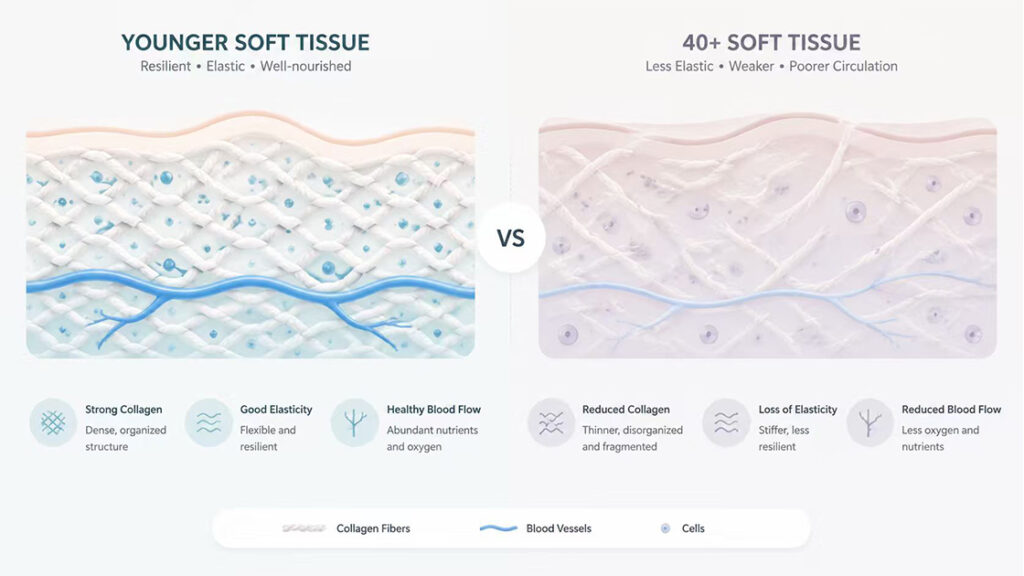
Starting around age 40, the body begins to produce less collagen and the quality of existing collagen declines. Collagen provides structural support to tendons, ligaments, and fascia, giving them the strength and elasticity needed to handle daily stress. As collagen production slows, tissues become less flexible and more prone to injury. The water content of tendons also decreases, making them stiffer and less able to absorb shock. Blood flow to soft tissues diminishes, which means fewer nutrients and oxygen reach the areas that need repair. Cellular senescence increases, with cells losing their ability to divide and function properly. These changes contribute to slower healing times, increased stiffness, and a higher risk of overuse injuries.
1.2 Why Recovery Takes Longer in Midlife
Several factors explain why the body’s repair processes slow down after 40. The inflammatory response, which initiates healing, becomes less efficient. Macrophages and other immune cells do not respond as quickly, prolonging the inflammatory phase and delaying tissue repair. The formation of new blood vessels, or angiogenesis, slows, limiting the delivery of oxygen and nutrients to damaged tissues. Growth factor production decreases, reducing the signals that stimulate cells to rebuild and remodel. The accumulation of senescent cells in tissues can also impair healing and contribute to chronic low-grade inflammation. For active adults who push their bodies regularly, these age-related changes can mean the difference between recovering in a day and nursing an injury for weeks.
1.3 The Cumulative Effect on Active Lifestyles
The gradual decline in tissue resilience does not happen overnight. It builds over years, often going unnoticed until an injury takes longer to heal or a familiar activity becomes more taxing. Weekend runners may find that their Achilles tendons feel tighter in the morning. Recreational tennis players may notice more elbow soreness after matches. Parents chasing young children may experience persistent knee discomfort. These small signs accumulate, eventually affecting not just performance but the enjoyment of physical activity. Without intervention, many active midlife adults find themselves scaling back their exercise routines or abandoning activities they once loved.
2. The Science Behind Shockwave Therapy
Shockwave therapy delivers acoustic waves to targeted tissues. These mechanical waves penetrate the skin and reach deep structures like tendons, ligaments, and fascia. The therapy does not use heat or electricity. Instead, it relies on mechanical energy to stimulate the body’s natural repair mechanisms.
2.1 How Acoustic Waves Stimulate Healing
When shockwaves reach the target tissue, the mechanical pressure creates a cascade of cellular responses. The waves stimulate mechanotransduction pathways, which convert mechanical signals into biochemical activity. This process activates tenocytes, the cells responsible for maintaining tendon health, and encourages them to produce new collagen. The mechanical energy also promotes the formation of new blood vessels, improving circulation to areas that have become poorly perfused with age. Better blood flow means more oxygen and nutrients reach the tissue, supporting repair and reducing stiffness. Shockwave therapy also helps break down adhesions and calcifications that can form in degenerating tendons, restoring some of the tissue’s original flexibility.
2.2 Benefits for Aging Soft Tissues
Research has shown that shockwave therapy can be particularly effective for middle-aged and older adults. It targets the degenerative changes that characterize age-related tendinopathy and fasciopathy. The therapy accelerates collagen remodeling, improving the tensile strength of tendons and reducing thickening. It enhances tissue resilience and speeds muscle and tendon recovery. For active midlife adults, this means a faster return to normal activity after a workout and a reduced risk of injury from overuse.
2.3 Safety and Suitability for Active Adults
Shockwave therapy is a non-surgical treatment that does not require anesthesia or incisions. It can be used safely in older adults and does not pose risks to the heart. The treatment is typically well tolerated, with most patients describing the sensation as deep pressure or tapping rather than pain. Sessions are relatively brief, and there is no downtime afterward. This makes shockwave therapy a practical option for busy adults who cannot afford lengthy recovery periods.
3. Common Soft Tissue Issues in Midlife Adults
Active adults over 40 frequently encounter specific soft tissue problems. Understanding these common conditions helps in recognizing when shockwave therapy might be a useful option.
3.1 Tendinopathies
Tendinopathy refers to degeneration of a tendon without significant inflammation. Unlike tendonitis, which involves acute inflammation, tendinopathy is a chronic condition marked by disorganized collagen, increased ground substance, and reduced tensile strength. Common sites include the Achilles tendon, patellar tendon, and rotator cuff. In middle-aged adults, tendinopathy often results from cumulative microtrauma rather than a single acute injury. Activities like running, jumping, or repetitive overhead motions can strain tendons that have lost some of their elasticity, leading to pain and dysfunction.
3.2 Fasciopathies
The plantar fascia and other fascial structures can also degenerate with age. Plantar fasciitis, a common cause of heel pain, is often a fasciopathy rather than an inflammatory condition. The fascia becomes thickened, less elastic, and more prone to microtears. This can cause pain that worsens with the first steps in the morning or after prolonged sitting. Fasciopathies respond to treatments that promote tissue remodeling and improve blood flow, making shockwave therapy a relevant option.
3.3 Muscle Strains and Overuse Injuries
Muscles also experience age-related changes. Reduced muscle mass, decreased elasticity, and slower repair mechanisms make strains more common and recovery slower. Overuse injuries, such as iliotibial band syndrome or medial epicondylitis, can develop from activities that were once tolerated without issue. These injuries often involve a combination of muscle imbalance, poor biomechanics, and tissue degeneration.
4. Integrating Shockwave Therapy into a Wellness Routine
Shockwave therapy can serve as more than a treatment for existing injuries. Many active adults use it as part of a proactive approach to maintain mobility and prevent problems before they start.
4.1 Beyond Injury Treatment
Clinics are increasingly offering shockwave therapy for preventative care, recovery after intense physical activity, and long-term mobility maintenance. Rather than waiting for an injury to develop, active adults can use shockwave therapy to address areas of high load, such as the Achilles tendon, rotator cuff, or patellar tendon. This proactive approach helps keep tissues healthy and resilient, reducing the likelihood of overuse injuries.
4.2 Frequency and Maintenance
The frequency of shockwave sessions depends on individual needs and goals. Some adults use it monthly to stay pain-free and competitive. Others return every few weeks for maintenance sessions to avoid flare-ups. A typical course may involve several sessions over a few weeks, followed by periodic maintenance treatments. This flexibility allows active adults to tailor the therapy to their specific schedules and activity levels.
4.3 Complementary Strategies
Shockwave therapy works best alongside other healthy habits. Staying hydrated supports tissue elasticity and nutrient delivery. Regular stretching helps maintain flexibility and reduce tension in tendons and muscles. Strength training builds the supporting muscles around joints, reducing the load on tendons and ligaments. Proper nutrition, including adequate protein intake, supports collagen synthesis and tissue repair. Combining shockwave therapy with these strategies can maximize its benefits and support long-term musculoskeletal health.
5. What to Expect from Shockwave Therapy
For those considering shockwave therapy, understanding the treatment process helps set realistic expectations.
5.1 The Treatment Session
A typical shockwave session lasts between 10 and 15 minutes. The practitioner applies a coupling gel to the skin and positions the applicator over the target area. The device then delivers acoustic waves through the skin to the underlying tissues. Most patients describe the sensation as deep tapping or pressure. The treatment does not require anesthesia, and patients can resume normal activities immediately afterward.
5.2 Number of Sessions
The number of sessions varies depending on the condition and individual response. Some patients notice improvement after just a few sessions, while others benefit from a longer series. A typical course might include three to six sessions spread over a few weeks. Follow-up maintenance sessions may be recommended to sustain the benefits and prevent recurrence.
5.3 Results and Recovery
Improvement often occurs gradually over the weeks following treatment. The body needs time to respond to the mechanical stimulation, remodel collagen, and grow new blood vessels. Patients may notice reduced pain, improved mobility, and a faster return to activity. While results vary, many active adults find that shockwave therapy helps them maintain their fitness routines with less discomfort and greater confidence.
FAQ
Q1: Is shockwave therapy painful?
Most people describe the sensation as deep pressure or tapping rather than pain. The treatment is generally well tolerated.
Q2: How many sessions do I need?
The number varies. Some people notice improvement after a few sessions, while others need a longer series. A common course is three to six sessions.
Q3: Can I continue exercising during treatment?
Yes. You can usually continue normal activities, though avoiding activities that cause sharp pain is advisable during the treatment period.
Q4: How soon will I see results?
Improvement often becomes noticeable over several weeks as the tissue responds and remodels.
Q5: Is shockwave therapy suitable for older adults?
Yes. It can be used safely in older adults and does not pose risks to the heart.
Conclusion
The gradual decline in soft tissue recovery after 40 is a natural part of aging, but it does not have to dictate the terms of an active life. Tendons, ligaments, and muscles undergo changes that can slow healing and increase injury risk. For those who want to stay active and avoid the frustration of persistent pain, shockwave therapy offers a non-invasive, drug-free approach. By stimulating cellular repair, improving circulation, and promoting tissue remodeling, shockwave therapy supports the body’s own healing mechanisms. When combined with sensible self-care strategies, it can help active midlife adults maintain their mobility, reduce discomfort, and continue doing the activities they enjoy.
References
Age and symptom severity as predictors of outcomes following shockwave therapy in Achilles tendinopathy
Shockwave: Is It Time to Wake Up Your Body’s Healing Potential?
https://www.neuroathletechiro.com
Why Active Clients Return for Shockwave Therapy
Care of the Aging Athlete: Interventional Treatment Options for Musculoskeletal Injuries in the Masters Athlete
Long-Term Efficacy of Combined Focused and Radial Extracorporeal Shockwave Therapy for Gluteus Medius Tendon Pathology: A Pilot Study