

Introduction
Modern lifestyles have changed the way people use their bodies every day. Long periods of screen use, driving, repetitive movements, and limited physical activity can contribute to increased tension in the neck and upper back areas. Many individuals experience discomfort related to muscle tightness, posture habits, and daily physical stress, which may influence movement quality and overall comfort. In recent years, Shockwave Therapy has gained attention as a non-invasive technology used in rehabilitation and physical wellness environments. Through acoustic wave energy, targeted application, and advanced Extracorporeal Shockwave Therapy (ESWT) approaches, this technology provides a supportive option for professionals and individuals focusing on soft tissue recovery and mobility improvement. When combined with proper movement habits and personalized wellness strategies, Shockwave Therapy can become part of a broader approach to managing modern lifestyle-related physical challenges.
1. Understanding Shockwave Therapy and Modern Neck Tension
1.1 What Is Shockwave Therapy?
Shockwave Therapy is a non-invasive technology that uses acoustic wave energy to interact with targeted areas of the body. Originally developed within medical applications involving physical recovery, this technology has become increasingly used in rehabilitation and sports wellness environments.
Extracorporeal Shockwave Therapy (ESWT) refers to the delivery of mechanical energy through specialized devices to specific areas of the body. Depending on the application, professionals may use different types of shockwave technology, including radial shockwave therapy and focused shockwave therapy.
Radial shockwave therapy distributes energy across a wider surface area, and practitioners commonly discuss it in relation to soft tissue applications. Focused shockwave therapy delivers energy with greater depth concentration, and clinicians may consider it for specific tissue areas.
Manufacturers design modern shockwave systems to provide adjustable energy levels and targeted application options, allowing professionals to consider different body conditions and individual requirements.
1.2 Why Modern Lifestyles Contribute to Neck and Upper Back Tension
Daily habits have a significant influence on how the neck and upper back function. Many people spend extended periods looking at computers, smartphones, or other digital devices, creating continuous demands on the muscles supporting the cervical and upper back regions.
Long periods of sitting, reduced movement, and repetitive activities may contribute to feelings of stiffness and physical discomfort. The muscles around the neck, shoulders, and upper back work continuously to maintain posture, which can increase physical stress over time.
Modern lifestyle-related neck discomfort is often connected with multiple factors rather than a single cause. Sleep habits, work environments, exercise routines, and overall activity levels may all influence how the body responds to daily stress.
Because of this complexity, many rehabilitation approaches focus on supporting mobility, soft tissue condition, and healthy movement patterns.
1.3 The Role of Acoustic Wave Technology in Soft Tissue Support
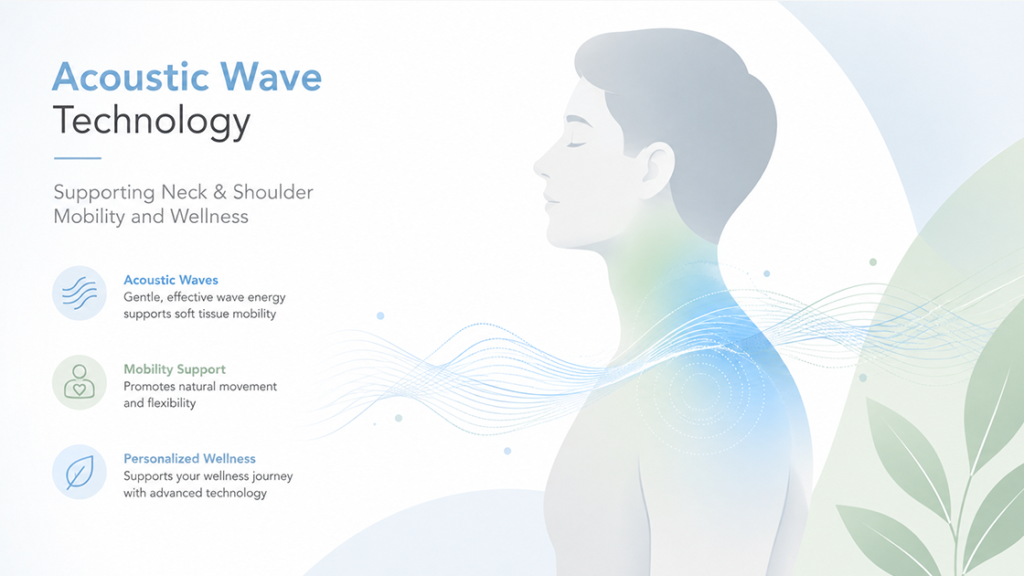
Shockwave Therapy works through mechanical acoustic waves that transfer energy into targeted body areas. These waves create physical stimulation within tissues and are used in rehabilitation environments as part of broader recovery programs.
The technology is often associated with supporting soft tissue function and mobility management. By focusing on specific areas, professionals can incorporate shockwave technology into personalized rehabilitation strategies.
Research has explored shockwave applications in different musculoskeletal conditions, including soft tissue concerns and chronic pain-related conditions. Studies have also examined the use of acoustic wave technologies in areas such as cervical myofascial discomfort and rehabilitation support.
The continued development of shockwave technology reflects growing interest in non-invasive approaches that support physical wellness.
2. Shockwave Therapy for Neck and Upper Back Comfort
2.1 Supporting Soft Tissue Recovery in the Neck Area
The neck and upper back contain complex networks of muscles, connective tissues, and joints that work together to support head movement and posture.
When these areas experience repeated physical stress from daily activities, individuals may notice changes in comfort and movement quality. Shockwave Therapy for Neck Pain has become an area of interest because it focuses on targeted mechanical stimulation rather than invasive approaches.
In rehabilitation settings, shockwave technology may be considered as part of a comprehensive plan designed around soft tissue support and mobility goals.
The purpose of this technology is not to replace healthy movement habits but to complement other approaches that encourage better physical function.
2.2 Supporting Upper Back Mobility in Sedentary Lifestyles
Sedentary lifestyles are becoming increasingly common due to computer-based work, online activities, and reduced daily movement. The upper back and shoulder regions often play an important role in maintaining posture during these activities.
When movement patterns become limited, individuals may experience increased muscle tension or reduced flexibility.
Shockwave Therapy provides a technology option that focuses on targeted areas involved in soft tissue function. By incorporating this approach into professional rehabilitation environments, practitioners can address individual mobility goals while considering lifestyle factors.
A complete approach to upper back wellness often includes regular movement, posture awareness, and personalized physical management strategies.
2.3 Why Shockwave Therapy Is Gaining Attention in Modern Rehabilitation
The demand for non-invasive rehabilitation technologies continues to grow as more people seek solutions that fit into active lifestyles.
Shockwave Therapy has attracted attention because it combines advanced technology with practical applications in rehabilitation, sports recovery, and physical wellness.
Unlike traditional approaches that focus only on short-term comfort, modern rehabilitation increasingly emphasizes long-term movement quality and personalized care.
The ability to adjust energy levels and application methods makes shockwave technology suitable for different professional environments, including rehabilitation centers, sports facilities, and wellness clinics.
3. The Relationship Between Lifestyle Habits and Upper Body Mobility
3.1 How Digital Device Use Influences Neck and Shoulder Comfort
The increasing use of computers, smartphones, and digital devices has changed the way many people position their bodies throughout the day. Looking downward at screens for extended periods can place additional demands on the muscles around the cervical spine and shoulders.
Over time, repetitive postures may influence muscle balance and movement patterns. The upper trapezius, cervical muscles, and surrounding soft tissues often work continuously to maintain head and shoulder positioning.
For individuals experiencing discomfort related to modern lifestyle habits, rehabilitation professionals often focus on improving movement quality and supporting soft tissue condition. Shockwave Therapy is becoming an area of interest because it offers a technology-based approach that can be incorporated into broader mobility and recovery programs.
3.2 Supporting People With Sedentary Work Patterns
Sedentary work has become increasingly common across many industries. People who spend several hours sitting at desks may experience challenges related to reduced movement, limited posture changes, and repetitive upper-body positioning.
Multiple factors, including workstation habits, physical activity levels, and daily routines, usually influence neck and upper back tension from sedentary lifestyles. A comprehensive approach often considers the relationship between movement, muscle condition, and lifestyle adjustments.
Shockwave Therapy for Neck Pain is being explored within rehabilitation environments as a supportive option for addressing soft tissue concerns. By using acoustic wave technology, practitioners can focus on specific areas while combining the approach with other mobility-focused strategies.
Research on physical rehabilitation technologies continues to examine different approaches for chronic neck-related conditions, including extracorporeal shockwave therapy and other non-invasive modalities.
4. Applications of Shockwave Therapy in Rehabilitation and Wellness Settings
4.1 The Role of Radial Shockwave Therapy in Soft Tissue Support
Radial Shockwave Therapy is one of the commonly discussed forms of shockwave technology. It delivers mechanical waves across targeted surface areas, making it suitable for applications involving muscles and soft tissues.
In rehabilitation settings, radial shockwave therapy may be considered when professionals are focusing on areas affected by repeated physical stress, muscle tension, or movement limitations.
The technology provides an alternative method for supporting recovery-focused programs because it does not require invasive procedures and practitioners can integrate it into different rehabilitation environments.
For individuals experiencing neck and upper back tension related to lifestyle factors, radial shockwave therapy represents one possible supportive technology within personalized wellness plans.
4.2 The Importance of Personalized Shockwave Therapy Approaches
Every person’s physical condition and lifestyle habits are different. Someone who spends most of the day at a computer may have different mobility challenges compared with someone involved in physical labor or athletic training.
Personalized approaches allow professionals to consider factors such as movement patterns, activity levels, and specific areas of concern.
Modern shockwave systems often provide adjustable settings and different applicator options, allowing professionals to adapt the technology according to individual requirements.
This personalized approach reflects the broader development of rehabilitation technology, where manufacturers increasingly design solutions around individual needs rather than general applications.
4.3 Combining Shockwave Therapy With Healthy Movement Habits
Technology alone is not the only factor involved in maintaining neck and upper back wellness. Healthy movement habits, regular physical activity, and proper posture awareness remain important parts of long-term body management.
Shockwave Therapy is generally considered a supportive tool that works alongside broader wellness strategies. Combining technology with appropriate exercise and lifestyle adjustments can create a more complete approach to maintaining mobility.
As rehabilitation continues to evolve, more professionals are exploring integrated solutions that combine advanced equipment with personalized care strategies.
5. The Future of Shockwave Therapy for Modern Lifestyle-Related Discomfort
5.1 Growing Demand for Non-Invasive Recovery Technologies
The demand for non-invasive recovery technologies continues to increase as more people seek approaches that fit into modern lifestyles.
Many individuals prefer options that support their wellness goals while allowing them to continue daily activities. This trend has encouraged the development of technologies such as Extracorporeal Shockwave Therapy, which focuses on mechanical energy delivery and targeted applications.
Shockwave Therapy is becoming an important topic in rehabilitation discussions because it connects advanced technology with practical needs in sports recovery, physical wellness, and movement support.
5.2 How Shockwave Technology May Support Future Rehabilitation Trends
The future of rehabilitation is moving toward more personalized and technology-supported solutions. Professionals are increasingly considering tools that can complement traditional approaches and provide additional options for different physical needs.
Shockwave Therapy represents one example of this development. With improvements in energy control, application precision, and device flexibility, modern shockwave systems continue to expand their role in rehabilitation environments.
As interest in mobility, active lifestyles, and preventive wellness continues to grow, shockwave technology may remain an important part of conversations around non-invasive physical support.
FAQ
What is Shockwave Therapy?
It is a non-invasive technology that uses acoustic wave energy to support rehabilitation and soft tissue recovery programs.
Can Shockwave Therapy help with neck tension?
It is often used as a supportive option in rehabilitation programs focusing on soft tissue conditions and mobility concerns.
What is the difference between radial and focused shockwave therapy?
Radial shockwave therapy distributes energy across a wider area, while focused shockwave therapy delivers energy with deeper concentration.
Is Shockwave Therapy only used for sports injuries?
No. It is also discussed in rehabilitation and wellness settings for various soft tissue and mobility-related concerns.
Can Shockwave Therapy replace exercise?
No. Manufacturers design it as a supportive technology, and practitioners usually combine it with healthy movement habits and personalized wellness strategies.
Conclusion
Modern lifestyles have created new challenges related to neck and upper back comfort, especially with increased screen use, sedentary routines, and repetitive daily activities. Shockwave Therapy provides a non-invasive technology option that supports rehabilitation and wellness programs through acoustic wave energy and targeted application methods. By combining radial shockwave therapy, personalized approaches, and healthy movement habits, this technology reflects the growing trend toward comprehensive solutions for maintaining mobility and physical comfort. As rehabilitation technology continues to develop, Shockwave Therapy may continue to play a role in supporting individuals seeking modern approaches to lifestyle-related physical challenges.
References
Extracorporeal Shock Wave Therapy in Musculoskeletal Disorders: A Review of Current Evidence
https://pubmed.ncbi.nlm.nih.gov/40244434
Shock Wave Therapy in Rehabilitation Medicine: Mechanisms and Clinical Applications
https://pmc.ncbi.nlm.nih.gov/articles/PMC7655229
The Effects of Photobiomodulation and Transcutaneous Electrical Nerve Stimulation on Chronic Neck Pain
https://pubmed.ncbi.nlm.nih.gov/39509929
Photobiomodulation Therapy Combined With Static Magnetic Field Reduces Pain in Chronic Neck and Shoulder Pain
https://www.mdpi.com/2075-1729/12/5/656
Extracorporeal Shockwave Therapy for Tendinopathy and Soft Tissue Conditions: Current Perspectives