

Introduction
Rehabilitation nurses play an important role in helping patients maintain daily function, mobility, and recovery progress in different healthcare environments. As rehabilitation care continues to develop, more facilities are exploring technology-based approaches that can complement traditional nursing support. Shockwave therapy, based on extracorporeal acoustic wave technology, has become an area of interest in rehabilitation settings because it provides a targeted approach that can be incorporated into professional recovery programs. With adjustable pressure levels, different applicators, and radial or focused shockwave options, this technology allows trained healthcare professionals to support personalized rehabilitation plans while working alongside existing care strategies.
1. The Changing Role of Rehabilitation Nurses in Modern Recovery Care
Rehabilitation nursing has expanded beyond traditional patient assistance. Today, rehabilitation nurses often participate in multidisciplinary care teams that focus on mobility support, functional improvement, patient education, and long-term recovery planning.
As healthcare facilities continue to introduce advanced rehabilitation technologies, nurses are becoming increasingly familiar with different supportive tools used alongside clinical programs. Shockwave therapy is one technology that rehabilitation teams may consider when developing comprehensive recovery environments.
1.1 Understanding the Responsibilities of Rehabilitation Nurses
Rehabilitation nurses work with patients who may need support during different stages of recovery. Their responsibilities often include monitoring patient conditions, assisting with mobility goals, coordinating with other healthcare professionals, and providing education about recovery routines.
Unlike general nursing environments, rehabilitation settings usually focus on helping individuals regain confidence and independence in daily activities. This requires continuous observation of movement patterns, functional abilities, and patient responses during recovery programs.
As rehabilitation technology develops, nurses may also become involved in supporting technology-assisted care workflows, including preparation, patient communication, and recovery progress documentation.
1.2 Why Recovery Facilities Are Exploring New Rehabilitation Technologies
Modern recovery facilities are looking for ways to create more personalized care environments. Traditional rehabilitation methods remain important, but technology can provide additional options for professional teams.
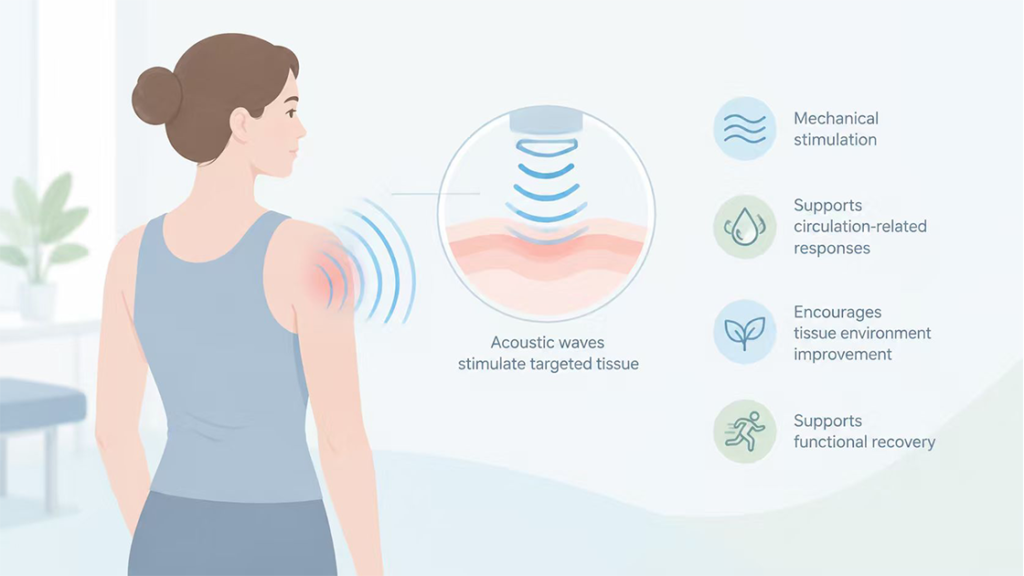
Shockwave therapy uses high-energy acoustic waves that create mechanical stimulation within targeted areas. This technology has been widely explored in rehabilitation and sports medicine settings, especially for supporting programs related to soft tissue and musculoskeletal conditions.
For rehabilitation nurses, understanding how these technologies fit into broader care plans can improve communication with therapists, physicians, and patients.
1.3 The Connection Between Nursing Care and Technology-Based Rehabilitation
Technology does not replace the role of rehabilitation nurses. Instead, it can become part of a larger healthcare approach where nurses help coordinate patient care and monitor recovery progress.
Rehabilitation nurses often provide continuous patient interaction, which makes their role valuable when introducing new recovery technologies. Their observations can help healthcare teams better understand patient comfort, mobility changes, and overall participation in rehabilitation programs.
2. Understanding Shockwave Therapy in Rehabilitation Settings
Shockwave therapy is a non-invasive technology that uses acoustic waves to deliver mechanical energy to targeted areas. In professional rehabilitation environments, it is commonly used as part of broader recovery programs designed around individual patient needs.
Different shockwave systems provide different application methods, including radial shockwave and focused shockwave technologies. These options allow healthcare providers to select appropriate approaches depending on treatment goals and targeted areas.
2.1 How Acoustic Wave Technology Supports Rehabilitation Programs
Shockwave therapy works through mechanical stimulation created by acoustic energy. This process is associated with biological responses in targeted tissues and has been studied in rehabilitation research.
The technology is often discussed in relation to supporting tissue environment, circulation-related responses, and functional recovery programs. However, professional assessment remains important because rehabilitation plans should consider each person’s condition, activity level, and overall health status.
For rehabilitation nurses, understanding the basic principles of shockwave therapy helps them communicate more effectively with patients and healthcare teams.
2.2 Radial and Focused Shockwave Therapy
Modern shockwave therapy systems commonly include radial and focused approaches.
Radial shockwave technology distributes acoustic waves over broader areas, which can be suitable for larger treatment regions.
Focused shockwave technology delivers energy more precisely to specific areas, allowing professionals to address smaller targeted regions.
The availability of different application methods provides rehabilitation facilities with more flexibility when designing patient-centered recovery programs.
2.3 The Importance of Professional Parameters and Treatment Planning
Shockwave therapy requires appropriate parameter selection based on individual needs. Factors such as pressure level, frequency, application area, and session planning influence how professionals integrate the technology into rehabilitation programs.
Rehabilitation nurses can support this process by helping patients understand the purpose of the technology, preparing them for sessions, and observing their overall responses during recovery care.
A coordinated approach between nurses, therapists, and physicians helps ensure that technology is used as part of a structured rehabilitation strategy.
3. How Rehabilitation Facilities Use Shockwave Therapy Technology
Rehabilitation facilities often combine multiple approaches to support patient recovery. Shockwave therapy may become one component of these programs, working together with exercise guidance, mobility training, and professional nursing support.
For rehabilitation nurses, understanding the practical role of shockwave technology can help improve patient communication and teamwork within multidisciplinary environments.
3.1 Supporting Mobility-Focused Rehabilitation Programs
Mobility is a major focus in many rehabilitation settings. Patients may participate in structured programs designed to improve movement confidence, functional abilities, and daily activity performance.
Shockwave therapy can be included within these programs as a supportive technology option selected by healthcare professionals. Nurses can help patients understand the process and encourage participation in their overall recovery plan.
3.2 Improving Communication Between Healthcare Teams
Rehabilitation often involves collaboration between different professionals, including physicians, physical therapists, occupational therapists, and nurses.
When new technologies such as shockwave therapy are introduced, communication becomes especially important. Nurses who understand the basic functions of the technology can better explain procedures, answer general patient questions, and report relevant observations to the care team.
This teamwork supports a more organized rehabilitation environment.
3.3 Supporting Patient Education During Technology-Assisted Care
Patient education is an important part of rehabilitation nursing. Many patients may have questions when they encounter unfamiliar technologies during their recovery journey.
Rehabilitation nurses can help patients understand:
- why a technology may be included in their recovery plan
- what to expect during professional sessions
- how technology fits with exercise and rehabilitation activities
Clear communication can help patients feel more involved in their own recovery process.
4. The Role of Rehabilitation Nurses in Shockwave Therapy Programs
As recovery facilities continue to adopt advanced rehabilitation technologies, rehabilitation nurses play an important role in creating a smooth connection between technology and patient care. While healthcare professionals with specialized training operate shockwave therapy systems, nurses often support the overall patient experience through communication, monitoring, and coordination.
The integration of shockwave therapy into rehabilitation programs requires teamwork between different healthcare professionals. A coordinated approach allows facilities to provide structured and patient-focused recovery environments.
4.1 Supporting Patient Preparation Before Shockwave Therapy Sessions
Before technology-assisted rehabilitation sessions, patients often need clear information about the process. Rehabilitation nurses can help introduce the purpose of shockwave therapy and explain how it fits into the overall recovery plan.
Patient preparation may include discussing general expectations, reviewing comfort levels, and ensuring that patients understand the importance of following professional guidance.
By providing clear communication, nurses help create a more comfortable rehabilitation experience and encourage active patient participation.
4.2 Monitoring Patient Responses During Recovery Programs
Rehabilitation nurses frequently interact with patients throughout their recovery journey. This allows them to observe changes in mobility, comfort levels, and daily functional abilities.
When shockwave therapy is included in a rehabilitation program, nurses may communicate relevant observations with the broader healthcare team. These observations can help professionals make informed decisions when adjusting recovery strategies.
Continuous communication between nurses and rehabilitation specialists supports a more coordinated care environment.
4.3 Supporting Long-Term Rehabilitation Goals
Recovery programs often focus on gradual progress rather than short-term changes. Rehabilitation nurses help patients maintain engagement with their care plans by providing education, encouragement, and ongoing support.
Shockwave therapy can be considered as one part of a broader rehabilitation strategy that may include exercise programs, movement training, lifestyle adjustments, and professional guidance.
By combining technology with comprehensive care approaches, recovery facilities can create more personalized rehabilitation pathways.
5. Choosing Shockwave Therapy Technology for Rehabilitation Facilities
As more healthcare facilities explore technology-assisted rehabilitation, selecting appropriate equipment becomes an important consideration. Recovery centers need solutions that match their clinical environment, patient needs, and professional workflows.
Shockwave therapy systems vary in design, application methods, and available settings. Understanding these differences helps rehabilitation facilities evaluate how the technology may fit into their existing services.
5.1 Important Features of Professional Shockwave Therapy Systems
Professional rehabilitation environments often consider several factors when evaluating shockwave therapy technology.
These factors may include:
- adjustable energy levels
- radial and focused shockwave options
- different applicator designs
- user-friendly operation
- compatibility with rehabilitation workflows
Flexible settings allow healthcare professionals to adapt applications based on different body areas and rehabilitation objectives.
5.2 The Growing Importance of Shockwave Therapy in Rehabilitation Care
Rehabilitation continues to evolve as healthcare providers explore new methods to support patient-centered care. Technology-based solutions are becoming increasingly common in recovery facilities because they offer additional options alongside traditional rehabilitation approaches.
Shockwave therapy represents one example of how acoustic wave technology can be incorporated into modern rehabilitation environments.
For rehabilitation nurses, understanding these developments helps them participate more effectively in multidisciplinary teams and provide better communication support for patients.
5.3 Future Trends in Rehabilitation Nursing and Technology Integration
The relationship between nursing care and rehabilitation technology will continue to develop. As recovery facilities adopt more advanced tools, rehabilitation nurses may become increasingly involved in technology-supported care coordination.
Future rehabilitation environments may place greater emphasis on personalized recovery plans, communication between healthcare professionals, and combining different approaches to support functional goals.
Shockwave therapy technology is part of this broader movement toward more comprehensive rehabilitation solutions.
FAQ
What is shockwave therapy used for in rehabilitation facilities?
Shockwave therapy is used as a supportive technology within professional rehabilitation programs focusing on mobility and recovery goals.
Can rehabilitation nurses operate shockwave therapy equipment?
Operation depends on professional training and facility requirements. Nurses often support patient communication and care coordination.
What types of shockwave therapy systems are available?
Common options include radial shockwave and focused shockwave technologies, which provide different application methods.
Is shockwave therapy a replacement for rehabilitation exercises?
No. It is generally used as part of a broader rehabilitation plan that may include exercise, mobility training, and professional guidance.
Why are recovery facilities interested in shockwave technology?
Many facilities explore shockwave technology because it provides another option for supporting personalized rehabilitation programs.
Conclusion
Rehabilitation nursing continues to play an essential role in modern recovery environments, especially as healthcare facilities introduce more technology-based approaches. Shockwave therapy, powered by acoustic wave technology, offers rehabilitation teams an additional tool that can be incorporated into structured care programs. For rehabilitation nurses, understanding this technology helps improve communication, patient education, and teamwork with other healthcare professionals. As rehabilitation continues to move toward personalized and comprehensive care models, combining professional nursing support with advanced recovery technologies may become an increasingly important part of modern rehabilitation services.
References
Extracorporeal Shock Wave Therapy in Musculoskeletal Disorders: A Review
https://pubmed.ncbi.nlm.nih.gov/28489231
Clinical Applications of Extracorporeal Shock Wave Therapy in Rehabilitation Medicine
https://pmc.ncbi.nlm.nih.gov/articles/PMC4742248
Mechanisms and Clinical Applications of Extracorporeal Shock Wave Therapy
https://pubmed.ncbi.nlm.nih.gov/25688380
Extracorporeal Shock Wave Therapy for Soft Tissue Conditions: Current Evidence and Future Perspectives
https://pmc.ncbi.nlm.nih.gov/articles/PMC6365135
Shockwave Therapy in Rehabilitation and Sports Medicine: Principles and Applications