

Introduction
Returning to running after an injury can feel more complicated than simply deciding when to start jogging again. Even when everyday walking becomes comfortable, running introduces repeated impact, faster muscle contractions, greater tendon loading, and higher demands on coordination. A sudden return to previous mileage or pace may place more stress on tissues that have not yet regained their previous level of tolerance. This is where a structured rehabilitation strategy can become important. Shockwave Therapy, also known as Extracorporeal Shock Wave Therapy (ESWT), uses controlled acoustic wave energy to provide targeted mechanical stimulation to selected soft-tissue areas. In sports rehabilitation, professionals may incorporate shockwave therapy alongside progressive exercise, strength development, mobility work, and running-load management. Rather than replacing these foundations, shockwave therapy can serve as a complementary option for supporting comfort, tissue function, and a gradual return to impact-based activity.
1. Why Returning to Running Requires More Than Pain Relief
Getting back to running involves rebuilding the body’s ability to tolerate repeated impact. A runner may feel better before the affected tissues have fully adapted to the demands of running, which makes gradual progression an important part of the process.
1.1 Walking and Running Create Different Mechanical Demands
Walking and running may appear similar, but their biomechanical demands differ considerably. Running generally involves a flight phase, faster loading rates, greater ground reaction forces, and more rapid force transfer through the foot, ankle, knee, hip, and surrounding connective tissues.
During a running stride, muscles and tendons repeatedly absorb and release mechanical energy. The Achilles tendon, plantar structures, calf complex, quadriceps, hamstrings, and hip musculature all contribute to controlling movement and transferring force.
After an injury, these tissues may temporarily tolerate less repetitive loading than they did before. Returning to running therefore requires more than checking whether pain has decreased. Strength, mobility, coordination, tissue capacity, and tolerance to repeated impact all influence readiness.
1.2 The Importance of Tissue Load Tolerance
Tissue capacity describes how well a structure can tolerate a particular physical demand. Running places repeated loads on tendons, muscles, fascia, joints, and bones, so an effective return-to-running plan needs to consider how much stress the body can currently manage.
If training volume increases too quickly, the cumulative load may exceed the body’s current capacity. Conversely, avoiding all loading for too long may leave tissues underprepared for the demands of running.
This creates the need for a balanced approach. Gradual exposure allows the body to adapt while giving rehabilitation professionals an opportunity to monitor symptoms, movement quality, and functional progress.
2. Understanding How Shockwave Therapy Fits Into Running Recovery
Shockwave Therapy has become an option within sports medicine and musculoskeletal rehabilitation because it delivers mechanical acoustic energy to selected areas. Its potential role becomes particularly relevant when a runner is managing persistent soft-tissue discomfort while rebuilding physical capacity.
2.1 What Extracorporeal Shockwave Therapy Does
Extracorporeal Shock Wave Therapy delivers acoustic waves through an applicator to a targeted body region. These mechanical waves interact with tissue and may influence local biological responses associated with circulation, cellular signaling, pain modulation, and tissue remodeling.
The biological concept behind this approach is often described through mechanotransduction, in which mechanical stimulation influences cellular activity and tissue responses.
The effect does not depend on simply delivering as much energy as possible. Factors such as energy level, frequency, number of impulses, treatment area, tissue depth, and the individual’s condition can influence how a professional structures an application.
A systematic review involving athletes and physically active individuals found that ESWT may have a role in selected sports-related injuries, either as a standalone modality for certain conditions or as an adjunct to exercise-based rehabilitation. The review also emphasized the need for further high-quality research to clarify indications and dose-response relationships.
2.2 Radial and Focused Shockwave Therapy Applications
Modern shockwave systems may provide radial shockwave and focused shockwave approaches. These technologies differ in how acoustic energy distributes through tissue.
Radial shockwave generally disperses energy outward across a broader treatment area. This can make it useful when a professional wants to address a larger region of muscle or soft tissue.
Focused shockwave concentrates acoustic energy toward a more specific target and may provide another option when the treatment objective involves a more localized or deeper anatomical area.
For runners returning from injury, the choice between radial and focused shockwave should depend on the affected tissue, anatomical location, depth, rehabilitation objective, and professional assessment.
2.3 Why Adjustable Parameters Matter for Runners
A runner recovering from injury does not necessarily require the same shockwave parameters as another runner. The affected tissue, symptom pattern, training history, body composition, and current rehabilitation stage can all influence clinical decision-making.
Professional shockwave systems can provide adjustable settings such as pressure or energy intensity, frequency, pulse count, and application mode. These controls allow practitioners to create more individualized applications rather than using one fixed protocol for every situation.
This flexibility also matters when a runner moves from an early recovery stage toward higher levels of activity. The objective can shift from managing localized discomfort toward supporting a broader return-to-running program.
3. Common Challenges When Runners Resume Impact
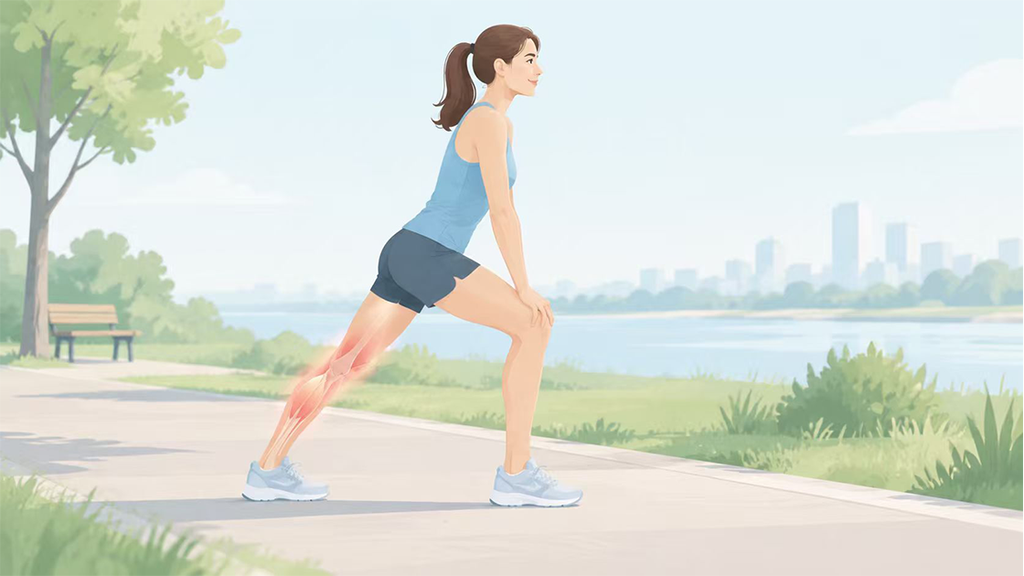
The transition back to running often exposes weaknesses or limitations that may not appear during ordinary daily activities. Understanding these challenges can help explain why a gradual return matters.
3.1 Tendons Need to Rebuild Running Capacity
Tendons play an important role in storing and releasing elastic energy during running. The Achilles tendon, patellar tendon, and other lower-limb tendons experience repeated mechanical loading with every stride.
After a period of reduced activity, a runner may regain cardiovascular fitness faster than tissue tolerance. This mismatch can create a situation in which the runner feels physically capable of running farther while the affected tissue has not yet adapted to the same workload.
Shockwave Therapy has been studied across several tendinopathies, although results vary by condition and treatment protocol. Recent evidence continues to evaluate ESWT for different tendon disorders, highlighting the importance of condition-specific assessment rather than assuming identical results across all injuries.
3.2 Muscles Must Handle Repeated Impact
Running does not place stress only on tendons. The calf muscles, quadriceps, hamstrings, gluteal muscles, and smaller stabilizing muscles all contribute to shock absorption and propulsion.
After an injury, weakness or altered movement patterns can change how forces travel through the lower limb. A runner may unconsciously shorten a stride, avoid loading one side, or change foot placement to protect a sensitive area.
These compensations can shift mechanical stress toward other tissues. For this reason, return-to-running programs often combine strength development with movement assessment and gradual exposure to impact.
Shockwave Therapy may fit into such programs as a complementary modality when localized muscle or soft-tissue discomfort remains part of the rehabilitation picture.
3.3 Repetitive Impact Is Different From a Single Exercise
A short strength session and a running workout can produce very different loading patterns. Running involves hundreds or thousands of repeated ground contacts, depending on distance and pace.
Even when each individual stride feels manageable, cumulative loading can become significant. This makes training volume an important variable during recovery.
A gradual increase in running frequency, duration, speed, and terrain can give the body time to adapt. Shockwave therapy should support this process rather than encourage runners to increase mileage simply because symptoms feel temporarily improved.
4. Building a Smarter Return-to-Running Framework
A successful return to running depends on more than one treatment or one recovery technique. It involves several interconnected factors, including strength, mobility, running mechanics, tissue tolerance, and training progression.
4.1 Start With Functional Readiness
Before returning to regular running, a runner should consider whether basic movements are comfortable and controlled. Walking, stairs, controlled single-leg movements, and appropriate strength exercises can provide useful information about current function.
Functional readiness does not require every sensation to disappear. Instead, the goal is to understand whether the body can tolerate progressively greater loads without a significant deterioration in symptoms or movement quality.
A sports medicine or rehabilitation professional can help determine whether a runner is ready to introduce impact and how quickly that impact should progress.
4.2 Progress Impact Before Chasing Speed
Speed increases mechanical demand. Sprinting, hill running, intervals, and rapid changes in pace can create substantially different loading conditions from easy running.
For this reason, many return-to-running strategies emphasize establishing tolerance to basic running first. Distance and frequency can then progress before introducing more demanding speed or terrain variables.
Shockwave Therapy may complement this process when a professional identifies a suitable soft-tissue target. Its role remains supportive rather than replacing the progressive loading that helps restore physical capacity.
4.3 Monitor Symptoms After Running
The body’s response does not always appear immediately. A runner may complete a session comfortably and then notice increased stiffness or soreness later in the day or the following morning.
Monitoring these responses can help determine whether the current training load remains appropriate.
Useful considerations include how symptoms feel during activity, whether movement quality changes, whether discomfort settles normally, and whether the next day’s function remains stable.
This approach helps prevent the common mistake of judging readiness solely by how the body feels during the first few minutes of a run.
5. Combining Shockwave Therapy With Long-Term Running Goals
Returning to running is not only about completing the first pain-free jog. The larger objective involves rebuilding enough physical capacity to tolerate regular training.
5.1 Strength and Mobility Remain Essential
Strength training provides an important foundation for runners returning from injury. Stronger muscles can help manage mechanical demands, while appropriate mobility supports efficient movement through the lower limb.
Depending on the injury, rehabilitation may include calf strengthening, hip strengthening, single-leg exercises, balance training, or controlled eccentric loading.
Shockwave Therapy can complement these approaches when clinically appropriate. A systematic review of ESWT in athletes and physically active individuals found that shockwave therapy may work particularly well as an adjunct to exercise treatment for certain sports-related conditions, reinforcing the value of combining modalities rather than treating them as isolated solutions.
5.2 Managing Training Volume Over Time
One of the biggest challenges for returning runners is resisting the urge to return immediately to their previous mileage.
A runner who previously completed long-distance training may still need to rebuild from shorter sessions after an injury. The body responds to cumulative training load, so weekly distance, running frequency, intensity, hills, terrain, and recovery time all deserve consideration.
Gradual progression can help create a more sustainable transition. If symptoms increase significantly after a workload change, adjusting the training plan may be more appropriate than simply pushing through.
5.3 Supporting a Sustainable Return to Impact
The final stage of recovery involves more than tolerating one successful run. Runners need to develop confidence in their ability to handle repeated training sessions without recurring problems.
This requires attention to recovery between workouts, strength maintenance, running mechanics, footwear, terrain, and changes in training intensity.
Shockwave Therapy may be one component of this broader strategy when a professional determines that it fits the individual’s rehabilitation needs. Its greatest value comes from being integrated into a structured plan rather than being viewed as a shortcut back to full training.
Frequently Asked Questions
Can Shockwave Therapy help someone return to running after an injury?
It may provide supportive care for selected musculoskeletal conditions, particularly when incorporated into a broader rehabilitation program.
Is Shockwave Therapy a replacement for running rehabilitation?
No. Strength training, progressive loading, mobility work, and appropriate training management remain important parts of recovery.
What is the difference between radial and focused shockwave therapy?
Radial shockwaves generally distribute energy over a broader area, while focused shockwaves concentrate energy toward a more specific target.
How soon can someone run after Shockwave Therapy?
The appropriate timing depends on the injury, treatment plan, symptoms, and professional guidance. There is no single timeline that applies to every runner.
Can Shockwave Therapy reduce running-related discomfort?
It may help support comfort in selected musculoskeletal conditions, but individual responses can vary.
Why is gradual impact progression important?
Running creates repeated mechanical loading. Gradual progression allows tissues and movement systems to rebuild tolerance instead of immediately facing previous training demands.
Can runners use Shockwave Therapy with strength training?
Yes. Shockwave Therapy may complement exercise-based rehabilitation when a qualified professional considers it appropriate.
Conclusion
Returning to running after an injury requires a careful balance between movement, tissue capacity, training load, and recovery. A runner may regain confidence and cardiovascular fitness before the injured tissues are ready to tolerate their previous level of repetitive impact, making gradual progression particularly important. Shockwave Therapy provides a non-invasive option that uses controlled acoustic wave energy to stimulate targeted tissues and may support comfort and tissue function in selected musculoskeletal conditions. Current evidence supports its use in certain sports-related injuries, while also emphasizing that outcomes can vary according to the condition, treatment parameters, and rehabilitation context. For runners, the most useful role for shockwave therapy is therefore as part of a comprehensive recovery strategy that includes progressive strength training, mobility work, functional assessment, running-load management, and gradual exposure to impact. A thoughtful return-to-running plan focuses not simply on getting back to the road, but on rebuilding the physical capacity needed to stay there consistently and comfortably.
References
Use of Extracorporeal Shockwave Therapies for Athletes and Physically Active Individuals: A Systematic Review
https://pubmed.ncbi.nlm.nih.gov/38228375
The Effect of Extracorporeal Shock-Wave Therapy on Pain in Patients With Various Tendinopathies: A Systematic Review and Meta-Analysis of Randomized Controlled Trials
https://link.springer.com/article/10.1186/s13102-024-00884-8
The Role of Extracorporeal Shock Wave Therapy in the Treatment of Muscle Injuries: A Systematic Review
https://pubmed.ncbi.nlm.nih.gov/37767244
The Effectiveness of Extracorporeal Shockwave Therapy in Treatment of Upper and Lower Limb Tendinopathies: A Systematic Review and Meta-Analysis
https://pubmed.ncbi.nlm.nih.gov/37493215
The Effect of Extracorporeal Shockwave Therapy in Tendinopathy: A Systematic Review and Network Meta-Analysis of Randomized Controlled Trials