

Introduction
As people age, maintaining mobility, physical independence, and overall physical comfort becomes an important part of healthy aging. Physical therapy clinics that work with older adults often focus on supporting movement ability, strength maintenance, and functional recovery through personalized care programs. In recent years, advanced technologies such as Shockwave Therapy have gained attention in rehabilitation environments because they provide a non-invasive approach that uses acoustic wave energy to support soft tissue care and mobility-focused programs. With adjustable settings, targeted applications, and different energy delivery options, modern shockwave technology offers physical therapy professionals an additional tool for creating customized recovery strategies for older adult patients.
1. Understanding Mobility Challenges in Older Adult Rehabilitation
Aging can bring changes in muscle strength, flexibility, balance, and movement patterns. These changes may influence how older adults participate in daily activities and maintain an active lifestyle.
Physical therapy clinics often design personalized programs that focus on improving movement confidence and supporting long-term physical wellness. Understanding the specific needs of older adults helps professionals choose suitable technologies and approaches within rehabilitation settings.
1.1 Why Mobility Support Becomes Important With Aging
Mobility plays an essential role in maintaining independence among older adults. Daily activities such as walking, climbing stairs, maintaining balance, and completing household tasks all require coordinated movement between muscles, joints, and connective tissues.
As physical demands change over time, many older adults focus more on maintaining comfortable movement patterns and supporting their ability to stay active.
Physical therapy professionals use various approaches to help individuals improve functional movement. Shockwave Therapy can be considered as part of a broader rehabilitation strategy by providing targeted acoustic wave energy to selected areas during professional sessions.
1.2 Common Areas of Focus in Senior Rehabilitation Programs
Older adult rehabilitation often involves multiple areas of the body because movement depends on the coordination of different muscle groups and joints.
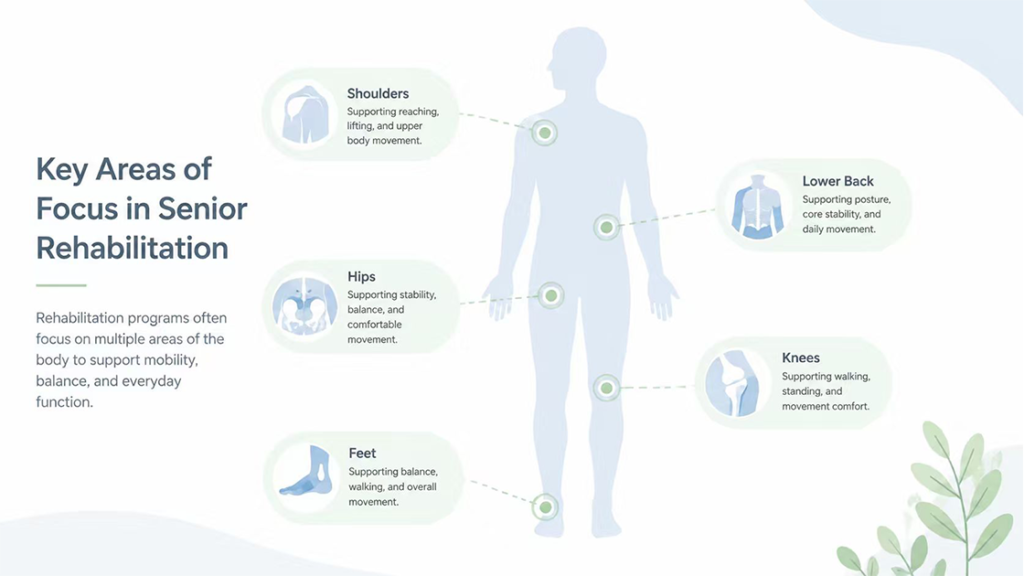
Physical therapy programs may focus on areas such as the shoulders, hips, knees, feet, and lower back based on individual conditions and activity levels.
Shockwave technology allows professionals to adjust treatment parameters according to different application areas. This flexibility helps clinics create personalized approaches rather than applying the same settings for every individual.
By combining technology with exercise programs, mobility training, and professional guidance, clinics can provide more comprehensive support for older adults.
1.3 The Role of Technology in Modern Physical Therapy Clinics
Modern rehabilitation clinics continue to explore technologies that can complement traditional physical therapy methods.
While manual techniques, movement exercises, and strength training remain important components of rehabilitation, advanced devices provide additional options for professional care environments.
Shockwave Therapy uses acoustic wave energy to support targeted applications. With adjustable pressure levels and frequency settings, professionals can customize sessions according to specific goals and patient needs.
For clinics serving older adults, this technology represents one option that can be integrated into a wider approach focused on mobility support and quality of life.
2. How Shockwave Therapy Supports Older Adult Rehabilitation Programs
Shockwave Therapy is an acoustic wave technology that delivers mechanical energy to targeted areas. It has been widely used in professional rehabilitation and sports recovery environments because of its ability to provide focused energy application.
For physical therapy clinics working with older adults, shockwave technology offers flexibility in supporting different rehabilitation plans.
2.1 The Role of Acoustic Wave Technology in Rehabilitation Settings
Acoustic wave technology uses controlled sound waves to deliver energy into targeted areas. In rehabilitation environments, professionals use this technology as part of recovery-focused programs.
For older adults, rehabilitation goals often involve maintaining movement ability, supporting physical comfort, and encouraging active lifestyles.
Shockwave Therapy provides professionals with another approach that can complement exercise-based programs. It does not replace personalized rehabilitation planning but works alongside other methods selected by qualified professionals.
2.2 Radial and Focused Shockwave Options for Different Applications
Modern shockwave systems commonly include radial and focused shockwave technologies, each designed for different professional applications.
Radial Shockwave Therapy delivers energy through pressure waves that spread outward from the applicator. This approach is often considered suitable for larger treatment areas.
Focused Shockwave Therapy provides more concentrated energy delivery, allowing professionals to focus on specific areas when appropriate.
The availability of different shockwave options allows physical therapy clinics to select suitable approaches based on individual rehabilitation requirements and professional evaluation.
2.3 Adjustable Settings for Personalized Rehabilitation Approaches
Older adults have different physical conditions, activity levels, and rehabilitation goals. Because of these differences, physical therapy clinics often need flexible technologies that can adapt to individual requirements.
Modern Shockwave Therapy systems provide adjustable settings, including pressure intensity and frequency control, allowing professionals to customize energy delivery during sessions.
For example, some rehabilitation programs may focus on larger areas that require broader applications, while other programs may involve more targeted areas that require precise energy control.
This level of customization allows shockwave technology to become part of personalized rehabilitation plans designed around individual mobility goals and professional assessment.
3. Applications of Shockwave Therapy in Senior Rehabilitation Programs
Physical therapy clinics serving older adults often create programs that focus on maintaining movement ability, supporting daily activities, and improving overall physical confidence.
Shockwave Therapy can be integrated into different rehabilitation environments as a complementary technology that supports professional care strategies.
3.1 Supporting Lower Limb Mobility Programs with Shockwave Therapy
Lower body mobility is an important focus area in many senior rehabilitation programs because walking, standing, and balance activities depend on strong coordination between muscles, joints, and connective tissues.
Physical therapists often design programs that include movement training, strengthening exercises, and mobility-focused activities.
Shockwave Therapy can provide targeted acoustic wave applications in areas selected by professionals as part of a broader rehabilitation approach.
By combining technology with functional exercises, clinics can support personalized programs that focus on helping older adults maintain active lifestyles.
3.2 Supporting Shoulder and Upper Body Function
Upper body movement also plays an important role in daily independence. Activities such as reaching, carrying lightweight objects, and maintaining posture require coordinated shoulder and arm movement.
Many older adult rehabilitation programs include exercises and techniques that focus on maintaining upper body function.
Shockwave technology offers professionals another option for targeted applications in rehabilitation settings. Adjustable energy delivery allows clinics to consider different body areas and individual needs when creating recovery-focused plans.
This flexibility makes shockwave devices suitable for various professional environments where personalized care is a priority.
3.3 Supporting Active Aging and Lifestyle Maintenance
Active aging focuses on helping older adults continue participating in meaningful daily activities and maintaining independence.
Physical therapy clinics increasingly focus not only on recovery after physical challenges but also on long-term wellness and movement maintenance.
Shockwave Therapy can become part of a comprehensive approach that combines professional assessment, exercise programs, and technology-based support.
For older adults who want to remain active, maintaining mobility and physical comfort can contribute to a more confident approach to everyday activities.
4. Advantages of Integrating Shockwave Technology Into Physical Therapy Clinics
As rehabilitation continues to evolve, clinics are exploring advanced technologies that can improve treatment flexibility and expand professional service options.
Shockwave Therapy provides several features that make it suitable for modern rehabilitation environments.
4.1 Providing Flexible Treatment Options for Different Patient Needs
Every older adult has different physical backgrounds, activity habits, and rehabilitation goals.
A flexible rehabilitation approach allows professionals to adjust their methods according to individual situations.
Shockwave systems with adjustable pressure and frequency settings give clinics more control over energy delivery.
This flexibility supports customized applications for different areas of the body and different rehabilitation programs.
Rather than following a fixed approach, professionals can incorporate shockwave technology based on their clinical experience and patient requirements.
4.2 Enhancing Professional Rehabilitation Workflows with Shockwave Therapy
Physical therapy clinics often combine multiple methods to create complete rehabilitation programs.
Traditional approaches such as exercise training, mobility exercises, and manual techniques remain important parts of professional care.
Adding Shockwave Therapy technology provides another tool that professionals can consider when developing individualized programs.
Its targeted application capabilities and adjustable parameters allow clinics to organize recovery-focused sessions more efficiently while maintaining personalized care.
4.3 Supporting Multidisciplinary Wellness Environments
Many rehabilitation centers now operate within broader wellness environments that include physical therapists, fitness professionals, and other healthcare specialists.
Technology that supports different professional applications can help create more integrated care experiences.
Shockwave Therapy devices can be used in various settings, including physical therapy clinics, rehabilitation centers, and wellness facilities.
This adaptability allows professionals to explore how acoustic wave technology fits into their existing service structure.
5. The Future of Shockwave Therapy in Senior Rehabilitation
The demand for mobility-focused wellness solutions continues to grow as more people prioritize healthy aging and active lifestyles.
Physical therapy clinics are looking for technologies that can complement traditional rehabilitation methods while offering personalized application options.
5.1 Combining Shockwave Therapy With Exercise-Based Rehabilitation
Exercise remains one of the most important components of physical therapy programs.
Strength training, balance exercises, and mobility activities help older adults maintain functional movement.
Shockwave Therapy works best as part of a comprehensive rehabilitation strategy rather than as a standalone approach.
When combined with exercise-based programs, professional evaluation, and healthy lifestyle habits, shockwave technology can support a more complete rehabilitation environment.
5.2 Expanding Technology Use in Modern Rehabilitation Clinics
As rehabilitation technology continues developing, more clinics are exploring tools that provide greater customization and efficiency.
Shockwave Therapy represents one example of how acoustic wave technology can be incorporated into modern physical therapy environments.
For clinics serving older adults, having flexible equipment options allows professionals to adapt their programs according to changing patient needs.
The future of senior rehabilitation will likely continue focusing on personalized care, mobility support, and technologies that complement professional expertise.
FAQ
What is Shockwave Therapy used for in physical therapy clinics?
Shockwave Therapy is an acoustic wave technology used in professional rehabilitation environments. Physical therapy clinics may use it as part of recovery-focused programs that support mobility, physical comfort, and personalized rehabilitation goals.
Why do physical therapy clinics consider Shockwave Therapy for older adults?
Older adults often have different mobility goals and physical needs. Shockwave Therapy provides professionals with another technology option that can be combined with exercise programs and other rehabilitation approaches.
Can Shockwave Therapy be used for different areas of the body?
Yes. Depending on professional assessment and selected settings, shockwave technology can be applied to different body areas, including areas involved in mobility and movement activities.
What is the difference between radial and focused Shockwave Therapy?
Radial Shockwave Therapy delivers pressure waves that spread outward from the applicator, while focused Shockwave Therapy provides more concentrated energy delivery for targeted applications.
Does Shockwave Therapy replace traditional physical therapy exercises?
No. Shockwave Therapy is designed to complement professional rehabilitation programs. Exercise, mobility training, and personalized guidance remain important parts of physical therapy.
How can clinics choose the right Shockwave Therapy system?
Clinics usually consider factors such as adjustable settings, application flexibility, technology features, and how the equipment fits into their existing rehabilitation programs.
Conclusion
Physical therapy clinics serving older adults continue to explore new approaches that support mobility, independence, and long-term physical wellness. Shockwave Therapy provides an advanced acoustic wave technology option that can complement traditional rehabilitation methods through adjustable energy delivery and targeted applications. By integrating shockwave technology with exercise programs, professional assessment, and personalized care strategies, clinics can create more flexible rehabilitation environments designed around the unique needs of older adults.
References
Extracorporeal Shock Wave Therapy in Musculoskeletal Disorders: A Review
Wang CJ.
https://pubmed.ncbi.nlm.nih.gov/20588168
Extracorporeal Shockwave Therapy: Current Evidence and Clinical Applications
Speed CA.
https://pubmed.ncbi.nlm.nih.gov/17508933
The Mechanisms and Applications of Extracorporeal Shock Wave Therapy
Delius M, Brendel W.
https://pubmed.ncbi.nlm.nih.gov
Clinical Applications of Extracorporeal Shock Wave Therapy in Rehabilitation Medicine
Moya D, Ramón S, Schaden W, et al.
https://pubmed.ncbi.nlm.nih.gov
Extracorporeal Shockwave Therapy for Tendinopathy and Soft Tissue Conditions: A Review
Gerdesmeyer L, Maier M, Haake M, et al.