

Introduction
Sports medicine centers continue to explore advanced technologies that support athlete care, physical performance, and long-term movement health. While injury management has traditionally focused on rehabilitation after problems occur, modern sports medicine increasingly emphasizes prevention strategies that help athletes maintain optimal physical condition throughout training and competition. Shockwave Therapy has become a valuable technology in many sports medicine environments because it uses acoustic wave energy to target specific soft tissue areas and support natural biological responses. By integrating shockwave technology into injury prevention programs, sports medicine professionals can provide additional support for athletes dealing with repetitive stress, muscle tightness, and training demands. This article explains how Shockwave Therapy fits into sports medicine settings, its role in preventive care strategies, and why it is becoming an important tool for modern athletic recovery programs.
1. Understanding Injury Prevention in Sports Medicine
Sports injury prevention focuses on identifying physical stress factors before they develop into larger movement limitations. Sports medicine centers combine assessment, training guidance, recovery strategies, and advanced technologies to help athletes maintain performance and physical balance.
1.1 Why Injury Prevention Has Become a Priority in Sports Medicine
Athletes often experience repeated physical stress due to high-intensity training, frequent competition, and specialized movement patterns. Over time, repetitive loading may affect muscles, tendons, and connective tissues.
Traditional sports medicine does not only focus on addressing injuries after they occur. Many professionals now emphasize proactive strategies that support mobility, tissue condition, and training consistency.
Shockwave Therapy provides another option within these prevention-focused programs by allowing professionals to apply targeted acoustic wave energy to specific areas that require additional support.
1.2 Common Physical Challenges Among Athletes
Different sports create different physical demands. Runners may experience repetitive lower-body stress, basketball players frequently perform jumping movements, and throwing athletes rely on repeated shoulder motion.
These activities can place continuous pressure on muscles, tendons, and soft tissues. Athletes may experience temporary discomfort, stiffness, or reduced movement quality during intensive training periods.
Sports medicine professionals use various approaches to monitor these conditions and create personalized prevention programs. Shockwave Therapy can complement these methods by supporting targeted areas during ongoing athletic preparation.
1.3 The Evolution of Modern Sports Medicine Technology
Sports medicine continues to develop beyond traditional rehabilitation methods. Advanced technologies now play a larger role in athlete maintenance, recovery planning, and performance support.
Technologies such as shockwave devices, laser therapy systems, and other rehabilitation tools provide professionals with additional options for managing athletic demands.
As sports organizations focus more on maintaining athlete availability and reducing training interruptions, preventive technologies continue to gain attention.
2. How Shockwave Therapy Supports Sports Medicine Applications
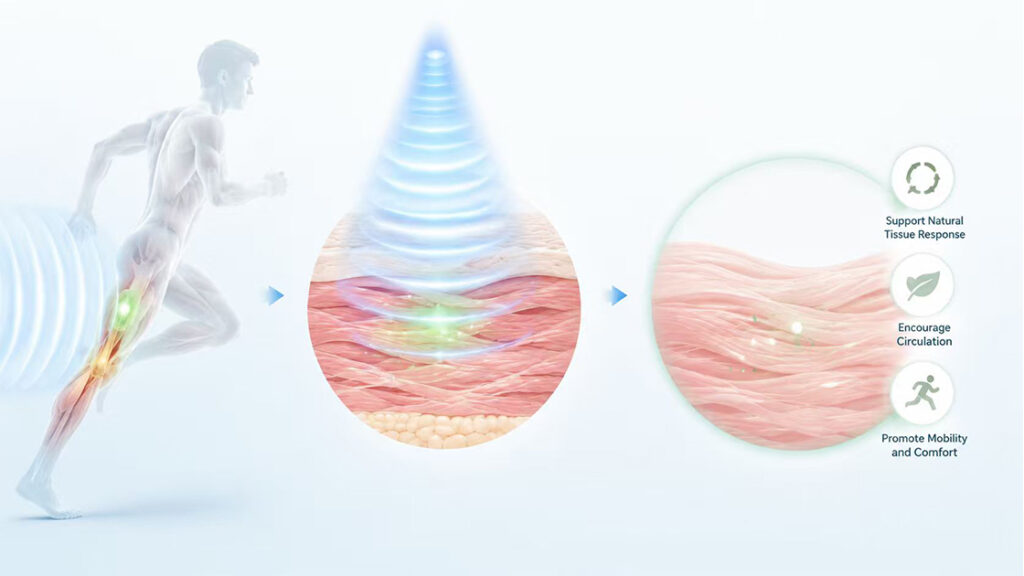
Shockwave Therapy uses acoustic wave energy to create mechanical stimulation within targeted tissues. This technology has been widely used in musculoskeletal applications and is becoming increasingly integrated into sports medicine environments.
2.1 The Science Behind Shockwave Therapy Technology
Shockwave Therapy delivers controlled acoustic waves into specific treatment areas. These mechanical waves interact with tissues and may influence local biological responses.
The process involves energy transmission through soft tissues, which can stimulate cellular activity and support natural tissue processes.
Different shockwave systems may use radial or focused technologies depending on application goals. Professionals select appropriate settings based on the athlete’s condition, body area, and rehabilitation objectives.
2.2 Supporting Soft Tissue Preparation Before Athletic Activity
Athletes often require effective preparation before demanding training sessions or competitions. Muscle flexibility, tissue condition, and movement quality are important factors that influence athletic performance.
Shockwave Therapy may be incorporated into sports medicine programs as part of a broader preparation strategy. By focusing on specific areas exposed to repetitive stress, professionals can support overall tissue management.
This approach does not replace warm-up routines, strength training, or mobility exercises but can work alongside established athletic preparation methods.
2.3 Supporting Recovery Between Training Sessions
Athletes frequently follow demanding schedules that require efficient recovery strategies. Short recovery periods between sessions may place additional stress on muscles and connective tissues.
Sports medicine centers often combine multiple recovery methods to support athletes during intense training cycles.
Shockwave Therapy can be included as one component of these programs, providing targeted applications based on individual recovery needs and training demands.
3. Integrating Shockwave Therapy Into Sports Injury Prevention Programs
Sports medicine centers use structured approaches when incorporating new technologies into athlete care. Shockwave Therapy is generally considered as part of a comprehensive strategy rather than a standalone solution.
3.1 Athlete Assessment Before Using Shockwave Technology
Before including Shockwave Therapy in a prevention program, sports medicine professionals evaluate factors such as movement patterns, training intensity, previous physical stress, and specific areas of concern.
A detailed assessment helps determine which areas may benefit from targeted support.
By combining professional evaluation with technology-based approaches, sports medicine teams can create more personalized athlete management plans.
3.2 Combining Shockwave Therapy With Strength and Mobility Training
Strength training and mobility exercises remain important parts of injury prevention. They help athletes improve movement control, stability, and physical capacity.
Shockwave Therapy can complement these activities by supporting specific soft tissue areas while athletes continue their regular training programs.
The combination of exercise-based strategies and advanced technology allows sports medicine professionals to address multiple aspects of athlete preparation.
3.3 Supporting Different Types of Athletes
Shockwave Therapy applications are not limited to one specific sport. Different athletes may benefit from targeted approaches depending on their movement patterns and training requirements.
Sports medicine centers may work with professional athletes, college athletes, recreational competitors, and active individuals.
Each group has different physical demands, making personalized technology applications an important part of modern sports care.
4. Why Sports Medicine Centers Consider Shockwave Therapy Equipment
As demand for comprehensive athlete care increases, sports medicine centers are evaluating technologies that provide flexible applications and support professional workflows.
4.1 Versatility of Shockwave Therapy in Athletic Settings
One reason sports medicine professionals consider shockwave technology is its versatility. It can be applied to different body regions involved in athletic movement.
Common areas of interest may include:
- shoulders involved in throwing activities
- knees exposed to repetitive jumping
- hips affected by movement demands
- lower legs involved in running activities
The ability to adjust energy settings allows professionals to customize applications based on athlete requirements.
4.2 Supporting Sports Medicine Clinics and Performance Facilities
Modern sports medicine facilities often focus on providing comprehensive services that combine evaluation, recovery support, and performance optimization.
Shockwave Therapy equipment can become part of these environments by expanding available technology options.
For sports medicine clinics and athletic performance centers, advanced equipment can support a broader approach to athlete care.
5. The Future Role of Shockwave Therapy in Sports Medicine
The relationship between technology and sports medicine continues to evolve. As athletes seek better ways to manage training demands, preventive strategies are becoming increasingly important.
5.1 Growing Interest in Preventive Sports Recovery Technology
Preventive care is becoming a major focus in athletic environments because maintaining physical readiness is essential for consistent performance.
Shockwave Therapy represents one technology that supports this shift by providing targeted applications within broader recovery and maintenance programs.
As sports science continues to develop, more facilities may explore how advanced technologies can complement traditional athletic care methods.
5.2 How Shockwave Technology May Shape Future Athlete Care
Future sports medicine programs will likely continue combining data analysis, personalized training, and advanced recovery technologies.
Shockwave Therapy may remain an important part of this development because of its ability to provide focused acoustic wave applications in musculoskeletal care.
By integrating technology with professional expertise, sports medicine centers can continue developing more comprehensive approaches for athlete support.
FAQ
What is Shockwave Therapy in sports medicine?
Shockwave Therapy uses acoustic wave energy to support soft tissue applications within sports medicine programs.
Can Shockwave Therapy prevent all sports injuries?
No. It is a supportive technology used alongside training, assessment, and professional injury prevention strategies.
Why do sports medicine centers use Shockwave Therapy?
It provides targeted applications that can complement athlete recovery and maintenance programs.
Which athletes can use Shockwave Therapy?
It may be used for professional athletes, recreational athletes, and individuals involved in regular physical training.
Is Shockwave Therapy combined with exercise programs?
Yes. It is commonly used as part of a broader sports medicine approach that includes mobility and strength training.
Conclusion
Sports medicine centers are increasingly focusing on injury prevention strategies that help athletes maintain movement quality, training consistency, and overall physical readiness. Shockwave Therapy has become a valuable technology within these programs because it provides targeted acoustic wave applications that can complement traditional sports care methods. By combining professional assessment, exercise programs, and advanced recovery technologies, sports medicine professionals can create more comprehensive approaches for athlete support. As sports performance continues to evolve, Shockwave Therapy will remain an important technology in modern injury prevention and athletic care environments.
References
Shock Wave Therapy in Musculoskeletal Disorders: Current Concepts and Clinical Applications
https://www.ncbi.nlm.nih.gov/pmc/articles/PMC6127130
Extracorporeal Shock Wave Therapy in Sports Medicine and Rehabilitation
https://www.ncbi.nlm.nih.gov/pmc/articles/PMC5866409
The Biological Effects of Extracorporeal Shock Wave Therapy
https://www.ncbi.nlm.nih.gov/pmc/articles/PMC4262043
Extracorporeal Shock Wave Therapy: Mechanisms and Applications
https://www.ncbi.nlm.nih.gov/pmc/articles/PMC3552615
Shockwave Therapy and Tendon Disorders: Current Evidence and Clinical Perspectives