

Introduction
Sports medicine continues to evolve as athletes and active individuals look for effective ways to support recovery, mobility, and long-term physical performance. Repetitive training, high-intensity activities, and competitive demands can place stress on muscles, tendons, and soft tissues. Shockwave therapy has become an increasingly recognized technology in sports medicine settings because of its ability to provide targeted mechanical energy to specific areas of the body. By supporting tissue stimulation and recovery processes, shockwave therapy can complement traditional rehabilitation approaches and help sports medicine professionals create more comprehensive recovery programs for athletes at different activity levels.
1. Understanding the Role of Shockwave Therapy in Sports Medicine
1.1 Why Sports Medicine Is Exploring Advanced Recovery Technologies
Sports medicine focuses on helping athletes maintain physical function, manage sports-related stress, and return to activity safely. As training methods become more intensive, professionals continue to explore technologies that can support modern rehabilitation programs.
Traditional approaches such as exercise programs, mobility training, and manual techniques remain important parts of sports recovery. Shockwave therapy provides an additional option that allows professionals to apply controlled mechanical energy to targeted areas as part of a personalized recovery plan.
1.2 The Connection Between Athletic Performance and Tissue Recovery
Athletic performance depends on the condition of muscles, tendons, ligaments, and joints. Repeated movements, sudden changes in intensity, and high-impact activities can create physical challenges for athletes.
Recovery management plays an important role in maintaining consistent training routines. Sports medicine professionals often combine different approaches to support mobility, comfort, and overall physical readiness throughout an athlete’s training cycle.
1.3 How Shockwave Therapy Fits Into Modern Sports Rehabilitation
Shockwave therapy is commonly integrated into sports rehabilitation programs because it offers a targeted application approach. Depending on the technology used, professionals can adjust treatment parameters according to different body areas and recovery goals.
Rather than replacing other rehabilitation methods, shockwave therapy works as a complementary tool alongside exercise therapy, stretching programs, strength training, and movement improvement strategies.
2. How Shockwave Therapy Works in Sports Medicine Applications
2.1 Understanding Shockwave Technology
Shockwave therapy uses acoustic energy waves that are delivered to specific areas through a specialized device. Specifically, these mechanical impulses interact with targeted tissues and are commonly used in professional rehabilitation environments.
However, different shockwave technologies provide different energy delivery methods. For instance, radial shockwave therapy and focused shockwave therapy are two common approaches, and each offers unique application characteristics based on clinical needs.
2.2 The Role of Mechanical Stimulation in Recovery Programs
Mechanical stimulation is an important concept in modern rehabilitation. Shockwave therapy delivers controlled energy that can support the body’s natural recovery environment and help professionals address areas affected by physical stress.
For athletes, this technology can be included in recovery programs designed around training intensity, movement demands, and individual physical conditions.
2.3 Why Sports Medicine Professionals Use Targeted Applications
Athletes experience different physical demands depending on their sport. A runner, basketball player, swimmer, or strength athlete may require attention to different areas of the body.
Shockwave therapy allows professionals to focus on specific regions, including the lower limbs, shoulders, elbows, and other commonly stressed areas. This targeted approach supports customized recovery strategies rather than using a single method for every athlete.
3. Common Sports Medicine Applications of Shockwave Therapy
3.1 Supporting Tendon and Soft Tissue Recovery
Tendons play an important role in transferring force between muscles and bones during athletic movement. Sports involving repetitive motion, jumping, throwing, or rapid acceleration can place continuous demands on tendon structures.
Shockwave therapy is often considered in sports rehabilitation programs focused on tendon and soft tissue recovery support. It may be used as part of a broader approach that includes movement training and professional guidance.
3.2 Supporting Muscle Recovery After High-Intensity Training
High-intensity workouts can create temporary muscle fatigue and physical stress. Athletes often use structured recovery methods to maintain training consistency.
It can be incorporated into professional recovery routines that focus on improving comfort and supporting muscle wellness after demanding physical activities.
3.3 Supporting Joint Mobility in Active Individuals
Joint mobility is important for athletes across many sports. Limited movement comfort may affect training quality and overall performance.
By focusing on surrounding soft tissues and movement-related areas, shockwave therapy can support rehabilitation programs designed to maintain mobility and physical function.
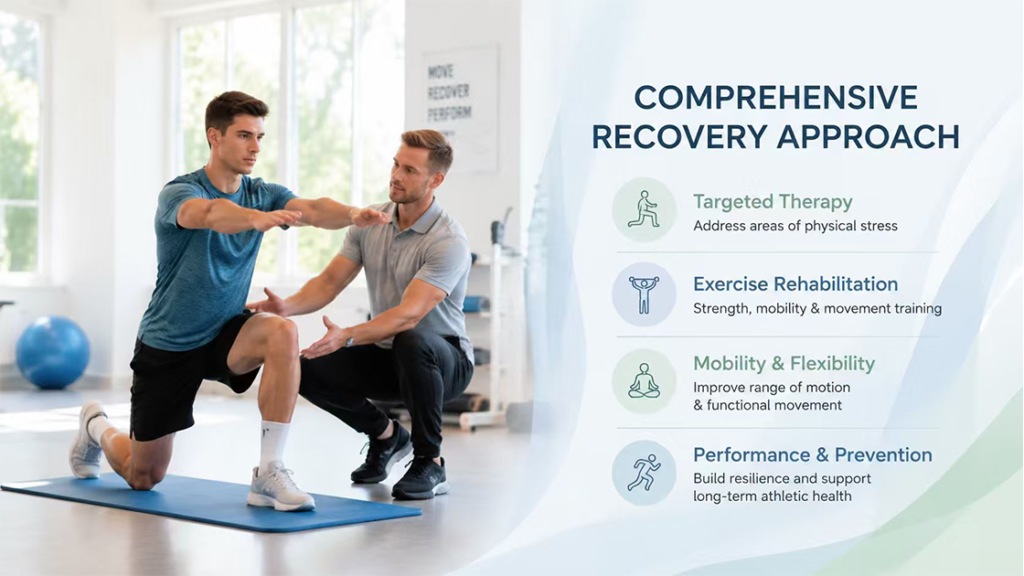
4. Integrating Shockwave Therapy Into Sports Rehabilitation Programs
4.1 Combining Shockwave Therapy With Exercise-Based Rehabilitation
Exercise remains one of the most important elements of sports rehabilitation. Strength training, flexibility exercises, and movement correction help athletes develop better physical control.
When combined with exercise-based programs, it can provide an additional recovery option for professionals designing comprehensive rehabilitation plans.
4.2 Personalized Recovery Strategies for Different Sports
Every sport creates different physical demands. Football players may experience different stress patterns compared with tennis players, runners, or swimmers.
Sports medicine professionals can develop personalized strategies by considering factors such as training frequency, movement patterns, and specific areas requiring attention. It can be adjusted according to these individual differences.
4.3 The Importance of Professional Assessment
Professional assessment helps determine appropriate recovery strategies for athletes. Understanding movement patterns, training habits, and physical conditions allows specialists to create more suitable rehabilitation plans.
I is most effective when used as part of a professional approach that considers the athlete’s overall health, activity level, and recovery objectives.
5. The Future of Shockwave Therapy in Sports Medicine
5.1 Growing Adoption of Non-Invasive Recovery Technologies
Modern sports medicine continues to explore technologies that support athletes without interrupting active lifestyles. Non-invasive recovery solutions have gained attention because they can be incorporated into broader wellness and rehabilitation programs.
Shockwave therapy represents one of the technologies contributing to this development by offering targeted energy application and flexible use in professional settings.
5.2 How Shockwave Therapy Supports the Evolution of Sports Recovery
As athletic training becomes more specialized, recovery strategies continue to develop alongside performance methods. Sports medicine professionals increasingly focus on personalized approaches that consider each athlete’s unique needs.
It provides another option within this evolving field, helping professionals expand their available recovery tools while supporting mobility, tissue wellness, and overall athletic care.
FAQ
What is shockwave therapy in sports medicine?
It is a rehabilitation technology that uses acoustic energy waves to support recovery programs for muscles, tendons, and soft tissues.
Do professional athletes use shockwave therapy?
Many athletes and sports rehabilitation programs consider this therapy as part of a broader recovery strategy.
What sports can benefit from shockwave therapy applications?
It may be used in recovery programs for activities such as running, basketball, tennis, cycling, and other sports involving repetitive movement.
Can shockwave therapy replace physical therapy exercises?
No. It is generally used as a complementary approach alongside exercise, mobility training, and professional rehabilitation methods.
What areas can sports medicine professionals focus on?
Common application areas may include shoulders, elbows, knees, hips, and other regions affected by athletic activity.
Conclusion
Shockwave therapy has become an important technology within modern sports medicine by providing professionals with another option for supporting athlete recovery programs. Through targeted mechanical energy application, it can complement traditional rehabilitation methods focused on mobility, muscle wellness, and physical readiness. As sports continue to become more demanding and personalized recovery approaches gain attention, this therapy will remain a valuable tool for sports medicine professionals seeking comprehensive solutions for active individuals.
References
Extracorporeal Shock Wave Therapy in Sports Medicine: A Review of Current Applications
https://pubmed.ncbi.nlm.nih.gov/28443922
Extracorporeal Shock Wave Therapy for Musculoskeletal Disorders
https://pubmed.ncbi.nlm.nih.gov/23353022
Shockwave Therapy: Clinical Applications and Mechanisms
https://www.ncbi.nlm.nih.gov/pmc/articles/PMC7588459
The Role of Extracorporeal Shock Wave Therapy in Rehabilitation
https://pubmed.ncbi.nlm.nih.gov/31344969
Extracorporeal Shock Wave Therapy in Tendon Disorders