

Introduction
Every paddle stroke places repetitive demand on the rotator cuff, the small but essential group of muscles that stabilises the shoulder joint. For wave riders who spend 40‑50% of their water time paddling, this constant motion gradually overloads the rotator cuff and surrounding stabilisers. With millions of surfers worldwide and chronic shoulder issues affecting many of them, a stiff, painful paddle is the most common reason surfers miss sessions. Extracorporeal shockwave therapy offers a non‑invasive, drug‑free way to help manage rotator cuff impingement, so you can keep catching waves without weeks of rest or surgery.
1. Why the Paddling Motion Puts Surfers at High Risk for Rotator Cuff Impingement
The paddling stroke may look smooth from the water, but it subjects the shoulder to an unnatural imbalance. Surfing demands endurance, power and mobility, especially from the shoulders, and the repetition of paddling is where most injury problems start.
1.1 Defining Rotator Cuff Impingement in Surfers
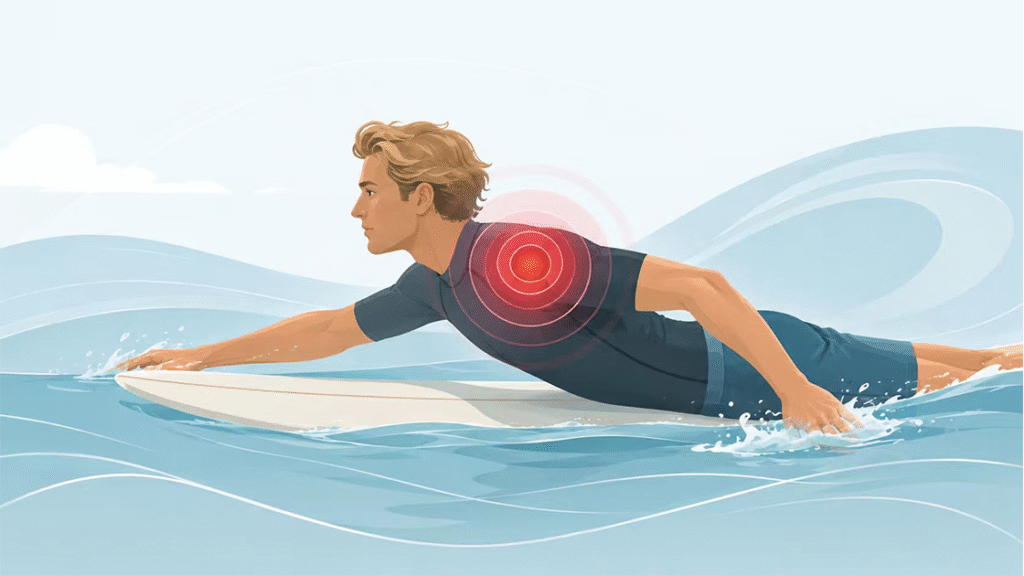
Rotator cuff impingement occurs when inflamed or swollen tissue becomes caught in the shoulder joint, leading to stiffness and pain. In surfing, the usual culprit is the paddling movement. This action strengthens the larger muscle groups around the shoulder, which apply upward pressure on the ball of the humerus, but neglects the smaller rotator cuff stabilisers that apply downward pressure. When these two muscle groups become imbalanced, the ball of the humerus slides upward, compressing the space where the rotator cuff tendons sit. Over time, irritation and damage to the rotator cuff occur, and the bursa swells, decreasing the space further and causing pain during paddling.
1.2 How Paddling Creates Muscle Imbalance and Joint Stress
The freestyle paddling stroke overdevelops the shoulder‘s internal rotators, such as the subscapularis and anterior chest wall muscles, while leaving the external rotators and posterior scapular stabilisers relatively weak. Large muscles like the pectorals, deltoids, lats and upper trapezius become powerful, pulling the arm bone upward. The rotator cuff muscles, which would normally counteract this upward force, struggle to keep up. Long sessions, sudden spikes in training volume, and fatigue reduce paddling efficiency and increase strain, leading to overuse injury. Many surfers also drop their elbows during the stroke or rely too heavily on their upper traps rather than engaging the core, which adds additional load on the shoulder joint.
1.3 How Shoulder Discomfort Affects Wave Count and Enjoyment
Once rotator cuff impingement sets in, even simple overhead reaching becomes difficult and painful. Surfers often describe the greatest pain when they reach up to start a paddling motion, which means every time you go for a wave, your shoulder protests. The day after surfing, the shoulder often hurts worse, forcing long breaks between sessions. Some surfers struggle to lift their board onto the car, paddle out to the lineup, or generate speed when the wave arrives. The fear that shoulder pain might end a surfing season leads many to take long periods out of the water, losing fitness, wave count, and the joy of simply being out there.
2. How Extracorporeal Shockwave Therapy Helps Manage Shoulder Impingement
Extracorporeal shockwave therapy uses acoustic waves to deliver mechanical energy to targeted tissues, stimulating the body‘s natural healing response. For rotator cuff conditions, this approach offers a meaningful alternative to injections or surgery.
2.1 What Shockwave Therapy Is and How It Affects the Rotator Cuff
Extracorporeal shockwave therapy applies high‑energy sound waves through the skin to the affected tendon and surrounding tissues. The mechanical stimulation triggers biological responses that help manage local inflammation, encourage new blood vessel formation, and promote remodelling of fibrous tissue. For rotator cuff tendinopathy, the tendons benefit from this tissue‑healing effect. Unlike injections that temporarily mask discomfort, shockwave therapy works with the body’s own repair pathways to reduce pain and improve function. The treatment is delivered in short sessions, requires no incisions, and leaves no scar tissue, making it an attractive option for active surfers who want to stay in the water.
2.2 What Practitioners Have Observed About Shockwave for Shoulder Conditions
Many physical therapists and sports medicine clinics have incorporated shockwave therapy into their shoulder treatment programs. Clinical experience suggests that radial extracorporeal shockwave therapy can help reduce pain and improve shoulder function for conditions such as rotator cuff tendinopathy, calcific tendinitis, and subacromial impingement. Some practitioners report that combining shockwave therapy with physical therapy yields better results than either approach alone. For surfers, the therapy appears to support tendon healing and reduce the discomfort that limits paddling endurance. While individual responses vary, many wave riders find that after a few sessions, their shoulder feels less stiff and they can return to paddling more comfortably.
2.3 How Shockwave Therapy Helps Maintain Paddling Readiness
For a surfer who lives for the next swell, every day out of the water feels like a missed opportunity. Surgery requires weeks of immobilisation, wound care, and gradual return to activity, often keeping you off your board for months. Corticosteroid injections may offer temporary relief, but they can weaken tendon tissue over time. Shockwave therapy demands no downtime after treatment. You can paddle, stretch, and carry your board normally while receiving therapy sessions. The non‑invasive nature means no incisions, no infection risk, and no waiting for tissue healing before getting back in the water. For a wave rider with a seasonal swell window or a busy travel schedule, this hassle‑free approach respects both your shoulder health and your love of surfing.
3. The Shockwave Advantage Over Traditional Approaches
Surfers considering treatment for shoulder impingement face a narrow set of options, each with significant limitations for those who rely on their paddling strength every session.
3.1 Why Corticosteroid Injections May Not Be Ideal for Active Surfers
Corticosteroid injections are commonly used to reduce inflammation around the rotator cuff, providing temporary relief. However, repeated injections may weaken the tendon structure over time, potentially increasing the risk of further issues. Even a single injection can soften the tendon tissue, making it more vulnerable to the repetitive loading of paddling. Moreover, the pain‑reducing effect of an injection does not address the underlying muscle imbalance or tissue changes; discomfort often returns within months. Some evidence suggests that adding shockwave therapy to a regular exercise program produces more lasting results than relying on injections, making shockwave a more appealing option for long‑term shoulder care.
3.2 Why Passive Rest Is Impractical for Dedicated Wave Riders
Many surfers are told to rest when shoulder pain appears. But resting means missing swells, losing paddle fitness, and watching the waves roll in from the beach. When surfers do return after weeks of rest, the same paddling mechanics and muscle imbalances quickly recreate the same discomfort. A physical therapy report notes that shoulder injuries in surfers are common but highly preventable, and that passive rest alone does not fix the underlying reasons impingement developed in the first place. Active management that addresses muscle imbalance, technique and tissue healing is far more effective than simply waiting for pain to fade.
3.3 A Non‑Invasive Option Aligned with a Surfer‘s Need to Keep Paddling
Shockwave therapy occupies the ideal middle ground between doing nothing and undergoing surgery. It does not require the repeated clinic visits of injections that wear off after weeks, nor does it demand the surgical recovery that sidelines a surfer for an entire season. The therapy works alongside your normal routine, not against it. You can receive a session in the morning and paddle out that afternoon. For travelling surfers, a clinic visit on a lay day or a portable device at your destination suffices. The treatment respects that your primary goal is to catch waves, not to sit on the couch. When shoulder impingement threatens to turn your paddle into a painful ordeal, shockwave therapy offers a way to stay in the lineup without compromise.
4. Integrating Shockwave Therapy Into a Surfer’s Shoulder Maintenance Routine
Surfers who care about wave‑riding longevity protect their shoulders with the same dedication they bring to reading swell charts. Adding shockwave therapy to a shoulder health routine requires simple planning and early action before minor irritation becomes a season‑ender.
4.1 Recognising When Shoulder Discomfort Needs Attention
Shoulder impingement begins with subtle signs that many surfers brush off—a vague ache after long sessions, stiffness the morning after a big swell, trouble reaching overhead to stretch out your wetsuit. These early indicators are exactly when shockwave therapy works best. Intervening when symptoms are mild can help prevent progression to the painful stage where lifting your board or paddling for a wave feels impossible. Research indicates that a large percentage of surfers report bilateral shoulder complaints, with rotator cuff‑related pain accounting for a significant portion of all shoulder injuries among surfers. If you notice pain that lingers after surfing or worsens the day after, do not ignore it.
4.2 What to Expect During and After Shockwave Sessions
A typical shockwave session for shoulder impingement focuses on the rotator cuff tendons and subacromial space, delivering acoustic waves through a handheld applicator. The sensation varies from mild tapping to brief, deep pressure, but the intensity stays comfortable. Each session lasts only a few minutes. After treatment, no bandaging or activity restriction is required. Some surfers notice improvement after a few sessions, while others benefit from additional sessions over several weeks. The therapy stimulates the body‘s repair mechanisms gradually. The goal is smoother, more comfortable paddling over the long term, not instant perfection after one session.
4.3 Complementary Habits for Long‑Term Shoulder Health
Shockwave therapy works best as part of a broader shoulder care strategy. Optimising thoracic spine mobility, refining paddle technique and strengthening the rotator cuff and scapular stabilisers can significantly reduce the risk of developing chronic shoulder pain. Apply these technique tips: keep your top hand below eye level and your top elbow below shoulder level to reduce stress on the rotator cuff; keep your bottom arm straight to force paddle power from your core, not your shoulder. Strengthen the muscles around the shoulder blades with exercises such as prone Ys and Ts to help with paddle endurance while taking pressure off your neck. These habits, combined with periodic shockwave therapy when symptoms appear, keep your shoulders ready for the next big swell.
5. Building a Long‑Term Strategy for Surfing Longevity
A surfer‘s relationship with the ocean can span decades if the shoulders stay healthy. Proactive management of minor issues prevents them from becoming major barriers to time in the water.
5.1 Recognising That Small Symptoms Deserve Attention
Many surfers pride themselves on paddling through discomfort—pushing through fatigue, finishing the session, ignoring the ache that sets in after a few hours. This mindset, while admirable, is exactly what allows impingement to progress from an occasional annoyance to a chronic problem that forces extended breaks. Rotator cuff injury exists on a continuum beginning with impingement and potentially progressing to a cuff tear, and the cuff tendons have areas of naturally low blood supply, making healing more difficult once damage occurs. Surfers who attend to early shoulder signals and seek evaluation—and early shockwave intervention when appropriate—preserve their full paddling range and avoid the scenario where a painful shoulder ends a surf trip early.
5.2 Matching Treatment Frequency to Surfing Volume
The demands on a surfer‘s shoulders vary across the year. A winter swell season may mean paddling out daily for weeks; a summer lull may offer lighter sessions. Shockwave therapy schedules should reflect these fluctuations. During peak surf periods, you might receive preventive sessions before the shoulder fatigue builds. During lighter months, treatment may only be needed reactively. A physical therapist familiar with water sports can help tailor the intensity and frequency of sessions to your individual wave‑riding volume, ensuring that protection matches paddling demand.
5.3 The Goal: Paddling Without Unnecessary Pain
The ultimate goal of any shoulder care is not merely to reduce discomfort but to restore the ability to paddle freely and enjoy every wave. Rotator cuff impingement that is left unmanaged does not resolve on its own; it typically worsens, narrowing the window for non‑surgical options. Extracorporeal shockwave therapy offers surfers a pathway to manage the condition on their own terms—without surgery, without repeated injection risks, and without extended time away from the water. A surfer who can paddle out without wincing, catch wave after wave without shoulder fatigue, and finish a session feeling the normal tiredness of a good workout—that is the measure of success. With proper care, the shoulders stay as strong as the commitment to the ocean they serve.
FAQ
Q1: Does shockwave therapy for shoulder impingement hurt during application?
Most surfers describe the sensation as brief tapping or deep pressure. The intensity stays comfortable throughout.
Q2: How many sessions will I need to notice easier paddling?
Many surfers notice improvement after a few sessions. A typical course involves several sessions spaced one week apart.
Q3: Can I surf the same day I receive shockwave therapy?
Yes. The therapy requires no downtime, so you can paddle out before or after a session without any problem.
Q4: How often should I use shockwave therapy for ongoing shoulder maintenance?
After your initial sessions, some surfers find that one or two treatments per month help keep their shoulders comfortable during heavy surf periods.
Q5: Can shockwave therapy be combined with my regular shoulder stretches and exercises?
Absolutely. Gentle stretching and rotator cuff strengthening complement the therapy and help maintain the benefits over time.
Conclusion
The shoulder that stiffens after a long session, the ache that lingers through the week, the worry that next winter’s swells might be out of reach—these are not signs that your surfing days are ending. They are signals that your rotator cuff needs support. Extracorporeal shockwave therapy gives wave riders a drug‑free, non‑invasive way to help manage rotator cuff impingement without sacrificing paddle time or time in the water. You can keep training, keep travelling, and keep chasing the waves that define your passion, all while treating the shoulders that carry you there.
References
BeFit Training Physio. Shoulder Injuries In Surfers.
https://befittrainingphysio.com/shoulder-injuries-in-surfers/
BreakThrough Physical Therapy. Shoulder Impingement in Surfers.
https://www.breakthroughpt.com/shoulder-impingement-surfers/
Barton Health. SUP & Your Shoulders.
https://www.bartonhealth.org/blog/articles/sup–your-shoulders/
Unity Physical Therapy. Surf Longer/Better with these 4 Pillars.
https://www.unityphysicaltherapy.com/blog/surf-longerbetter-with-these-4-pillars
Sydney Strength Conditioning. Surfer‘s or Swimmer’s Shoulder.
https://sydneystrengthconditioning.com/surfers-and-swimmers-shoulder/