

Introduction
Swimming is a high-repetition, overhead-motion sport that demands extensive shoulder mobility and strength. While highly beneficial for cardiovascular health and overall conditioning, long-term intensive swimming can lead to chronic shoulder issues, particularly calcific shoulder tendinitis. This condition occurs when calcium deposits form within the rotator cuff tendons, causing pain, stiffness, and limited range of motion. Traditional treatments may include anti-inflammatory medications, physiotherapy, or surgery, but these often involve long recovery periods or invasive procedures. Shockwave therapy offers a non-invasive solution that stimulates the body’s natural healing processes, reduces pain, and promotes tissue regeneration. For swimmers of all levels, understanding this therapy can help maintain shoulder health and prolong active participation.
1. Understanding Calcific Shoulder Tendinitis
Swimmers often experience shoulder pain due to repetitive overhead movements that stress the rotator cuff.
1.1 Causes of Calcium Deposits
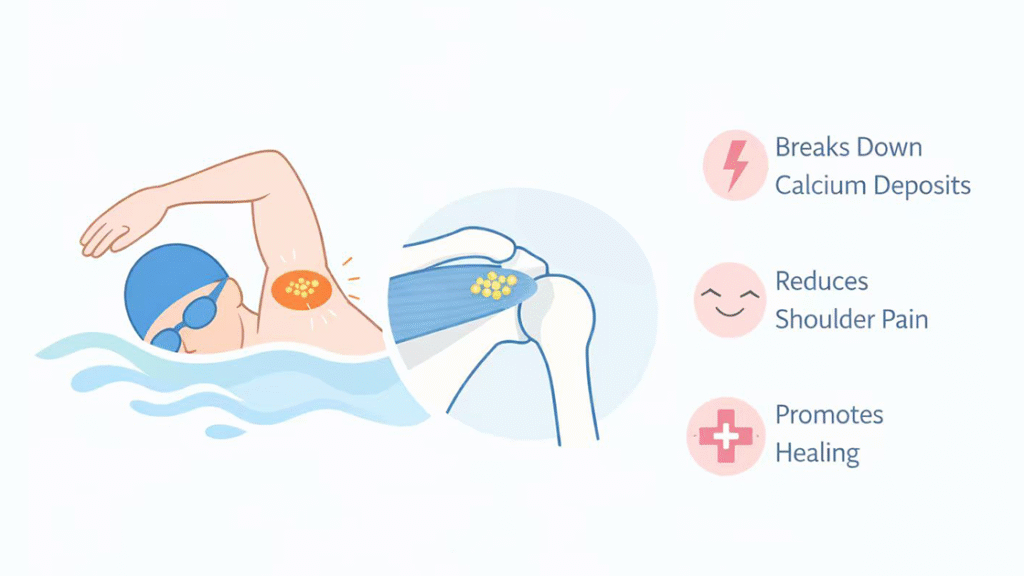
Calcific shoulder tendinitis develops when calcium crystals accumulate in the tendons of the rotator cuff. This deposition may result from chronic microtrauma, repetitive strain, or localized tissue degeneration. Swimmers performing frequent overhead strokes, like butterfly or freestyle, repeatedly stress the supraspinatus and infraspinatus tendons. The body responds to tendon microinjuries by depositing calcium, which can trigger inflammation, swelling, and localized pain. Shockwave therapy targets these areas by delivering acoustic energy that stimulates cellular activity and encourages resorption of calcium deposits over time, reducing the inflammatory response while preserving tendon integrity.
1.2 Symptoms Common in Swimmers
Swimmers with calcific tendinitis often report dull shoulder pain, sharp discomfort during overhead strokes, and stiffness, particularly in the morning. Pain can radiate from the front of the shoulder toward the upper arm and worsen during training or competitions. Restricted range of motion may impact performance, reduce stroke efficiency, and increase the risk of secondary injuries. Shockwave therapy addresses both pain and tendon pathology, enabling athletes to maintain functional mobility while supporting tissue repair.
1.3 Risk Factors Specific to Swimming
High training volumes, repetitive overhead strokes, improper technique, and inadequate rest increase the risk of tendon microtrauma and subsequent calcification. Age and metabolic factors may also contribute to calcium deposition. Swimmers who fail to manage workload or undergo insufficient recovery are particularly susceptible. Shockwave therapy complements preventive strategies, promoting tendon healing and reducing the likelihood of chronic pain, making it an ideal intervention for competitive and recreational swimmers alike.
2. How Shockwave Therapy Works
Shockwave therapy uses high-energy acoustic waves to stimulate biological responses within affected tissues.
2.1 Acoustic Wave Mechanism
Shockwaves transmit mechanical energy through soft tissues, creating micro-stress in the targeted area. This mechanical stimulation triggers cellular mechanotransduction, enhancing fibroblast activity, increasing collagen synthesis, and promoting angiogenesis. In calcific tendinitis, these effects help break down calcium deposits and encourage tissue regeneration. The acoustic energy penetrates deep tendon structures, reaching the affected supraspinatus or infraspinatus tendons without surgery. Over several sessions, shockwave therapy reduces inflammation, alleviates pain, and improves shoulder functionality.
2.2 Pain Modulation
Pain in calcific tendinitis results from both inflammation and localized pressure caused by calcium deposits. Shockwave therapy reduces pain by decreasing substance P levels, a key neuropeptide involved in pain transmission, and by promoting endogenous analgesic mechanisms. This dual effect relieves discomfort during daily activities and swimming. Swimmers experience improved range of motion and can resume training sooner than with conventional therapies, allowing for quicker return to peak performance.
2.3 Tissue Regeneration and Collagen Remodeling
Beyond pain relief, shockwave therapy enhances tendon healing by stimulating fibroblasts and supporting collagen remodeling. Collagen is vital for tendon strength, elasticity, and resistance to repetitive stress. In calcific shoulder tendinitis, remodeled collagen improves tendon resilience and reduces the likelihood of re-injury. Swimmers benefit from improved tendon integrity, which supports consistent training intensity while minimizing downtime.
3. Benefits of Shockwave Therapy for Swimmers
Swimmers can experience multiple advantages from shockwave therapy beyond simple pain reduction.
3.1 Non-Invasive Treatment Option
Unlike surgery or corticosteroid injections, shockwave therapy is non-invasive and requires no anesthesia. Swimmers can receive treatment during the training season with minimal disruption. Sessions typically last 15–20 minutes, allowing athletes to maintain their conditioning routine. The therapy provides long-term relief without compromising tendon structure, making it a preferred choice for athletes aiming to continue competitive swimming.
3.2 Accelerated Recovery and Training Continuation
By stimulating natural healing processes, shockwave therapy shortens recovery time compared to traditional approaches. Reduced inflammation and improved tendon flexibility allow swimmers to gradually resume full training intensity. Faster recovery enhances competitive readiness, reduces compensatory movement patterns, and prevents secondary injuries that often arise from chronic tendon pain.
3.3 Long-Term Tendon Health
Repeated shockwave therapy sessions improve tendon resilience and support long-term joint health. By breaking down calcium deposits, reducing inflammation, and promoting collagen remodeling, this therapy reduces chronic pain recurrence. Swimmers can maintain optimal shoulder performance while minimizing the risk of future injuries, sustaining athletic longevity and improving overall quality of life.
4. Treatment Process and Expectations
Understanding what to expect during shockwave therapy can optimize results and compliance.
4.1 Session Frequency and Duration
Most treatment plans involve 4–6 sessions spaced 3–7 days apart, depending on severity and individual response. Each session lasts approximately 15–20 minutes. Chronic calcific deposits may require multiple sessions to achieve significant reduction and pain relief. Swimmers typically notice gradual improvement in range of motion and reduced discomfort within 2–3 sessions.
4.2 Sensations During Treatment
During therapy, patients may feel mild tingling, warmth, or slight discomfort at the treatment site. These sensations indicate energy absorption by the tendon tissue and are generally well-tolerated. No post-treatment restrictions are necessary, allowing swimmers to continue light training or rehabilitation exercises immediately.
4.3 Complementary Practices
Pairing shockwave therapy with stretching, strengthening, and proper technique correction enhances outcomes. Shoulder stabilization exercises, rotator cuff strengthening, and proper warm-up routines complement the therapy’s effects. Nutrition and adequate rest further support tissue regeneration, enabling swimmers to maximize long-term benefits.
5. Self-Care Strategies for Swimmers
Swimmers can maintain shoulder health alongside shockwave therapy through lifestyle and training modifications.
5.1 Stretching and Mobility
Daily stretching and mobility exercises targeting the rotator cuff, deltoid, and scapular stabilizers prevent stiffness and maintain joint range of motion. Gentle dynamic stretches before training and static stretches post-practice complement tendon healing and reduce risk of overuse injuries.
5.2 Strength Training
Targeted shoulder and upper back strengthening exercises support tendon stability. Resistance band routines, scapular stabilization drills, and rotator cuff exercises improve tendon resilience, reduce stress on the calcium-affected area, and enhance performance efficiency in swimming strokes.
5.3 Load Management
Monitoring training intensity, volume, and rest intervals is critical for preventing tendon overuse. Incorporating rest days, cross-training, and gradual load progression reduces the risk of recurrence. Shockwave therapy is most effective when combined with responsible training habits.
5.4 Pain Monitoring and Early Intervention
Swimmers should track pain patterns and respond early to flare-ups. Prompt intervention with therapy sessions and modified training prevents chronic deterioration and maintains shoulder health. Early use of shockwave therapy can halt progression and minimize calcium deposition over time.
FAQ
Q: Is shockwave therapy painful?
A: Most patients feel mild tingling or warmth. Discomfort is temporary and generally well-tolerated.
Q: How many sessions are needed?
A: Typically 4–6 sessions, spaced 3–7 days apart, depending on severity.
Q: Can I swim immediately after treatment?
A: Yes, light swimming or rehab exercises are allowed, though high-intensity sessions should be gradual.
Q: Are there side effects?
A: Side effects are rare and may include mild redness or temporary tenderness.
Q: Is shockwave therapy a replacement for surgery?
A: It is non-invasive and effective for many cases, but severe tendon tears may still require surgical intervention.
Conclusion
Shockwave therapy provides swimmers with a scientifically supported, non-invasive method to treat calcific shoulder tendinitis. By reducing pain, promoting calcium resorption, stimulating collagen remodeling, and enhancing tendon resilience, it allows athletes to maintain shoulder mobility and return to training more quickly. When combined with stretching, strengthening, proper technique, and load management, shockwave therapy supports long-term shoulder health, performance longevity, and overall quality of life for swimmers of all levels.
References
Shockwave Machines — Indications
https://www.shockwavemachines.com/indications
Gerdesmeyer, L., et al. “Extracorporeal Shock Wave Therapy for the Treatment of Calcifying Tendinitis of the Shoulder.” Journal of Bone and Joint Surgery, 2003.
https://pubmed.ncbi.nlm.nih.gov/12533556
Rompe, J.D., et al. “Shock Wave Therapy for Tendinopathy: Mechanisms and Clinical Applications.” American Journal of Sports Medicine, 2001.
https://pubmed.ncbi.nlm.nih.gov/11580845
Speed, C.A. “Extracorporeal Shock-Wave Therapy in the Management of Chronic Tendinopathy.” British Journal of Sports Medicine, 2004.