

Introduction
Tendon pain can be frustrating. You rest, it feels better. You return to activity, the pain comes back. This cycle repeats for weeks or months. Traditional treatments like rest, ice, and anti-inflammatory medications provide temporary relief but do not always address the underlying tendon issue. Extracorporeal shockwave therapy offers a different approach. This non-invasive treatment uses acoustic waves to stimulate the body‘s natural healing processes. Clinical guidelines have identified several tendinopathies where shockwave therapy may offer meaningful support. Understanding which conditions respond well can help you have informed conversations with your healthcare provider about whether this treatment might be right for you.
1. Understanding Tendinopathy and Shockwave Therapy
Tendons connect muscles to bones. When a tendon becomes damaged from overuse or strain, the condition is called tendinopathy. Unlike a sudden tear, tendinopathy develops gradually over time.
1.1 What Happens in a Damaged Tendon
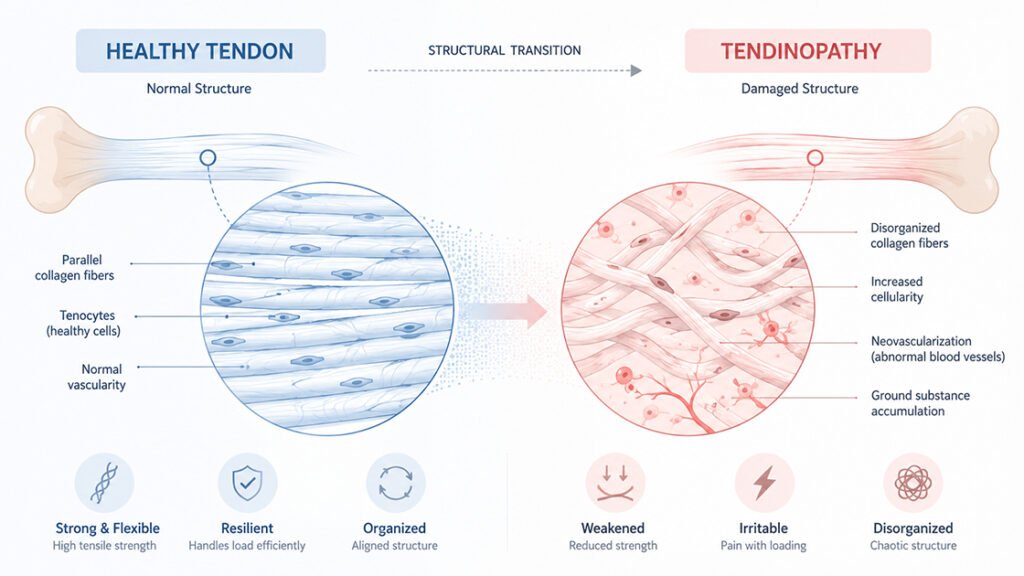
A healthy tendon contains collagen fibers lined up in parallel rows, like perfectly arranged straws. This organization gives the tendon its strength. In tendinopathy, the collagen fibers become disorganized, twisting and crossing over each other. The tendon may thicken, and small blood vessels may grow into areas where they do not belong. These changes make the tendon weaker and more sensitive to load. Simple activities like walking, running, or gripping can become painful.
1.2 How Shockwave Therapy Supports Healing
Shockwave therapy delivers acoustic waves into the tendon tissue. These waves create mechanical forces that cells can sense and respond to. The energy stimulates the cells responsible for tendon repair, encouraging them to clear away damaged tissue and build new, organized collagen. The treatment also influences local blood flow, which may help bring oxygen and nutrients to the injured area. This process supports the body‘s natural healing mechanisms rather than simply masking pain.
1.3 What Clinical Guidelines Tell Us
Medical experts have reviewed the available evidence and identified several tendinopathies where shockwave therapy shows consistent benefit. These conditions share common features: they are chronic, they have not responded well to conservative treatments like rest and physical therapy, and the tendon pathology is accessible to the shockwave energy. The guidelines help clinicians make informed decisions about when to offer shockwave therapy, but each patient‘s situation is unique.
2. Tendinopathies That May Respond to Shockwave
Based on clinical guidelines and published research, the following tendinopathies have shown positive responses to shockwave therapy in many patients.
2.1 Calcific Tendinitis of the Shoulder for Shockwave Therapy
Calcific tendinitis occurs when calcium deposits form within the rotator cuff tendons, most commonly the supraspinatus tendon. These deposits can cause significant shoulder pain and limit arm movement. People often describe the pain as sharp, especially when lifting the arm away from the body. Shockwave therapy may help break up the calcium deposits, allowing the body to absorb them over time. Many patients experience reduced pain and improved shoulder function after a course of treatment.
2.2 Lateral Epicondylitis (Tennis Elbow) for Shockwave Therapy
Lateral epicondylitis affects the tendon that attaches to the bony bump on the outside of the elbow. Despite the name, most people with this condition do not play tennis. Repetitive gripping, typing, or using tools can cause the same problem. Simple actions like shaking hands, turning a doorknob, or holding a coffee cup can become painful. Shockwave therapy may help stimulate tendon repair in this area. Many patients notice gradual improvement over several weeks following treatment.
2.3 Medial Epicondylitis (Golfer’s Elbow) for Shockwave Therapy
Medial epicondylitis affects the tendon on the inside of the elbow. This condition is less common than tennis elbow but causes similar frustration. Activities that involve wrist flexion or gripping, such as golf, baseball, or manual work, can aggravate the pain. Shockwave therapy may support the healing process in this tendon as well. The treatment approach is similar to that for lateral epicondylitis.
2.4 Patellar Tendinopathy (Jumper’s Knee) for Shockwave Therapy
Patellar tendinopathy affects the tendon connecting the kneecap to the shinbone. This condition is common in sports involving jumping, such as basketball and volleyball, but can also affect non-athletes. Pain typically occurs just below the kneecap and worsens with activity. Squatting, kneeling, or climbing stairs can be particularly uncomfortable. Shockwave therapy may help stimulate collagen production and tissue remodeling in the patellar tendon.
2.5 Plantar Fasciopathy for Shockwave Therapy
Plantar fasciopathy affects the thick band of tissue that runs along the bottom of the foot from the heel to the toes. People with this condition often experience sharp pain with the first steps in the morning or after periods of rest. The pain may improve with walking but return after prolonged standing or activity. While not strictly a tendinopathy, this condition shares many features with tendon disorders. Shockwave therapy may help support healing in the plantar fascia.
2.6 Achilles Tendinopathy for Shockwave Therapy
The Achilles tendon connects the calf muscles to the heel bone. This tendon withstands significant forces during running and jumping. Achilles tendinopathy typically causes pain a few inches above the heel, especially during or after activity. Morning stiffness in the tendon is common. Shockwave therapy may help stimulate healing in the Achilles tendon, particularly for chronic cases that have not improved with eccentric exercise programs.
2.7 Greater Trochanteric Pain Syndrome for Shockwave Therapy
This condition involves the gluteal tendons that attach to the side of the hip bone. People with this condition often experience pain on the outside of the hip that worsens with walking, running, or lying on the affected side. The pain can be sharp or achy and may radiate down the outside of the thigh. Shockwave therapy may help support tendon healing in this area, offering an alternative to corticosteroid injections for some patients.
2.8 De Quervain Tenosynovitis for Shockwave Therapy
De Quervain tenosynovitis affects the tendons on the thumb side of the wrist. People with this condition experience pain when turning the wrist, making a fist, or grasping objects. New parents often develop this condition from repeatedly lifting their baby. People who frequently use their phone or tablet may also be affected. Shockwave therapy may help reduce pain and improve function in this condition, though evidence is still emerging compared to other tendinopathies.
2.9 Myofascial Pain Syndrome (Trapezius) for Shockwave Therapy
Myofascial pain syndrome involves trigger points in muscles that cause localized and referred pain. The trapezius muscle, which runs from the neck to the shoulder, is commonly affected. People with this condition may experience neck and shoulder pain, headaches, and limited range of motion. Shockwave therapy may help deactivate trigger points and reduce muscle tension. Some patients notice improvement in their symptoms after a few sessions.
3. What to Expect During Shockwave Therapy
If you and your healthcare provider decide that shockwave therapy is appropriate for your condition, understanding what the treatment involves helps you prepare.
3.1 Before Your First Session
Your provider will examine the painful area, confirm the diagnosis, and determine whether this therapy is suitable for your specific situation. They will ask about your medical history, any medications you take, and previous treatments you have tried. The provider will explain what you will feel during treatment so nothing comes as a surprise. No special preparation is needed before your first session.
3.2 The Treatment Experience
You will sit or lie in a comfortable position that allows easy access to the treatment area. The provider will apply a gel to your skin to help the shockwaves transmit efficiently. They will then position a handheld device against your skin and activate the shockwave. You will feel a tapping or pulsing sensation at the treatment site. The intensity may vary depending on the condition being treated and the depth of the affected tendon. Each session typically lasts between five and ten minutes.
3.3 How Many Sessions You May Need
A typical course of shockwave therapy includes three to five sessions, spaced about one week apart. Some patients notice improvement after one or two sessions, while others need the full course to experience benefit. Your provider will monitor your symptoms between sessions and adjust the treatment plan as needed. After completing the initial course, some patients return for occasional maintenance sessions, while others do not need further treatment.
3.4 What You May Notice After Treatment
Your symptoms may not improve immediately after a session. The healing process triggered by shockwave therapy takes time. Some patients experience mild soreness in the treated area for a day or two after treatment. This is a normal response. Many patients notice gradual improvement over several weeks as the tendon tissue remodels. Pay attention to trends in your symptoms rather than day-to-day changes.
4. Supporting Your Recovery Alongside Shockwave Therapy
Shockwave therapy works best as part of a comprehensive approach to tendon health. These strategies can support your recovery.
4.1 Gradual Return to Activity
After shockwave therapy, avoid activities that caused your original pain for a few days. Your provider will give you specific guidance about when to resume normal activities. When you do return, start slowly. Gradually increase the intensity and duration of your activity over several weeks. Rushing back too quickly can undo the healing that is taking place.
4.2 Gentle Movement and Stretching
Gentle range-of-motion exercises may help maintain mobility in the affected area. Your physical therapist or provider can recommend specific stretches for your condition. Avoid aggressive stretching that causes pain. The goal is to keep the tissue moving, not to force it.
4.3 Strengthening Exercises
Once the acute pain has settled, strengthening the muscles that support the affected tendon may help prevent recurrence. Eccentric exercises, where the muscle lengthens under tension, are particularly helpful for many tendinopathies. Your physical therapist can design a program specific to your condition.
4.4 Modifying Activity and Ergonomics
Consider what activities may have contributed to your tendinopathy. For tennis elbow, this might mean adjusting your grip or workstation. For patellar tendinopathy, this might mean modifying your training routine. Small changes in how you move or perform activities can reduce stress on the affected tendon while it heals.
FAQ
Q: Does shockwave therapy hurt?
A: You will feel a tapping or pulsing sensation during treatment. The intensity varies depending on the condition. Most patients tolerate the treatment well.
Q: How many sessions will I need?
A: Typical treatment courses include three to five sessions spaced about one week apart. Your provider will track your progress and adjust as needed.
Q: How long does each session take?
A: Each treatment session typically lasts between five and ten minutes.
Q: Are there any side effects?
A: Side effects are generally mild and temporary. Some patients experience temporary soreness, bruising, or mild swelling at the treatment site that resolves within a day or two.
Q: Can I take pain medication during shockwave therapy?
A: Your provider may recommend avoiding anti-inflammatory medications during treatment because they can interfere with the healing response. Discuss any medications you take with your provider.
Q: How soon will I notice improvement?
A: Some patients notice improvement within a few weeks. Others need several weeks to see benefit as the tendon tissue remodels.
Conclusion
Tendon pain can be a frustrating and persistent problem. Shockwave therapy offers a non-invasive approach that may help support the body‘s natural healing processes. Clinical guidelines have identified several tendinopathies where shockwave therapy shows consistent benefit, including calcific tendinitis of the shoulder, tennis elbow, patellar tendinopathy, and Achilles tendinopathy. For people who have tried rest, ice, and physical therapy without achieving lasting relief, shockwave therapy represents a reasonable next step to discuss with their healthcare provider.
References
- Expert Consensus on Focused Extracorporeal Shockwave Therapy for Tendinopathies. National Center for Biotechnology Information.
https://pubmed.ncbi.nlm.nih.gov/39857896/ - 2025 International Consensus on Shockwave Therapy for Musculoskeletal Conditions. British Journal of Sports Medicine.
https://bjsm.bmj.com/content/early/2025/09/15/bjsports-2025-108431 - Shockwave Therapy for Tendinopathies: A Systematic Review. Journal of Orthopaedic and Sports Physical Therapy.
https://www.jospt.org/doi/10.2519/jospt.2024.12001 - Clinical Guidelines for Extracorporeal Shockwave Therapy. International Society for Medical Shockwave Treatment.
https://www.shockwavetherapy.org/guidelines